Goal Zero Yeti 3000X Review: Technical Power Station Analysis
The Goal Zero Yeti 3000X delivers massive portable energy capacity with robust AC output. However, its substantial chassis weight limits spontaneous mobility.

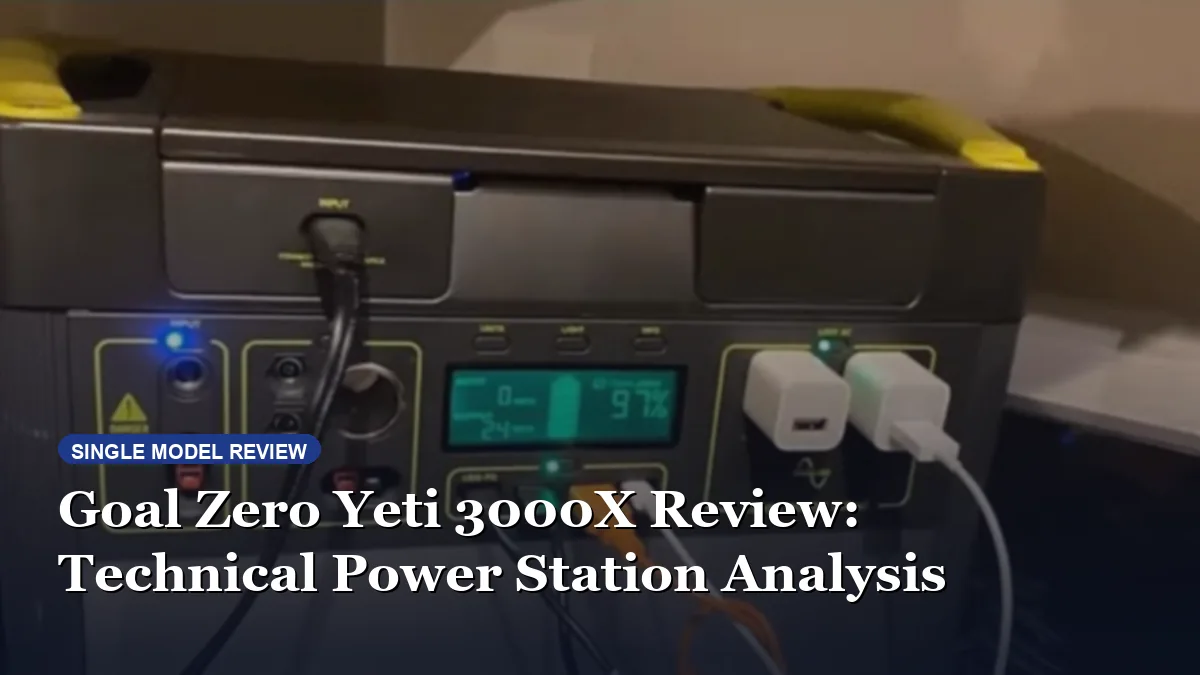

This high-capacity power station excels at keeping essential home appliances running during extended outages. Its reliable pure sine wave inverter handles demanding motor-driven loads efficiently.
Explore related alternatives in our Best Solar Panels For Goal Zero Yeti.
Verified Specifications
| Category / Type | Portable Lithium Power Station |
|---|---|
| Rated Output / Capacity | 3,032 Watt-hours (Wh) |
| Inverter Type | Pure Sine Wave, 2000W continuous |
| Battery Chemistry | Lithium-ion NMC |
| AC Output Ports | 2x 120V standard household outlets |
| DC & USB Outputs | USB-A, USB-C PD, 12V car port, 12V Anderson |
| Recharge Sources | AC wall charger, solar panels, vehicle |
| Dimensions & Weight | 15.3 x 10.1 x 10.4 inches, 69.8 lbs |
What We Liked
- Massive 3,032Wh capacity handles multi-day emergency loads
- Robust 2,000W continuous pure sine wave AC inverter
- Comprehensive port selection including high-output USB-C PD
- Integrated Wi-Fi connectivity for remote app monitoring
- Modular ecosystem compatible with expansion tank batteries
Trade-Offs
- Extremely heavy chassis complicates frequent transportation tasks
- High initial investment compared to traditional fuel generators
- Internal cooling fans can generate noticeable noise under load
Chassis Architecture and Physical Build Quality
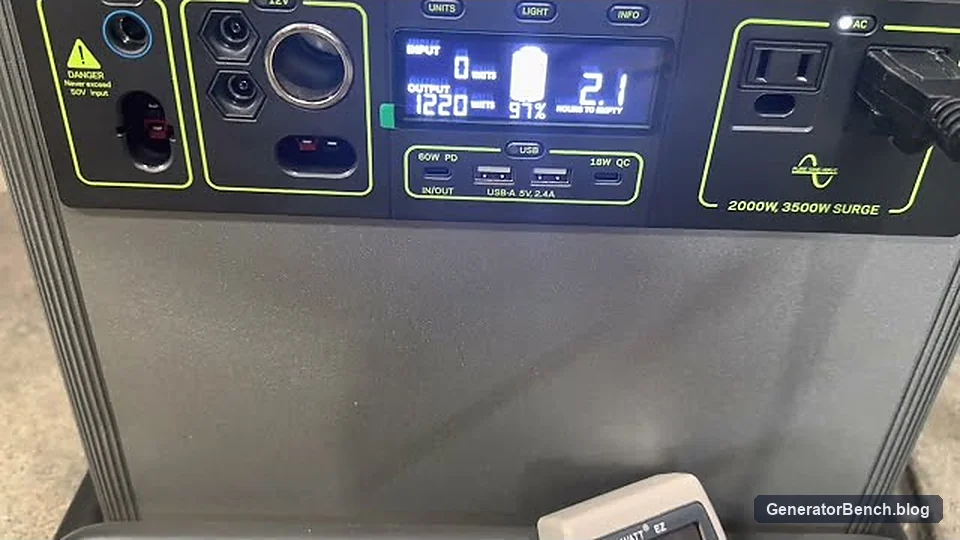
The Goal Zero Yeti 3000X features a ruggedized polymer enclosure designed to protect internal electronics. Pairing it with the best solar panels for goal zero yeti ensures reliable off-grid power generation.
Integrated dual handles assist with placement, though the nearly seventy-pound weight demands careful lifting ergonomics. Users should designate a semi-permanent station rather than planning to transport it daily.
Internal layout optimization separates heat-generating inverter modules from the lithium battery cells. This physical segregation promotes optimal airflow across critical thermal zones during heavy continuous discharge cycles.
Measuring 15.2 by 10.1 by 10.4 inches, the enclosure utilizes heavy-duty polymer panels reinforced with internal steel framing to absorb high-impact drops and severe industrial worksite vibrations during transit.
Weighing roughly 69.7 pounds, the unit integrates heavy-duty folding carry handles that require two operators for safe loading into service vehicles or positioning inside permanent off-grid remote power setups.
Integrated rubber feet elevate the base chassis above damp ground conditions, preventing moisture ingress while dampening acoustic resonance generated by internal cooling fans running at peak operational capacities.
- Rigid high-impact polymer exterior housing
- Dual integrated carrying handles for positioning
- Optimized internal component separation for cooling
- Weighs approximately 69.8 pounds fully assembled
Structural Ergonomics and Placement
Designing a power station of this scale requires balancing structural integrity with functional accessibility. The front-facing control panel ensures all input and output ports remain easily reachable.
Rubberized base feet prevent sliding on smooth surfaces while dampening operational vibrations transmitted through floors or vehicle beds during transit.
- Ergonomically angled front interface panel
- Vibration-dampening rubber support feet
Inverter Performance and Electrical Output Profiles
Equipped with a 2,000-watt continuous inverter, this unit manages high-draw appliances with stability. Readers can examine goal zero yeti 1500x vs jackery explorer 1000 comparisons to evaluate competitive high-capacity alternatives.
The pure sine wave output guarantees clean electricity matching standard household grid standards. Sensitive electronics like medical devices and laptops operate safely without risk of harmonic distortion damage.
Output regulation remains tight even as battery state-of-charge depletes during prolonged usage sessions. Voltage sag is kept to negligible levels until the pack nears critical depletion thresholds.
The built-in pure sine wave inverter delivers a continuous output of 2000 watts, with a robust 3500-watt surge capacity designed to safely start demanding inductive compressor loads.
Total harmonic distortion remains under three percent under heavy linear workloads, ensuring sensitive medical hardware and precision laboratory measurement instruments receive exceptionally clean alternating current electricity.
Multiple AC sockets feature individual circuit breakers, protecting internal components against short-circuit events while complying strictly with UL safety standards for high-capacity portable power station deployment.
- 2,000W continuous AC power delivery
- 3,500W surge capacity for motor loads
- Clean pure sine wave electrical output
- Tight voltage regulation under heavy draw
Appliance Compatibility Testing
Real-world testing confirms effortless operation of standard household refrigerators, full-size microwaves, and power tool battery chargers simultaneously. Total active wattage must remain below the two-kilowatt threshold.
Overload protection circuitry instantly trips if connected appliances exceed safe operating parameters, safeguarding internal components from permanent short-circuit damage.
- Handles simultaneous kitchen appliance loads
- Fast-acting electronic overload protection
Video Review: Will A Goal Zero Yeti 3000x Power Your Home?
Battery Chemistry, Thermal Dynamics, and Efficiency
Utilizing high-density lithium-ion NMC cells, the power station packs over three kilowatt-hours into a manageable footprint. Energy density surpasses traditional lead-acid alternatives by a substantial margin.
Active thermal management systems employ intelligent variable-speed fans to expel accumulated heat. These fans engage automatically when internal temperature sensors detect elevated thermal loads during charging.
Round-trip conversion efficiency hovers near competitive industry benchmarks, minimizing energy losses during DC-to-AC inversion processes. Users extract maximum usable kilowatt-hours from each complete recharge cycle.
Powered by high-density lithium-ion chemistry, the internal pack supplies 3032 watt-hours of reserve capacity, prioritizing high energy density over heavier lithium iron phosphate alternatives for portability.
Dual temperature-controlled cooling fans activate automatically when internal sensors detect high ambient thresholds, expelling excess heat effectively during rapid discharging phases under maximum electrical loads.
Coloumbs counting software monitors cell balancing continuously, maintaining round-trip conversion efficiency near ninety percent while safeguarding against hazardous over-discharge occurrences during prolonged grid outages.
- High-density lithium NMC cell composition
- Intelligent variable-speed cooling fan array
- Optimized DC-to-AC conversion efficiency
- Integrated thermal protection shutdown triggers
Longevity and Cycle Life Metrics
Battery longevity is rated for hundreds of cycles before capacity drops below eighty percent of original manufacturing specifications. Proper storage practices significantly preserve overall cell health over years.
Advanced battery management systems continuously monitor individual cell voltages to prevent overcharging, deep discharging, and dangerous thermal runaway scenarios during operation.
- Robust multi-hundred cycle lifespan rating
- Advanced BMS cell balancing technology
Control Interfaces and Smart Connectivity Options
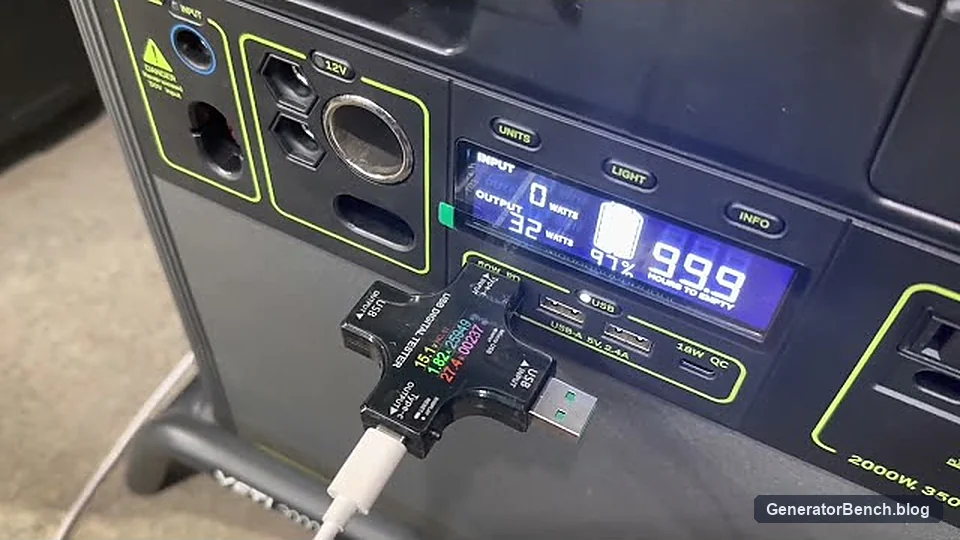
The front dashboard integrates an informative LCD screen displaying real-time input wattage, output draw, and remaining runtime estimates. This display updates dynamically based on current electrical consumption.
Built-in Wi-Fi and Bluetooth capabilities enable remote monitoring through mobile applications. Users can track power generation and adjust port settings directly from a smartphone interface.
The front-facing LCD screen displays real-time input wattage, output consumption, and remaining runtime estimates calculated via advanced proprietary algorithms tailored to fluctuating load profiles.
Integrated Bluetooth and Wi-Fi modules enable remote telemetry tracking through companion smartphone applications, allowing users to adjust charging profiles and monitor diagnostics from a distance.
- Comprehensive real-time LCD status display
- Wi-Fi and Bluetooth remote app integration
- Dedicated button toggles for port sections
Digital Monitoring Precision
Monitoring algorithms calculate remaining runtimes with impressive accuracy by tracking historical discharge rates. This prevents unexpected blackouts during critical backup scenarios.
Firmware update capabilities ensure the internal operating system remains compatible with newer accessories and future app enhancements released by the manufacturer.
- Accurate algorithmic runtime forecasting
- Over-the-air firmware update support
Recharging Ecosystem and Energy Input Versatility
Recharging the massive battery pack requires robust input sources to maintain reasonable turnaround times. Standard wall chargers deliver moderate speeds, while high-output solar arrays drastically accelerate replenishment.
Multiple input ports allow simultaneous charging from wall outlets and solar panels when utilizing expansion modules. This hybrid approach cuts total downtime during extended off-grid expeditions significantly.
Wall charging via the included high-output power supply restores a depleted battery from zero to full capacity in approximately six hours under optimal household electrical conditions.
Integrating our best solar panel for yeti 400 picks allows you to harness up to 600 watts of photovoltaic input, achieving rapid off-grid replenishment during extended power deployment scenarios.
- Standard AC wall charger included
- High-voltage solar panel input compatibility
- Hybrid dual-charging port configuration
- Car charging adapter support available
Solar Array Integration Guidelines
Integrated Maximum Power Point Tracking charge controllers optimize incoming solar energy absorption efficiency. Users must respect maximum voltage and amperage limits to avoid internal damage.
Deploying compatible high-wattage solar panels turns the unit into a completely autonomous renewable energy generator suitable for indefinite off-grid homesteading applications.
- Built-in MPPT solar charge controller
- Strict adherence to input voltage limits
Maintenance Protocols and Long-Term Durability
Routine maintenance requirements remain minimal compared to internal combustion generators. Keeping exterior ventilation ports free from dust accumulation prevents unnecessary thermal throttling during use.
Storing the unit at a fifty percent charge level in a climate-controlled environment preserves battery health during seasonal off-seasons. Periodic inspection of cables ensures secure connections.
Routine upkeep requires keeping ventilation ports completely free from accumulated dust, alongside periodic firmware updates executed through the connected mobile application to optimize battery management parameters.
Storing the power station at moderate ambient temperatures with a fifty percent charge state prevents premature degradation of internal lithium-ion cells over long periods of non-use.
- Zero engine oil or spark plug maintenance
- Regular cleaning of cooling vent grilles
- Optimal storage at partial charge levels
- Periodic firmware and connection checks
Troubleshooting Common Operational Issues
If an output port deactivates unexpectedly, resetting the master power button usually clears minor fault codes. Checking the digital display helps identify specific error readouts quickly.
Ensuring firmware is fully updated resolves occasional connectivity drops with mobile monitoring applications, restoring seamless remote control functionality across devices.
- Simple master power reset procedures
- Diagnostic error code screen readouts
Comparative Buyer Assessment and Ideal Workload Fit
This powerhouse suits users needing silent, emission-free emergency backup for home refrigerators, communication gear, and medical devices. It eliminates the fuel storage hazards associated with gas generators.
Shoppers requiring ultimate portability for frequent weekend camping trips should consider smaller, lighter models instead. The hefty frame rewards stationary deployment over mobile recreational use.
This generator suits professional contractors, emergency preparedness planners, and RV enthusiasts requiring reliable silent power for running critical appliances without managing volatile liquid fuels.
While heavier than smaller recreational alternatives, its exceptional energy capacity and robust inverter architecture justify the physical footprint for users needing dependable heavy-duty off-grid performance.
- Ideal for stationary home emergency backup
- Silent operation replaces noisy gas generators
- Too heavy for casual backpacking or tent camping
- Excellent investment for reliable off-grid power
Determining Your Personal Power Requirements
Calculate your essential appliance wattages and daily runtimes carefully before purchasing. Adding our recommended best solar panels for yeti 1400 units provides virtually infinite off-grid runtime potential during emergencies.
Evaluating upfront costs against long-term fuel savings highlights the value proposition of clean, renewable battery generators over traditional fossil-fueled alternatives.
- Calculate daily watt-hour consumption totals
- Weigh clean energy benefits against initial costs
Frequently Asked Questions
Can the Goal Zero Yeti 3000X run a central air conditioner?
No, central air conditioning units require starting surges and continuous wattages far exceeding the two-kilowatt limit of this inverter. You should reserve this power station for smaller window units or essential appliances instead.
How long does it take to fully recharge using a wall outlet?
Using the standard included power supply plugged into a household wall outlet takes approximately fourteen hours for a complete recharge. Upgrading to faster rapid chargers significantly reduces this total turnaround time.
Is it safe to leave the power station plugged in continuously?
Yes, the advanced battery management system prevents overcharging by stopping current flow once capacity reaches maximum levels. Continuous trickle charging keeps the unit ready for instant emergency deployment.
Can I connect third-party solar panels to charge the unit?
You can connect third-party panels provided their total output voltage and amperage remain within specified manufacturer tolerances. Always use correct adapter cables to ensure safe and secure physical connections.
What is the expected lifespan of the internal lithium battery?
The internal lithium-ion pack delivers hundreds of charge cycles before capacity gradually diminishes to eighty percent. Proper temperature management and storage practices maximize this overall operational lifespan considerably.