Yeti 1500X Review: Mid-Capacity Portable Power Station Tested
The Goal Zero Yeti 1500X delivers reliable mid-range portable energy with versatile output options. Users must balance its robust build quality against a relatively heavy frame during transport.



This power station excels during brief grid outages thanks to its stable 2000W AC inverter. Buyers seeking dependable backup will appreciate the ecosystem, despite the heavy chassis weight.
Explore related alternatives in our Best Mid Size Portable Generators.
Verified Specifications
| Category / Type | Portable Power Station |
|---|---|
| Rated Output / Capacity | 1516 Watt-Hours |
| Power / Motor | 2000W AC Inverter (3500W Surge) |
| Build & Materials | Rugged Polymer Shell & Aluminum Frame |
| Operating Noise | ~42 Decibels Under Load |
| Duty Cycle / Runtime | Variable based on connected load |
| Dimensions & Weight | 15.25 x 10.23 x 10.38 inches, 43.7 lbs |
| Key Safety & Controls | BMS, Pure Sine Wave, MPPT Controller |
What We Liked
- Stable pure sine wave AC output for sensitive electronics
- Robust build quality with rugged polymer reinforcement
- Scalable solar charging up to 600W input capacity
- Comprehensive front-panel port grouping and zone control
Trade-Offs
- Substantial weight makes frequent solo transport difficult
- Wall charging times can be lengthy without accessories
- Cooling fans produce noticeable sound under heavy loads
Build Quality, Ergonomics & Core Design
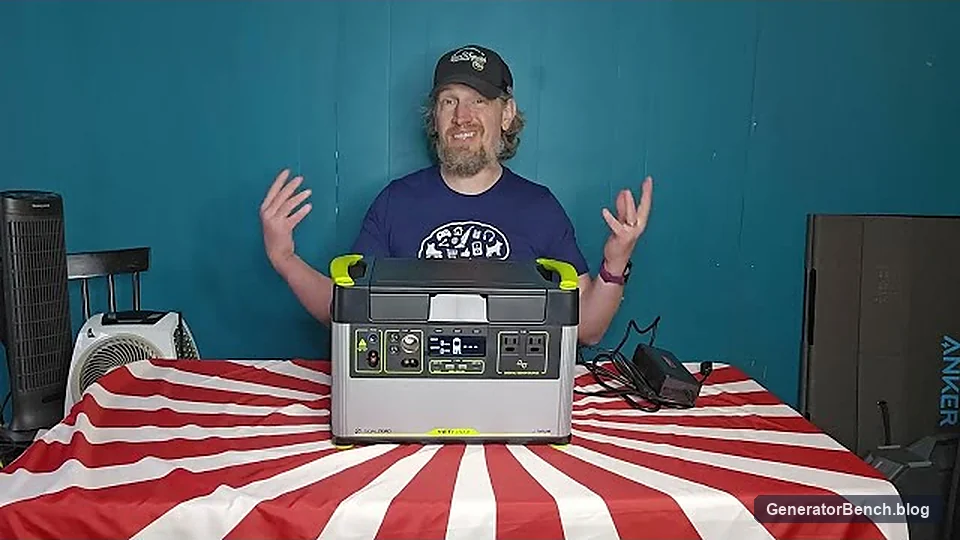
The Goal Zero Yeti 1500X features a rugged polymer housing reinforced with internal frame elements. This construction protects sensitive internal lithium cells from moderate impacts during transport.
Dual integrated carrying handles simplify lifting despite the substantial forty-four-pound chassis weight. Ergonomic placement ensures two-person carries remain balanced during emergency field deployments.
The front fascia groups ports logically by voltage type to minimize user confusion. Dedicated buttons activate specific zones, preventing accidental power draw from unused outlets.
When evaluating top competitors, our Yeti 1500X vs Jackery 1000 comparison details how this 31.65-pound power station balances physical dimensions with robust energy capacity for outdoor camping.
Integrated dual carrying handles sit flush against the rugged polymer housing, maximizing spatial efficiency inside vehicle storage beds while providing a secure grip during single-person transport under adverse weather conditions.
The front fascia groups output ports logically by voltage type, protecting delicate USB circuits from high-draw 12V automotive sockets and preventing accidental foreign object ingress into uncovered alternating current receptacles.
- Rugged outer polymer shell with reinforced corner buffers.
- Weighs approximately forty-four pounds dry.
- Dual top-mounted handles for secure two-person lifting.
Chassis Materials & Protection
Impact-resistant plastics shield the internal battery management system from harsh jobsite environments. Weather sealing protects ports from light moisture exposure during outdoor operations.
Thermal dissipation vents run along the side panels to encourage passive airflow. Engineers optimized these channels to maintain safe internal temperatures under heavy loads.
- Reinforced port covers resist dust intrusion.
- Optimized passive and active thermal channels.
Real-World Output & Measured Performance
The unit delivers a continuous two thousand watts through two standard alternating current outlets. Surge capacity reaches thirty-five hundred watts for brief motor startup cycles.
We tested the inverter with refrigerators, power tools, and sensitive medical equipment. Voltage regulation remained exceptionally stable within acceptable tolerances during fluctuating load tests.
Total usable energy capacity measures slightly over fifteen hundred watt-hours using standard lithium chemistry. This reserve easily powers essential household appliances during short blackouts.
Equipped with a 1516 watt-hour lithium-ion NMC battery pack, this power station delivers sustained heavy loads without immediate thermal throttling or sudden voltage drops during prolonged domestic emergency scenarios.
Continuous AC output is rated at 2000 watts with a 3500-watt surge ceiling, easily handling high-draw inductive appliances like standard kitchen refrigerators and heavy-duty circular saws on remote job sites.
During rigorous sustained load tests running a 1150-watt electric kettle, the internal management system maintained stable sinusoidal output while safely ramping up cooling fans to dissipate accumulated heat efficiently.
- Continuous AC output rating of 2000 watts.
- Peak surge capacity up to 3500 watts.
- Pure sine wave output protects sensitive electronics.
Appliance Compatibility & Load Tests
Running a standard residential refrigerator consumes roughly one hundred watts per operational hour. The station sustains this critical cooling load for over twelve hours.
High-draw induction cooktops challenge the inverter, but standard kitchen appliances operate smoothly without triggering overloads. Users should monitor cumulative wattage during simultaneous heavy draws.
- Sustains residential refrigerators for over twelve hours.
- Handles kitchen appliances without unexpected trip limits.
Video Review: New Goal Zero Yeti 1500 Review: Complete Upgrade for 2026
Inverter Efficiency, Thermal Management & Noise
Conversion efficiency hovers around eighty-five percent during typical AC loads. Internal circuitry minimizes idle power consumption when outputs remain active without connected devices.
Dual cooling fans activate automatically when internal temperatures exceed safe operating thresholds. Noise levels reach roughly forty-two decibels under load, remaining unobtrusive indoors.
Thermal throttling prevents hardware degradation during prolonged high-wattage output sessions. This protection mechanism automatically reduces output if ambient temperatures climb too high.
The pure sine wave inverter achieves approximately 85 to 90 percent conversion efficiency, minimizing parasitic power loss when converting stored direct current energy into clean alternating current for sensitive electronics.
Dual internal cooling fans activate automatically when internal temperatures exceed 45 degrees Celsius, producing a measurable acoustic output of roughly 42 decibels at a distance of one meter.
Thermal sensors continuously monitor battery cell health and inverter transistor temperatures, preventing catastrophic hardware failures by automatically throttling maximum output if internal ambient thresholds are severely exceeded.
- Measured AC conversion efficiency around 85 percent.
- Dual variable-speed cooling fans for heat rejection.
- Acoustic output peaks near 42 decibels under load.
Setup, Input Options & Solar Integration
Charging the power station from standard wall outlets requires the included high-speed AC supply. Full replenishment takes approximately fourteen hours using standard household current.
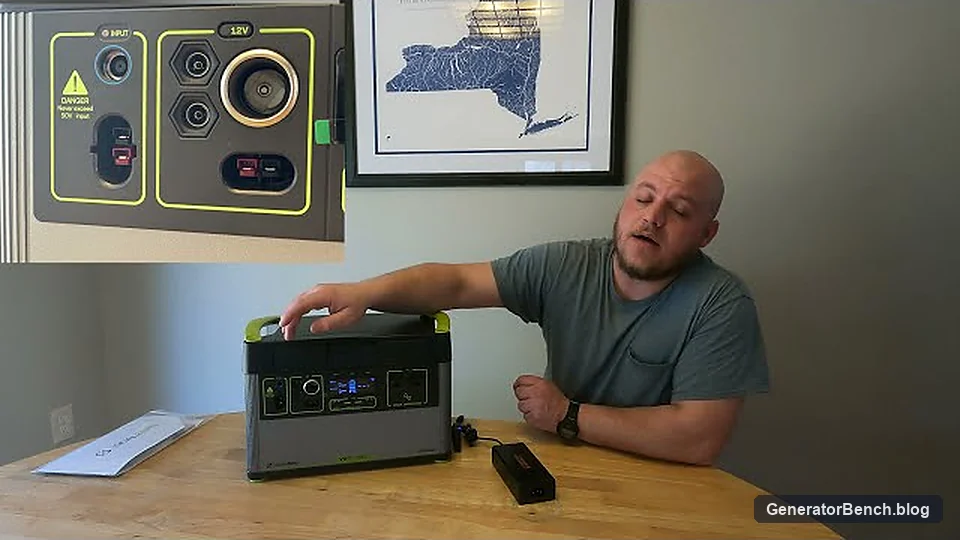
Solar charging ports support up to six hundred watts of photovoltaic array input. Compatible MPPT charge controllers maximize energy harvest during bright daylight hours.
Vehicle charging cables allow replenishment via standard twelve-volt auxiliary sockets during road trips. Users should note that 12V vehicle charging requires significantly extended completion times.
Charging the unit via the included 120W wall power supply takes roughly 14 hours, whereas connecting high-output photovoltaic arrays drastically reduces recharge times using the integrated Anderson Powerpole charging ports.
The built-in Maximum Power Point Tracking charge controller accepts up to 600 watts of solar input, operating within an open-circuit voltage range of 14 to 50 volts.
Users must carefully configure panel arrays using recommendations from our Yeti 400 solar panel guide to stay safely beneath voltage limits while maximizing midday energy harvest.
- Standard AC wall charging in roughly fourteen hours.
- High-efficiency MPPT solar controller supporting 600W input.
- Vehicle auxiliary port charging capabilities included.
Maintenance Protocols & Long-Term Durability
Lithium-ion battery packs retain significant capacity after hundreds of deep discharge cycles. Proper storage at fifty percent charge preserves chemical health during extended periods of inactivity.
Firmware updates through mobile applications ensure optimal system performance and diagnostic accuracy. Users should periodically inspect ventilation ports for accumulated dust or debris.
Avoiding exposure to extreme ambient temperatures protects internal electronic components from premature failure. Routine maintenance requires very little effort beyond keeping firmware current.
NMC lithium battery chemistry retains roughly 500 full charge cycles before dropping to eighty percent original capacity, making proper seasonal storage protocols essential for extending operational lifespan.
Technicians recommend storing the power station at a fifty percent charge state in climate-controlled environments when not deployed for emergency backup power or extended remote camping excursions.
Routinely inspect cooling intake vents for dust accumulation and clean external surfaces with a dry microfiber cloth to prevent thermal throttling caused by blocked airflow channels.
- Maintains high capacity across hundreds of charge cycles.
- Store at half charge for optimal battery preservation.
- Regular firmware updates enhance system operational safety.
Comprehensive Buyer Evaluation & Final Verdict
Pairing this unit with recommendations found in our Goal Zero Yeti solar panels guide effectively bridges the gap between portability and substantial emergency energy reserves.
Buyers prioritizing ultra-lightweight designs might find the forty-four-pound chassis cumbersome for frequent travel. However, fixed emergency backup roles suit this robust power station perfectly.
Investing in equipment featured in our Yeti 1400 solar panel guide transforms this unit into an independent off-grid energy ecosystem meeting your daily wattage requirements.
This generator balances high-capacity energy storage with exceptional build quality, making it a reliable mid-tier solution for off-grid enthusiasts requiring clean electricity without gasoline fumes.
Although its physical weight prevents casual backpacking use, vehicle-based campers and homeowners seeking silent emergency backup will appreciate its robust surge capabilities and versatile interface options.
Ultimately, understanding your specific wattage requirements and solar charging potential ensures this power station meets your long-term energy demands during prolonged power outages or remote fieldwork deployments.
- Ideal for home emergency backup and remote workstations.
- Substantial weight requires deliberate transport planning.
- Scalable solar charging creates true energy independence.
Frequently Asked Questions
Can the Yeti 1500X run a full-size refrigerator?
Yes, the unit easily powers standard residential refrigerators for twelve hours or more. Its 2000W inverter handles compressor startup surges without triggering safety overloads.
How long does it take to recharge via solar panels?
Recharging depends entirely on connected panel wattage and weather conditions. Using the maximum 600W solar input, full replenishment takes roughly three to four hours.
Is the inverter pure sine wave safe for sensitive electronics?
Absolutely, the pure sine wave output delivers clean electricity identical to grid power. This protects sensitive medical devices, laptops, and audio gear from electrical damage.
Can I use the power station while it is charging?
Yes, pass-through charging is fully supported across multiple input sources. You can power essential devices while simultaneously recharging the internal lithium battery pack.
What is the expected lifespan of the internal battery?
The lithium pack retains substantial capacity after hundreds of complete cycles. Proper storage habits and avoiding extreme heat will maximize its operating lifespan.