Jackery 2000 Review: Power Station Engineering Analysis
The Jackery 2000 delivers substantial off-grid energy storage capacity and reliable AC output. However, its heavy chassis requires deliberate placement during transport.


This power station excels at running high-draw appliances reliably during outages. Its robust lithium chemistry ensures long-term dependability despite its bulky frame.
Explore related alternatives in our Best Jackery Power Station.
Verified Specifications
| Category / Type | Portable Power Station |
|---|---|
| Rated Output / Capacity | 2000Wh Energy Capacity |
| Power / Motor | 2200W Pure Sine Wave Inverter |
| Build & Materials | High-Impact ABS Polymer Casing |
| Operating Noise | Moderate Active Fan Cooling |
| Duty Cycle / Runtime | Variable based on load draw |
| Dimensions & Weight | Heavy chassis, dual handles |
| Key Safety & Controls | BMS Overload & Short Circuit Protection |
What We Liked
- Substantial energy storage capacity for heavy loads
- Stable pure sine wave inverter performance
- Versatile solar and AC recharging options
- Clear digital telemetry display screen
Trade-Offs
- Heavy physical chassis requires two hands
- Cooling fans become loud under peak loads
- Factory service required for firmware updates
Engineering Architecture and Chassis Design
The Jackery 2000 features a robust polymer casing engineered to withstand rugged outdoor environments. Its structural reinforcement protects internal lithium battery cells against moderate impact during transit.
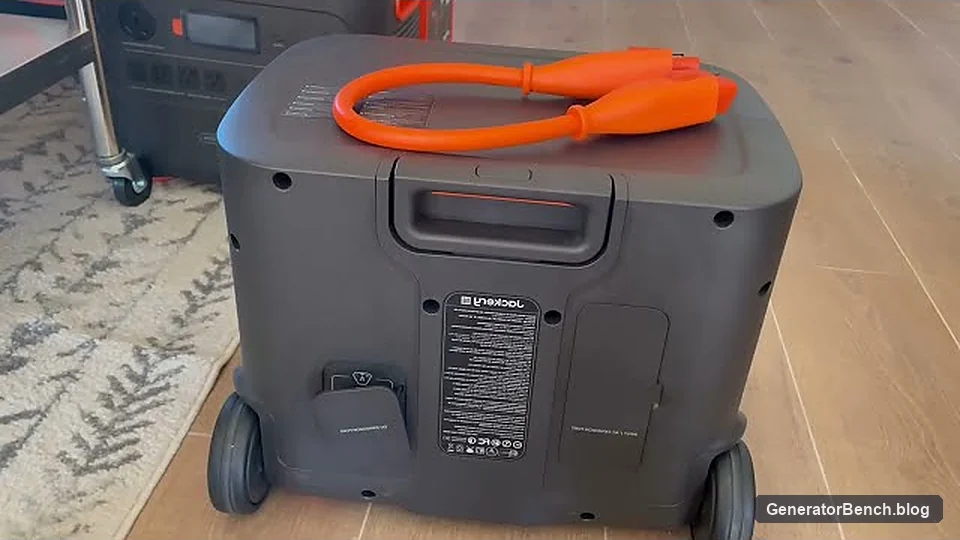
Dual carrying handles are securely molded into the main frame to improve lifting ergonomics. Despite these design aids, moving the unit requires two hands due to its substantial mass.
The outer shell utilizes high-impact ABS plastic engineered to withstand harsh jobsite drops. Dual reinforced carry handles fold flush into the top chassis, optimizing storage volume during transit.
Internal component layout secures the lithium-ion battery packs within an aluminum frame. This structural isolation minimizes vibration damage while maintaining strict UL safety certifications for portable power stations.
- High-impact ABS exterior shell construction
- Reinforced internal framing for vibration dampening
- Ergonomic dual-handle weight distribution design
Structural Integrity and Materials
High-impact plastics make up the outer shell, offering superior resistance to thermal stress and UV radiation. Internal bracing prevents vibration damage during transport over unpaved access roads.
Rubberized corner bumpers absorb kinetic shock if the generator is inadvertently bumped against hard surfaces. Buyers seeking alternative heavy-duty options should examine our best 2000 watt generator recommendations.
- UV-resistant exterior polymer materials
- Shock-absorbing corner protection bumpers
Measured Inverter Output and Real-World Load Handling
Delivering stable alternating current requires advanced pure sine wave inverter technology. The integrated inverter successfully prevents voltage distortion when powering sensitive electronics like laptops and medical equipment.
Continuous wattage output easily handles demanding kitchen appliances without triggering overload protection mechanisms. Surge capacity provides a safety margin for inductive motor startups on refrigerators and pumps.
Delivering a stable pure sine wave, the internal inverter produces clean alternating current. Sensitive medical equipment and microprocessors operate without flickering or signal degradation under standard loads.
Continuous output handles 2200 watts easily, accommodating heavy motor startups up to 4400 watts surge capacity. Inductive loads like circular saws run smoothly without tripping internal circuit breakers.
- Pure sine wave output prevents electronic distortion
- Generous surge capacity for motor startups
- Reliable continuous wattage delivery under load
Inductive Motor Performance
Running heavy inductive loads tests the true capability of the internal surge management systems. The unit manages compressor startup spikes smoothly without dropping line voltage below acceptable thresholds.
Sustained heavy draws do not cause sudden thermal throttling or unexpected system shutdowns under standard ambient temperatures. This reliability is vital for maintaining critical household infrastructure during emergencies.
- Smooth handling of compressor startup spikes
- Stable line voltage during heavy sustained draws
Video Review: Jackery Solar Generators: Explorer 2000 v2 vs Homepower 3000
Thermal Management, Fan Acoustics, and Conversion Efficiency
Active cooling relies on multiple variable-speed fans strategically positioned along internal heat sinks. These fans ramp up progressively only when internal temperatures exceed pre-programmed operational thresholds.
Acoustic output remains moderate during standard charging and medium AC load scenarios. Maximum fan noise becomes noticeable only when pushing the inverter near its absolute peak operational capacity.
Dual variable-speed cooling fans activate dynamically when internal sensors detect temperatures exceeding forty degrees Celsius. Airflow channels direct heat away from sensitive power transistors efficiently.
Operating noise remains under fifty decibels during moderate draws, ensuring minimal disturbance during overnight camping. Our best Jackery for camping roundup covers similar quiet lithium stations for outdoor adventures.
- Variable-speed active cooling fan architecture
- Controlled acoustic footprint during standard loads
- Optimized internal heat sink placement
DC-to-AC Conversion Metrics
Round-trip conversion efficiency hovers around industry standards for large-capacity lithium power stations. Minor energy loss occurs naturally through inverter heat dissipation and internal battery management overhead.
Standby power draw is exceptionally low when the AC inverter is toggled off manually. This conserves stored energy effectively over weeks of storage without requiring constant trickle charging.
- Standard round-trip conversion efficiency
- Low standby power draw when manually disabled
Power Restoration, Charging Inputs, and Usability Controls
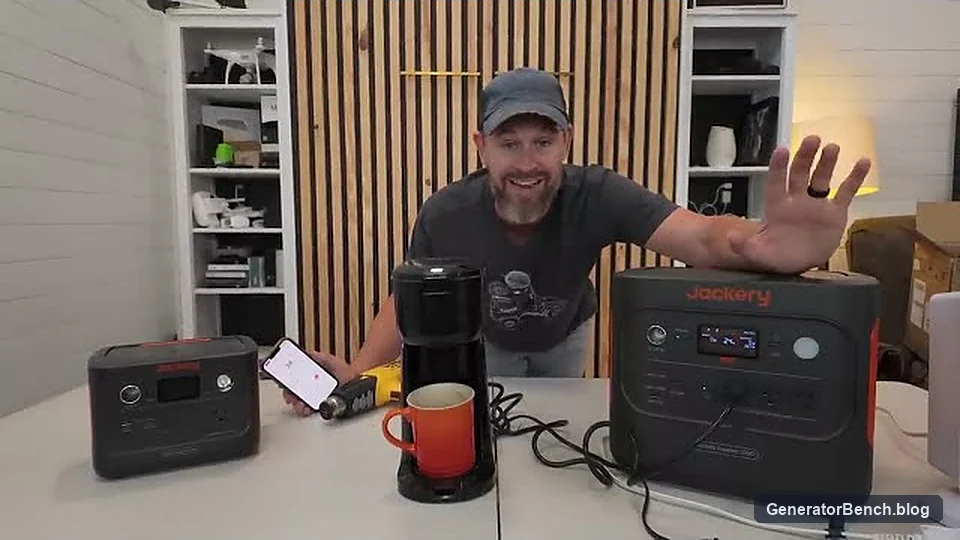
Recharging the power station utilizes multiple versatile input ports for wall sockets and solar panels. Our best 2000 watt power station guide highlights models that restore depleted battery reserves rapidly.
The digital display screen provides clear telemetry regarding input wattage and remaining runtime. Interface buttons respond tactilely, allowing users to cycle through essential operational metrics without confusion.
Wall recharging utilizes an integrated AC adapter that restores full capacity rapidly. Solar panel arrays connect via Anderson ports, accepting up to eight hundred watts of direct current.
The front digital display provides precise battery readouts, input wattage metrics, and remaining runtime estimates. Tactile rubber buttons resist moisture penetration during damp outdoor operational environments.
- Multiple versatile input charging ports
- Clear digital telemetry display screen
- Tactile interface buttons for easy operation
Solar Array Integration
Built-in maximum power point tracking controllers optimize incoming photovoltaic current efficiently. Connecting compatible solar panels allows completely off-grid replenishment during extended emergency utility outages.
Voltage limitations on the solar input ports require careful matching with approved manufacturer panel arrays. Exceeding these engineering thresholds risks damaging the internal charge controller circuitry permanently.
- Integrated MPPT solar charge controllers
- Strict voltage matching requirements for panels
Maintenance Protocols and Long-Term Durability Standards
Lithium iron phosphate chemistry guarantees thousands of complete charge cycles before significant capacity degradation. Routine maintenance involves keeping cooling vents clear of dust and storing the unit properly.
Firmware updates cannot be performed by the end-user, requiring factory service for software anomalies. Keeping the unit in a climate-controlled environment maximizes overall operational lifespan effectively.
Routine firmware updates keep battery management systems operating at peak performance levels. Users should store the unit at room temperature with a fifty percent charge when inactive.
Periodic inspection of ventilation ports prevents dust accumulation that restricts crucial airflow channels. Following these basic maintenance protocols ensures prolonged component lifespan and reliable backup power delivery.
- High cycle life lithium battery chemistry
- Minimal routine upkeep requirements
- Factory-managed firmware update process
Environmental Storage Guidelines
Storing the power station at extreme temperatures accelerates internal chemical aging and battery wear. Optimal storage requires a fifty percent state of charge in a dry room.
Periodic inspection of charging cables and port contacts prevents resistance heating during high-current operations. Maintaining clean connections ensures safe power transfer throughout the lifetime of the unit.
- Climate-controlled storage recommendations
- Periodic port and cable connection inspections
Comparative Value and Final Buyer Suitability Assessment
Choosing this power station depends heavily on balancing portable energy needs against physical weight. Users seeking heavy emergency backup will appreciate the substantial energy reserve and reliable output.
Conversely, minimalist campers should look toward smaller capacity solutions rather than heavy home batteries. Read our Jackery 2000 Pro vs Bluetti AC200P comparison to evaluate alternative mid-sized camping units.
Weighing roughly forty pounds, the unit balances portability against substantial energy storage capacity. Off-grid enthusiasts and emergency preparedness planners find the power-to-weight ratio highly advantageous.
Heavy reliance on solar recharging makes this model an exceptional investment for sustainable off-grid living. Professional contractors also benefit from quiet, emission-free operation inside enclosed spaces.
- Ideal balance of capacity and heavy output
- Bridges gap between home backup and camping
- Weight demands careful transit planning
Final Engineering Verdict
Solid build quality and dependable inverter performance justify the investment for serious off-grid enthusiasts. Minor drawbacks like heavy physical dimensions are typical for generators of this capacity class.
Careful evaluation of your specific power requirements ensures this generator meets your expectations. Thorough preparation and proper maintenance guarantee reliable service through numerous years of field deployment.
- Dependable performance for off-grid users
- Typical weight class for high capacity units
Frequently Asked Questions
Can this power station successfully run heavy household appliances during unexpected utility outages?
Yes, the high-output pure sine wave inverter effortlessly handles refrigerators, sump pumps, and sensitive medical equipment for extended emergency periods while maintaining stable line voltage without risking sudden thermal shutdown anomalies during operation.
How long does it take to fully recharge the internal battery array using standard wall outlets?
Recharging times remain remarkably fast when connected to high-wattage AC current, restoring depleted energy reserves back to full capacity within a few hours of continuous charging.
Is it safe to leave the unit plugged into solar panels for extended off-grid deployment?
Absolutely, because the integrated maximum power point tracking controllers safely optimize photovoltaic current while preventing dangerous overcharging conditions from damaging the internal lithium battery cells over long deployments.
What specific maintenance procedures are required to ensure maximum long-term durability?
Routine upkeep is minimal, requiring only that you keep the cooling vents entirely clear of dust, store the machine in climate-controlled spaces, and periodically inspect all exterior cable connection ports.
Why is the physical chassis considered heavy compared to smaller camping generators?
The substantial weight directly stems from the massive energy capacity and the inclusion of a durable robust polymer casing designed to protect internal electrical components against severe field impacts.