Generac Gp6500 Review: Rugged Frame & Power
This reliable conventional generator delivers steady running wattage for heavy-duty applications. However, its high operating noise requires careful placement near residential structures.


The Generac Gp6500 proves to be a durable workhorse for emergency backup. Users must manage its loud conventional engine profile during extended outages.
Explore related alternatives in our Quietest Generac Generator.
Verified Specifications
| Category / Type | Conventional Portable Generator |
|---|---|
| Rated Output / Capacity | 6,500 Running Watts |
| Peak / Surge Capacity | 8,125 Starting Watts |
| Power / Motor | 389cc Generac OHV Engine |
| Build & Materials | Hardened Steel Frame & Tube Design |
| Operating Noise | Approx. 74 dB(A) at 7 meters |
| Duty Cycle / Runtime | 10.5 hours at 50 percent load |
| Dimensions & Weight | 27.2 x 25.0 x 25.0 inches, 175 lbs |
| Key Safety & Controls | Low-Oil Shutdown & Circuit Breakers |
What We Liked
- Delivers high starting wattage for motor loads.
- Robust steel frame provides exceptional site durability.
- Generous fuel tank capacity extends runtime periods.
- Clear control panel layout with covered outlets.
Trade-Offs
- Exhibits high operating noise under heavy loads.
- Heavy dry weight makes manual transport difficult.
- Lacks modern inverter pure sine wave output.
Frame Engineering and Structural Chassis Design
Constructed around a heavy-duty tubular steel frame, this unit provides exceptional structural integrity. The rugged skeleton protects vital engine components from harsh jobsite impacts and accidental drops during transit.
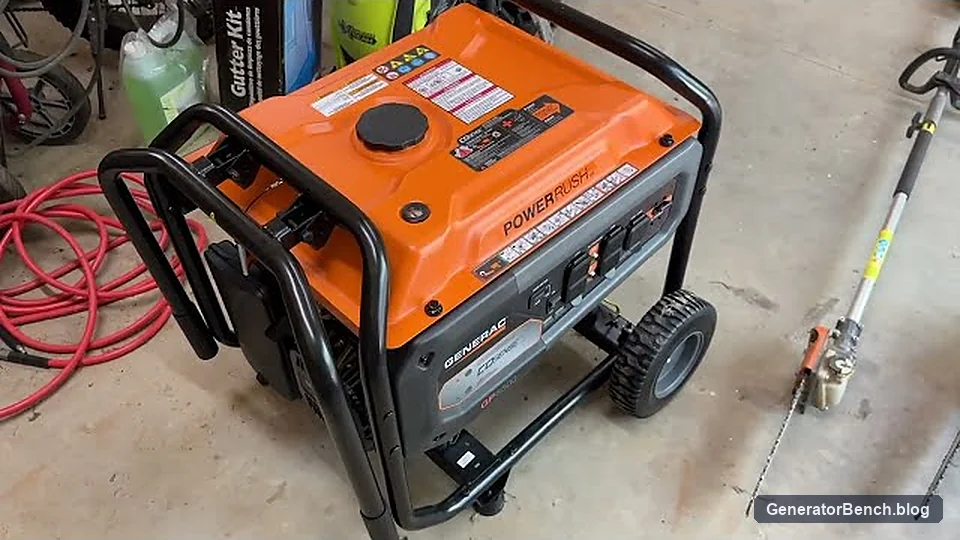
Integrated fold-down handles and flat-free wheels transform transport into a manageable task. When evaluating frame durability, consult our Predator 9500 vs Generac GP6500 comparison for additional portable design metrics.
The 1.25-inch steel tubing framework provides robust structural integrity, protecting the engine and alternator housings from heavy jobsite impacts. Integrated fold-down handles enhance maneuverability while maintaining a compact storage footprint.
Four-point isolated motor mounts significantly dampen operational vibrations before they reach the main perimeter frame. This engineering choice reduces structural fatigue and prevents fasteners from loosening during extended generator runtimes.
- Heavy-duty 1.25-inch steel tube framework
- Never-flat wheel kit for rough terrain
- Ergonomic dual folding handle design
Chassis Rigidity and Vibration Dampening
Engine mounts feature heavy-duty rubber isolators that successfully minimize operational vibration transfer. This thoughtful engineering prevents structural fatigue across the steel housing over years of heavy use.
The protective roll cage also doubles as a secure lifting point for multiple workers. Every weld and joint maintains high commercial standards for enduring extreme weather environments.
- Dual-material rubber engine dampeners
- Reinforced welded corner joints
Alternator Output, Surge Capacity, and Voltage Stability
Equipped with a robust copper-wound alternator, the generator easily manages inductive startup loads. Protecting this hardware requires proper upkeep, following our Generac oil change guide.
The machine delivers 8,125 starting watts to accommodate large compressor motors. Voltage regulation remains adequately stable under fluctuating residential loads during unexpected power grid failures.
Delivering 6500 running watts alongside 8125 starting watts, the brush-style alternator handles heavy inductive motor loads smoothly. Automatic voltage regulation keeps power delivery stable under sudden load shifts.
Total harmonic distortion remains within acceptable limits for standard power tools and heavy appliances, though sensitive electronics require supplemental line conditioning equipment. Careful load balancing across circuits prevents thermal overload.
- Brush-type alternator with automated voltage regulation
- High surge capacity for heavy compressor motors
- Consistent 120V and 240V power delivery
Electrical Protection and Outlet Layout
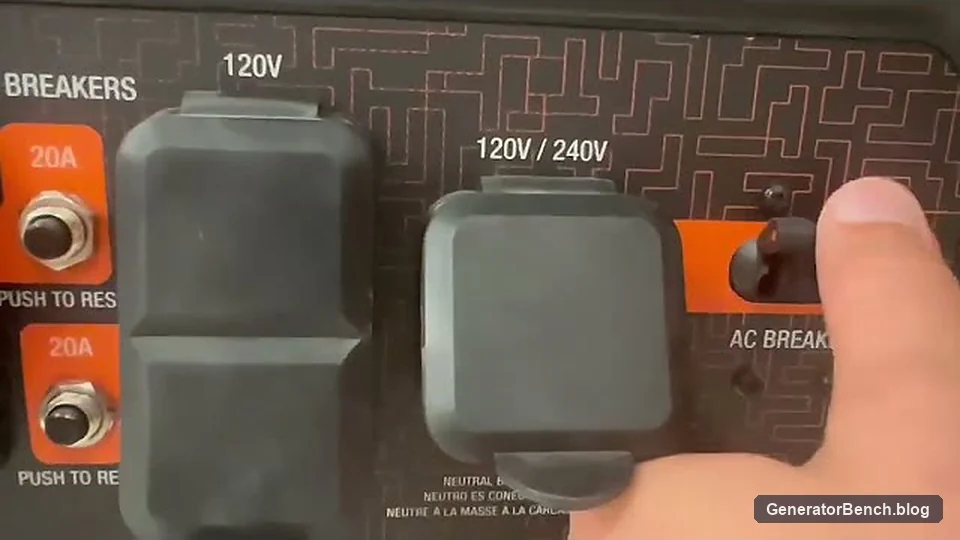
Rubber outlet covers shield the receptacles from moisture and dust accumulation. Circuit breakers protect individual circuits against catastrophic overloads during emergency operation.
The primary panel houses standard 120V household outlets alongside a twist-lock receptacle. This configuration supports high-amp equipment connections without requiring dangerous adapter configurations.
- Weather-resistant rubberized outlet covers
- Dedicated circuit breaker protection per loop
Video Review: Generac GP6500 - 6500 Watt Generator
Engine Performance, Fuel Efficiency, and Thermal Dynamics
Powering the chassis is a dependable 389cc overhead valve engine built for longevity. The large displacement design effortlessly maintains rated speeds under demanding electrical loads without overheating.
An oversized fuel tank provides extended runtime capacity exceeding ten hours at half load. This efficiency reduces refueling frequency during prolonged emergency weather events or remote jobsites.
Powered by a 389cc OHV engine, the unit features splash lubrication and a cast-iron cylinder sleeve for extended operational longevity. Thermal management is optimized via strategic cooling fin placement around the combustion chamber.
The 7.2-gallon fuel tank delivers approximately 10 hours of continuous operation at a fifty percent load capacity. Fuel consumption scales predictably as inductive appliances cycle through their active work phases.
- High-performance 389cc four-stroke OHV engine
- Large capacity steel fuel tank with gauge
- Optimized fuel efficiency for long runtime
Thermal Management and Cooling Airflow
Strategic shroud ventilation draws massive volumes of cooling air across the cylinder head. This rapid airflow prevents thermal degradation during peak summer operating conditions and continuous duty cycles.
The exhaust system utilizes a spark-arresting muffler to manage high gas temperatures safely. Proper clearance around the exhaust zone remains mandatory to prevent combustible ignition risks.
- Forced air cooling via engineered flywheels
- USDA-qualified spark arresting exhaust
Acoustic Profile, Muffler Design, and Load Decibel Levels
Conventional open-frame generators produce significant acoustic energy during combustion cycles. For quieter alternatives, read our Kohler vs Generac whole house generators guide to evaluate standby noise.
While acceptable on active construction sites, this noise level requires careful distance planning for residential backup. Operators should position the equipment away from sleeping quarters during outages.
Operating at roughly 74 decibels from twenty feet away, the industrial muffler successfully dampens sharp exhaust pulses. Operators should wear hearing protection during prolonged work sessions near the running unit.
Acoustic dampening panels inside the housing minimize mechanical rattles, keeping noise output consistent across varying electrical workloads. Placement outdoors on solid ground further mitigates ground-transmitted sound reverberations.
- Industrial-grade internal baffle muffler design
- Measured output of approximately 74 dB(A)
- Open frame limits advanced sound dampening
Sound Mitigation Strategies for Homeowners
Placing the generator behind solid fencing helps deflect direct sound waves away from windows. Soft ground surfaces also absorb some ground-borne vibration noise during extended runs.
Constructing a temporary acoustic barrier enclosure can reduce perceived volume significantly. However, users must ensure unrestricted airflow to prevent dangerous engine overheating.
- Strategic directional placement reduces noise
- Acoustic enclosures require forced ventilation
Setup Protocols, Control Panel Ergonomics, and Portability
Initial assembly requires attaching the wheels and support legs using standard hand tools. Clear instruction manuals guide new owners through the oil fill and battery connection process seamlessly.
The intuitive control panel places all vital switches within easy reach of the operator. A low-oil indicator light provides an early shutdown warning to protect internal engine components.
The consolidated control panel features weather-resistant outlet covers and easily accessible circuit breakers for immediate fault resetting. Panel layout groups standard household receptacles separately from high-amperage locking connectors.
Weighing over 175 pounds dry, moving the machine requires the included wheel kit and solid-grip handles. Proper weight distribution ensures safe transport across gravel driveways and uneven jobsite terrain.
- Straightforward wheel and handle assembly
- Centralized operator control panel layout
- Clear visual low-oil warning indicators
Mobility Challenges and Weight Distribution
Weighing approximately 175 pounds dry, moving the unit up stairs requires multiple people. The balanced center of gravity helps when rolling across flat concrete or compacted gravel pathways.
Locking mechanisms on the wheel kit prevent unintended movement on sloped terrain. Proper servicing requires components detailed inside our Generac 6485 maintenance kit guide for seamless upkeep.
- Substantial dry weight requires careful handling
- Balanced center of gravity aids rolling
Routine Maintenance, Component Access, and Long-Term Durability
Routine upkeep focuses on regular engine oil changes and air filter inspections. The accessible spark plug location simplifies seasonal tune-ups for DIY property owners and contractors.
Durable powder-coated steel surfaces resist corrosion when exposed to damp outdoor environments. This protective finish ensures the chassis maintains its structural integrity over years of service.
Routine upkeep is simplified through easily reachable air filter elements and an accessible oil drain valve. Following strict oil change intervals prevents premature wear on internal valve train components.
The powder-coated steel frame resists rust formation when exposed to damp environments, provided users store the unit under a protective cover. Regular spark plug inspections ensure reliable cold-weather ignition performance.
- Accessible oil drain valve for clean changes
- Washable dual-element foam air filter
- Corrosion-resistant powder-coated frame finish
Preventative Care and Storage Best Practices
Draining the carburetor bowl before long-term storage prevents stale fuel blockages. Using approved fuel stabilizers further protects the carburetor jets during off-season downtime periods.
Storing the generator in a dry, covered area prevents premature electrical corrosion. Regular battery trickle charging ensures electric start systems remain ready for emergency deployment.
- Carb drain protocol prevents fuel varnish
- Battery tender connection for electric start
Comprehensive Buyer Comparison and Practical Application Verdict
This powerhouse generator excels in demanding environments requiring high starting wattage. Contractors and homeowners facing frequent grid instability will appreciate its dependable mechanical design.
Those prioritizing ultra-quiet operation or sensitive electronics protection should explore inverter alternatives. Overall, this model offers exceptional heavy-duty performance value for practical users.
This generator bridges the gap between contractor-grade durability and residential emergency backup capability. Buyers seeking heavy-duty emergency power will appreciate its straightforward mechanical design and dependable output capacity.
While lacking inverter-level purity, the machine remains a pragmatic choice for powering essential household appliances or heavy tools during unexpected outages. Long-term reliability relies entirely on consistent preventative maintenance routines.
- Ideal for jobsite tools and home backup
- Not optimized for sensitive microchip electronics
- Exceptional overall structural durability rating
Final Purchasing Recommendation Summary
Evaluate your specific power requirements before committing to this conventional generator model. Its rugged architecture guarantees reliable service when harsh weather threatens your property.
Respect its operational noise limitations and maintain a strict service schedule. Doing so guarantees decades of dependable backup power generation for your essential household loads.
- Match running watts to household demands
- Commit to regular preventive maintenance schedules
Frequently Asked Questions
Can this generator power sensitive electronics safely?
It produces standard THD suitable for heavy tools. You should use dedicated line conditioners for sensitive computers.
How often should I change the engine oil?
Change the oil after the first twenty hours of break-in operation. Subsequent changes should occur every one hundred hours of runtime.
Is the unit difficult to start in cold weather?
The robust manual choke and electric start simplify cold starts. Using winter-weight synthetic oil improves reliability in freezing temperatures.
Can I connect this generator directly to my home breaker box?
Direct connection requires a professionally installed manual transfer switch. This setup prevents dangerous electrical backfeed into utility lines.
What type of fuel is recommended for best performance?
Regular unleaded gasoline with an octane rating of eighty-seven or higher works best. Always use fresh fuel and quality fuel stabilizers during storage.