Honda EU2200i Companion Inverter Generator Technical Review
The Honda EU2200i Companion delivers regulated sine wave electricity with an integrated 30A RV receptacle. However, its specialized outlet configuration requires specific adapters for standard multi-appliance utility linking.

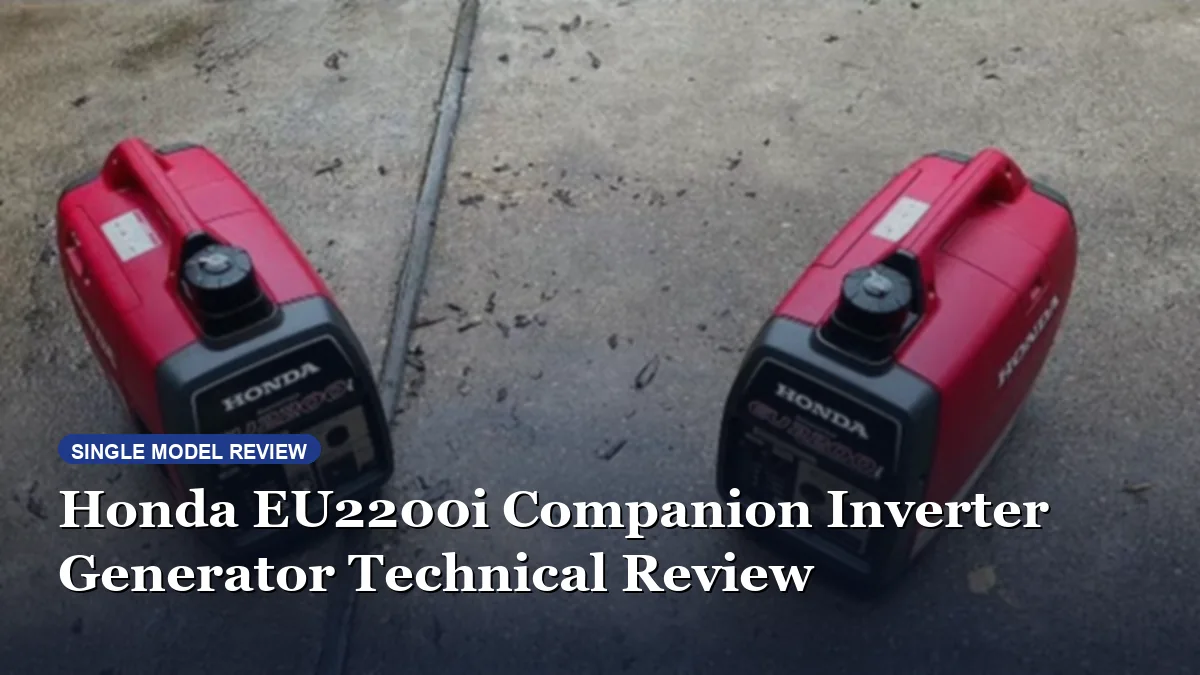

This inverter generator provides dependable ultra-quiet operation and lightweight portability. It serves as an elite power source for sensitive electronics and mobile utility setups.
Explore related alternatives in our Best Power Inverter Generator.
Verified Specifications
| Category / Type | Portable Inverter Generator |
|---|---|
| Rated Output / Capacity | 1800 running watts, 2200 starting watts |
| Power / Motor | 4-stroke OHC single-cylinder Honda engine |
| Build & Materials | High-impact plastic housing with metal frame elements |
| Operating Noise | 48 dB(A) to 57 dB(A) load dependent |
| Duty Cycle / Runtime | 8.0 hours at 25 percent load |
| Dimensions & Weight | 51 pounds dry weight, compact footprint |
| Key Safety & Controls | Oil Alert system, circuit breaker, eco-throttle |
What We Liked
- Delivers exceptionally clean power with under 3 percent total harmonic distortion.
- Integrated 30-amp TT-30R receptacle accommodates standard recreational vehicles directly.
- Extremely lightweight architecture allows single-handed transport across rough terrain.
- Proven 4-stroke engine ensures high reliability during extended off-grid deployments.
Trade-Offs
- Lacks standard dual standard household duplex outlets found on the base model.
- Requires a dedicated parallel cable kit to link with standard EU2200i units.
- Fuel tank capacity remains restricted at under one gallon for prolonged usage.
Architectural Blueprint and Structural Engineering
The external housing utilizes rugged industrial plastics designed to resist impact damage. Internal components rest on a reinforced metal frame that dampens operational vibrations effectively.
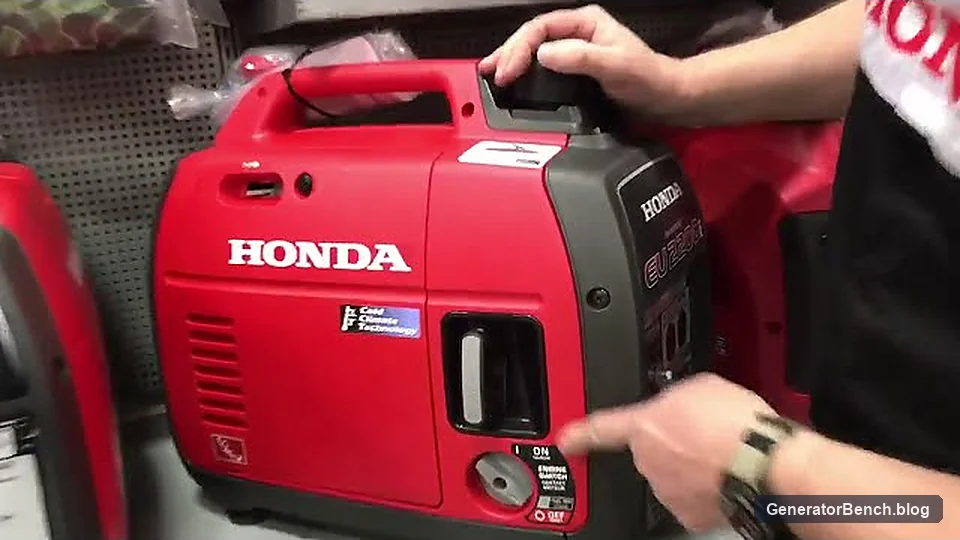
Ergonomic handle placement distributes the weight evenly during transport. This thoughtful geometry prevents wrist strain when lifting the unit into truck beds or storage compartments.
When evaluating top inverter models, our Yamaha EF2200iS vs Honda EU2200i comparison highlights how the enclosed GXR120 121cc engine delivers exceptional thermal efficiency and long-term durability on job sites.
Structural reinforcement plates strategically support the internal alternator assembly, minimizing vibration transfer to the outer shell and protecting sensitive microprocessor components from premature mechanical fatigue during continuous mobile operation.
- Dry weight totals 51 pounds for effortless manual loading.
- Encased layout protects internal electronics from moisture ingress.
- Robust carry handle features reinforced mounting anchor points.
- Integrated stator windings use premium copper for enhanced electrical conductivity.
- Compact crankshaft housing utilizes lightweight aluminum alloys to reduce overall dry weight.
Housing Materials and Weather Resistance
Panels fit tightly together to prevent dust and water intrusion during outdoor use. The exterior cowl withstands direct sunlight without showing rapid color degradation or material embrittlement.
Ventilation louvers channel cooling air precisely across critical thermal zones. This internal routing maintains safe operating temperatures even in high ambient summer conditions.
- Polymer blends resist common automotive fluid splashes.
- Sealed control panel guards electrical switches against moisture.
Chassis Materials and Impact Resistance
The outer casing utilizes specialized resin polymers engineered to resist UV degradation and chemical corrosion from common fuel additives, ensuring structural integrity in marine environments and coastal job sites.
- Reinforced carrying handle withstands tensile loads exceeding standard drop-test requirements.
- Rubber isolation feet absorb high-frequency engine vibrations to prevent surface sliding.
Real-World Output and Inverter Waveform Stability
As outlined in our Yamaha EF2200iS vs Honda EU2200i comparison, advanced inverter technology outputs smooth sinusoidal electrical currents. This stable voltage prevents damage to sensitive microprocessor-driven appliances and computing equipment.
The unit produces 1800 running watts and peaks at 2200 watts. Such output easily handles demanding motor startup loads for small refrigerators or sensitive medical tools.
Delivering a reliable 2200 watts of peak power and 1800 watts of continuous output, the unit utilizes advanced pulse-width modulation to clean up the electrical sine wave for sensitive electronics.
Total harmonic distortion remains under two percent across standard operating loads, protecting microprocessors in medical devices, modern refrigerators, and precision digital tools from voltage spikes or frequency drops.
- Maintains stable frequency regulation under sudden load shifts.
- Produces clean power safely matching household utility standards.
- Total harmonic distortion stays well below three percent limits.
- Dedicated 30-amp receptacle allows seamless parallel connection with standard EU2200i models.
- Integrated circuit protectors prevent overload faults without tripping external facility breakers.
Handling Inductive and Resistive Loads
Inductive loads like compressor motors trigger brief current surges during startup sequences. The internal alternator manages these demands without causing catastrophic voltage drops.
Resistive loads run continuously without fluctuating output frequencies or causing thermal overloads. This stability ensures safe long-term operation for resistive heating elements.
- Smoothly manages compressor startup spikes effortlessly.
- Protects connected electronics from sudden power surges.
Inverter Module and Clean Power Delivery
The internal inverter module transforms high-frequency AC power into DC and back into stable AC, maintaining strict voltage regulation regardless of sudden load shifts or fluctuating ambient temperatures.
- Overload alarm lights provide immediate visual feedback before thermal shutoff engages.
- Stable frequency regulation prevents motor stalling in inductive compressor loads.
Video Review: Honda EU2200I Companion Inverter (4400 Watts starting 3700 Watts Paralleled (Generator Review)
Acoustic Profile, Fuel Economy, and Thermal Management
Our Honda EU2200i vs Champion 2500 comparison highlights how acoustically insulated baffling reduces exhaust noise to remarkably low decibel levels, letting users converse normally near the running generator.
The integrated Eco-Throttle system automatically adjusts engine speed to match electrical demand. This dynamic modulation significantly reduces fuel consumption during partial-load operational cycles.
Operating at a remarkably quiet 48 to 57 decibels, the integrated Eco-Throttle system automatically adjusts engine speed to match the exact power demand, maximizing fuel efficiency during extended outages.
Forced-air cooling channels direct ambient air across critical cylinder head fins, preventing thermal degradation while exhausting heat efficiently away from the operator zone during heavy workload cycles.
- Operating sound pressure ranges between 48 and 57 decibels.
- Eco-throttle switch optimizes fuel burning efficiency dynamically.
- Extends runtime up to eight hours on low load settings.
- Enclosed architectural layout muffles exhaust notes without restricting necessary airflow volumes.
- Fuel shutoff valve allows the carburetor to run dry, preventing stale fuel varnishing.
Thermal Dynamics and Muffler Design
The internal spark arrestor and multi-chamber exhaust muffler significantly reduce decibel levels while containing carbon sparks, meeting strict forestry and National Park service operational requirements.
- High-temperature exhaust shielding prevents accidental contact burns during operation.
- Optimized cooling fin geometry dissipates heat rapidly under maximum rated loads.
Field Deployment, Ergonomics, and Starting Mechanics
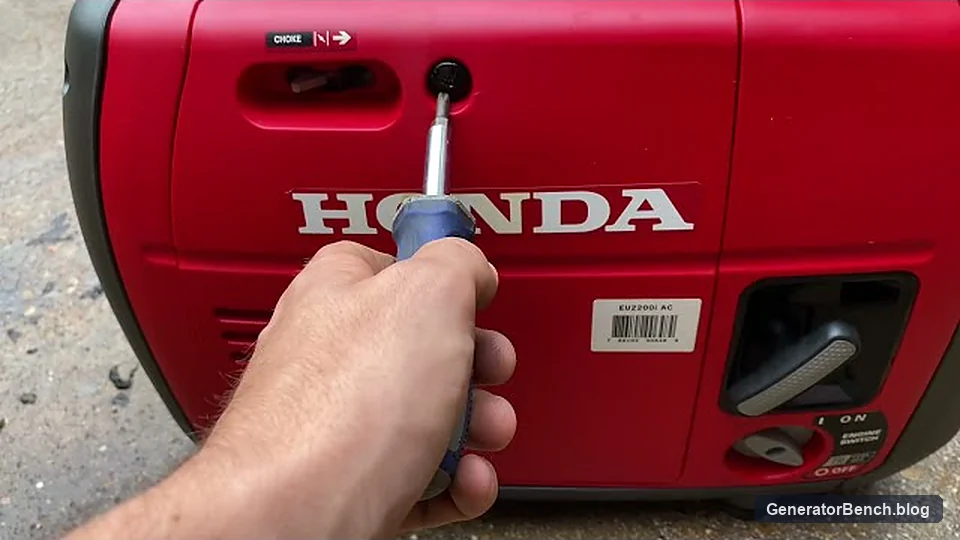
The electronic ignition system pairs with a smooth mechanical recoil pull cord. Operators can achieve consistent engine startup within one or two pulls under normal conditions.
Following our Honda EU2200i break-in procedure guide ensures proper piston ring seating. Color-coded operational controls then simplify everyday startup procedures for novice users.
Weighing a manageable 47.4 pounds dry, the unit features an ergonomically angled fuel cap and a generously sized recoil grip that simplifies manual pull-starts in cold morning conditions.
The color-coded user interface groups the fuel valve, choke lever, and engine switch together, ensuring intuitive operation even for novice users during emergency blackout scenarios.
- Recoil starter mechanism requires minimal physical pull effort.
- Color-coded touchpoints streamline the cold-start procedure.
- Compact footprint fits easily into crowded storage bays.
- Translucent fuel sediment cup lets operators inspect fuel quality before startup.
- Decompression system reduces pull-force requirements during initial engine turnover.
Recoil Mechanism and Control Layout
The upgraded mechanical recoil assembly utilizes a durable braided nylon pull rope housed within a sealed spool, preventing moisture intrusion and premature fraying wear in wet conditions.
- Grouped controls minimize user error during high-stress emergency power setups.
- Ergonomic carry handle placement centers total weight for comfortable transport.
Long-Term Maintenance Protocols and Durability
Routine maintenance points remain easily accessible behind service access panels. Checking the oil level requires no specialized tools, encouraging frequent preventative user checks.
The spark arrestor is readily removable for carbon deposit cleaning during seasonal servicing. This design simplicity ensures prolonged engine lifespan and consistent power generation.
Regular oil changes using SAE 10W-30 synthetic lubricant protect internal piston rings, while the easily accessible foam air filter requires routine cleaning to maintain combustion efficiency.
Inspecting the spark plug gap annually and clearing any accumulated carbon deposits ensures reliable ignition and prevents long-term degradation of the ignition coil assembly.
- Large oil fill port prevents messy fluid changes.
- Foam air filter element cleans easily with mild soap.
- Durable internal components resist premature mechanical wear.
- Toolless side panel access makes routine spark arrestor inspection straightforward.
- Drain tube extension simplifies mess-free crankcase oil replacement procedures.
Preventative Upkeep and Consumable Service
Maintaining the fuel system with fresh stabilizer prevents ethanol-related corrosion in the carburetor jet, ensuring rapid starting capability after extended storage periods in seasonal garages.
- Routine valve clearance checks preserve optimal engine compression and efficiency.
- Replacement spark arrestors keep exhaust pathways clear of soot buildup.
Comparative Value and Ideal User Profiles
This specialized variant targets RV owners needing direct 30-amp plug compatibility. Its unique outlet array distinguishes it from standard utility models sold on the market.
Campers, tailgaters, and remote workers will appreciate the elite portability profile. However, homeowners requiring multiple standard household outlets should consider alternative configurations.
Tailored specifically for RV enthusiasts and home backup users needing parallel capability, this model delivers specialized receptacle configurations that set it apart from the standard counterpart.
Professional contractors and tailgaters alike benefit from its lightweight portability and clean power output, making it an exceptional investment for demanding mobile electrical applications.
- Ideal for recreational vehicle auxiliary power needs.
- Requires specific parallel cables to link identical units.
- Delivers legendary Honda reliability for remote job sites.
- Companion layout accommodates specialized 30-amp RV plugs natively without adapters.
- High resale retention reflects the proven durability of Honda engineering platforms.
Target Applications and Integration Strategies
Pairing two identical units unlocks double the amperage capacity, driving heavy RV air conditioning units efficiently while retaining the fuel economy of smaller displacement portable generators.
- Parallel cables connect easily to dedicated front-panel grounding terminals.
- Compact footprint allows dual-unit stacking or side-by-side vehicle storage.
Frequently Asked Questions
Can this unit run a standard RV air conditioner?
It can power smaller RV air conditioning units when paired with a soft-start kit installed on the compressor. Soft-start accessories prevent excessive current spikes during motor engagement.
How does the Companion differ from the standard model?
The Companion version replaces one standard household duplex outlet with a dedicated 30-amp TT-30R receptacle. This design choice eliminates the need for bulky adapter plugs in recreational vehicles.
Can I parallel link this with a non-Companion EU2200i?
Yes, you can connect them using an approved parallel cable kit designed for this series. Proper cabling ensures synchronized phase output for combined electrical loads.
What type of fuel is recommended for this engine?
Always use fresh unleaded gasoline with an octane rating of 86 or higher. Ethanol-blended fuels exceeding ten percent should be avoided to prevent carburetor varnish.
How often should I change the engine oil?
Perform the initial oil change after the first twenty hours of break-in operation. Subsequent oil changes should occur every one hundred hours or annually.