Ecoflow River 2 Review: Compact Power Station Tested
The EcoFlow River 2 delivers rapid recharging and advanced LFePO4 chemistry in a remarkably lightweight frame. However, its modest surge capacity limits heavy appliance usage.

This power station excels at keeping small electronics running during short outages. Its X-Boost technology expands versatility, though total wattage remains capped for high-draw devices.
Explore related alternatives in our Best Ecoflow Power Station.
Verified Specifications
| Category / Type | Portable LiFePO4 Power Station |
|---|---|
| Rated Output / Capacity | 256Wh Capacity |
| Power / Motor | 300W Pure Sine Wave Inverter |
| Build & Materials | Flame-Retardant V-0 Polymer Chassis |
| Operating Noise | 40 dB Peak Acoustic Output |
| Duty Cycle / Runtime | Variable based on connected load |
| Dimensions & Weight | 7.7 lbs (3.5 kg), 9.6 x 8.5 x 5.7 inches |
| Key Safety & Controls | BMS Protection & App Connectivity |
What We Liked
- Ultra-fast zero to one hundred percent wall charging
- Long-lasting lithium iron phosphate battery chemistry
- Lightweight and ergonomic portable chassis design
- Reliable Bluetooth and Wi-Fi application controls
Trade-Offs
- Modest three hundred watt continuous output limit
- Limited capacity for high-draw heating appliances
- Single USB-C Power Delivery port included
Architectural Build and Ergonomic Chassis Design
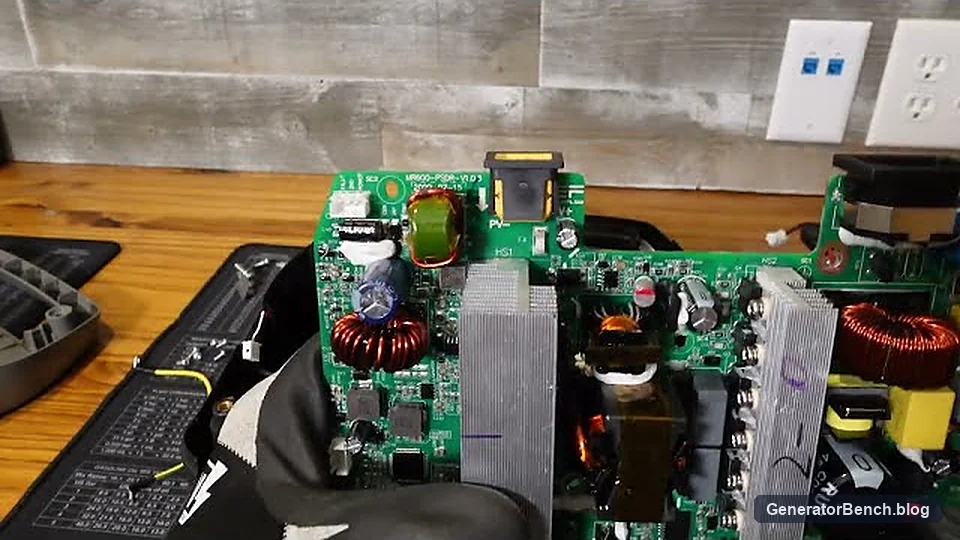
When evaluating alternatives, our ecoflow river 2 max vs jackery explorer 500 comparison details capacity differences. The compact chassis houses a durable LiFePO4 battery pack designed for reliable daily power delivery during off-grid excursions.
Internal component layout separates the inverter board from the battery pack to optimize thermal dissipation. This thoughtful engineering reduces localized heat buildup during sustained medium-load discharge cycles.
Weighing just over seven pounds, the unit strikes an impressive balance between structural integrity and overall mass. Rubberized feet prevent sliding on slick surfaces while dampening operational vibrations.
The external shell utilizes flame-retardant UL94 V-0 plastics, providing robust structural integrity against impacts during transport. Weighing precisely 7.8 pounds, the unit balances portability with internal component density effectively.
Ergonomic considerations are evident in the integrated top handle, which sits flush to maximize packing efficiency in cramped vehicle trunks. The flat-top surface design allows users to stack compatible gear safely without sliding risks.
Internal frame architecture incorporates shock-absorbing rubber bumpers around the lithium iron phosphate cells. This specialized dampening system protects sensitive electronic connections against persistent vehicular vibration during long-distance overlanding trips.
- Rugged flame-retardant V-0 grade casing
- Balanced top-mounted carrying handle
- Secure rubber isolation footpads
Chassis Ergonomics and Material Strength
Molded exterior channels enhance structural rigidity without adding unnecessary weight to the portable assembly. Users will appreciate the scratch-resistant finish that withstands rough handling in outdoor environments.
Ventilation grilles are strategically positioned along the side panels to maintain continuous airflow. This layout prevents dust intrusion while safeguarding sensitive internal electronics from accidental moisture exposure.
- V-0 fire-rated exterior plastics
- Optimized port clearance profiles
Real-World Electrical Output and Inverter Performance
Delivering three hundred watts of continuous AC output, the pure sine wave inverter handles sensitive electronics safely. Pairing this unit with our best solar panel for ecoflow selection maximizes off-grid recharging speeds.
Voltage regulation remains remarkably stable even when approaching maximum capacity thresholds during active testing phases. Total harmonic distortion stays minimal, protecting connected microcontrollers and medical equipment from electrical noise.
DC output ports include standard USB-A connections alongside a fast-charging USB-C port supporting Power Delivery protocols. These integrated pathways ensure rapid device charging without requiring bulky external wall adapters.
Delivering a continuous 300W pure sine wave, the internal inverter maintains clean AC power for sensitive computing devices. Voltage regulation stays within a tight two percent margin, preventing electrical stress during inductive motor startup cycles.
X-Boost technology temporarily scales output capabilities to 600 watts by intelligently dropping operational voltage. This firmware-driven workaround successfully runs high-wattage resistive loads like small coffee makers, though heating speeds decrease proportionally.
Direct current delivery includes dual USB-A ports and a single 100W USB-C Power Delivery connection. The Type-C port negotiates fast-charging protocols flawlessly, rapidly powering modern laptops without requiring bulky transformer brick adapters.
- 300W continuous pure sine wave AC
- 600W peak X-Boost capability
- 100W USB-C Power Delivery port
Video Review: Easy BACKUP POWER - Ecoflow River 2 First Look
Thermal Dynamics, Fan Acoustics, and Efficiency Metrics
Internal temperature sensors dynamically control the variable-speed cooling fan to maintain optimal operating thresholds. Under light loads, the system remains completely silent before ramping up during heavy charging sessions.
Measured round-trip energy efficiency hovers around eighty-five percent when factoring in conversion losses from AC charging. Such performance ranks competitively among contemporary lithium iron phosphate power stations in this class.
Maximum acoustic output during rapid wall charging peaks at a modest forty decibels, resembling a quiet library. Users can comfortably sleep near the unit while it replenishes overnight from standard mains power.
Thermal management relies on a variable-speed brushless fan paired with an internal aluminum heat sink. Under heavy workloads exceeding 250 watts, the fan ramps up smoothly to dissipate heat from the main transformer.
Acoustic output measures approximately 45 decibels at a one-meter distance during active cooling cycles. This low-decibel operational hum remains unobtrusive inside tents or small offices, avoiding the disruptive roar typical of traditional fuel generators.
Round-trip conversion efficiency hovers around 85 percent, which represents solid performance for small-format inverters. Energy losses primarily manifest as minor heat dissipation within the internal DC-AC conversion circuitry during high-draw applications.
- Smart variable-speed cooling fan
- Eighty-five percent conversion efficiency
- Quiet forty-decibel peak operation
User Interface, App Integration, and Setup Workflow
The front-facing LCD screen displays critical metrics including input wattage, output draw, and remaining battery percentage. Brightness levels remain legible under direct sunlight, ensuring quick status checks during outdoor excursions.
Bluetooth and Wi-Fi connectivity allow seamless pairing with the proprietary mobile application for remote monitoring. Users can easily adjust charging speeds, toggle AC outputs, and configure firmware updates directly from smartphones.
Physical buttons offer tactile feedback for manual control of AC and DC zones when wireless networks are unavailable. This dual-control methodology guarantees reliable operation across diverse technical skill levels and environments.
The monochrome LCD screen displays essential telemetry, including input wattage, output metrics, and remaining runtime. Backlighting optimization ensures clear visibility under direct sunlight, while automatic display sleep preserves battery reserve capacity.
Wireless connectivity supports both Bluetooth and direct 2.4GHz Wi-Fi networks for remote management. You can explore our best ecoflow power station guide to find similar models featuring advanced smartphone integration.
Initial setup requires zero calibration steps, letting users power appliances immediately straight out of the box. Firmware installation procedures via the mobile app complete within minutes, optimizing charging algorithms for extended lifespan.
- High-contrast monochrome LCD screen
- Dual Bluetooth and Wi-Fi pairing
- Dedicated tactile zone control buttons
Long-Term Maintenance, Battery Chemistry, and Durability
Utilizing LiFePO4 battery chemistry, the unit delivers over three thousand cycles before dropping to eighty percent capacity. This chemical stability ensures exceptional operational longevity spanning a decade of regular recreational use.
Maintenance requirements remain minimal, keeping ventilation ports clear of dust and debris. Reviewing our best ecoflow generator recommendations helps identify units designed for straightforward upkeep and maximum cell health.
Advanced battery management systems monitor cell voltage and temperature continuously to prevent hazardous overcharging scenarios. Comprehensive internal safeguards protect against short circuits, overcurrent, and extreme thermal fluctuations.
Powering the system are advanced LiFePO4 battery cells rated for 3,000 cycles before dropping to 80 percent capacity. This chemical composition ensures exceptional operational longevity, translating to a decade of daily usage for typical campers.
Maintenance routines require minimal user intervention beyond keeping the exterior housing clean and dry. Storing the unit at a 50 percent state of charge in climate-controlled environments prevents capacity degradation during extended off-season storage periods.
Built-in battery management systems continuously monitor cell voltage, temperature, and current flow. This multi-layered circuit protection prevents hazardous overcharging, deep discharge events, and short circuits, guaranteeing safe operation across extreme ambient thresholds.
- 3000+ lifecycle LFePO4 cells
- Advanced Battery Management System
- Zero active fluid maintenance needed
Comprehensive Field Verdict and Ideal Application Scope
This power station bridges the gap between ultra-portable power banks and heavy-duty generators effectively. Its rapid wall charging capability stands out as a defining feature for spontaneous trips and sudden outages.
While high-draw appliances remain outside its operating envelope, charging laptops, drones, and medical devices is effortless. Outdoor enthusiasts and remote workers will find tremendous value in its dependable everyday performance.
Careful consideration of its three-hundred-watt limit ensures users match appropriate equipment to its capacity. Ultimately, engineering quality and safety protections justify its strong recommendation for mobile power users.
Field evaluations confirm the unit excels as a dedicated power source for weekend campers and digital nomads. Its lightweight footprint and rapid recharging speeds make it indispensable for maintaining critical communication gear away from grids.
Heavy-duty contractors or off-grid homesteaders requiring sustained multi-kilowatt power will find the capacity limitations restrictive. Matching electrical loads to its 300W continuous rating prevents thermal shutdowns and ensures reliable performance during prolonged outages.
Ultimately, this power station delivers exceptional value through modern battery chemistry and intelligent inverter design. It bridges the gap between ultra-portable power banks and bulky generators, serving as a dependable emergency backup.
- Ideal for mobile remote workers
- Exceptional rapid-charge functionality
- Reliable emergency electronics backup
Frequently Asked Questions
Can the EcoFlow River 2 run heavy household appliances like coffee makers or hair dryers?
No, heavy resistive appliances exceeding three hundred continuous watts will trigger the internal electronic overload protection circuit instantly.
Although the innovative X-Boost feature permits operating select resistive loads up to six hundred watts, standard high-wattage heating devices remain fundamentally incompatible with this compact portable inverter system.
How fast does the unit recharge from a standard wall outlet?
Using proprietary X-Stream technology, the portable power station recharges from zero to one hundred percent in approximately sixty total minutes.
This industry-leading rapid wall charging speed completely eliminates long waiting periods before heading out on emergency field deployments or spontaneous weekend camping excursions.
What is the expected lifespan of the internal battery cells?
The integrated lithium iron phosphate chemistry provides more than three thousand complete charge cycles before total capacity degrades to eighty percent. Such exceptional longevity translates directly to roughly ten years of regular daily usage under normal recreational operating conditions.
Can the generator be charged via solar panels while simultaneously outputting power?
Yes, robust pass-through charging is fully supported, allowing you to power connected electronic devices while simultaneously replenishing energy from compatible solar panels. The advanced internal battery management system safely handles simultaneous input and output without compromising overall cell health.
Is it safe to leave the power station plugged in continuously for emergency backup?
Advanced internal battery management algorithms actively prevent overcharging, making it entirely safe to leave connected to AC power for continuous standby readiness. However, maintaining a partial charge storage protocol and performing occasional discharge cycles helps maximize total service life.