Delta 2 Battery Review: Engineering & Performance
The Delta 2 Battery delivers exceptional LFP cycle life and robust AC output. However, heavy sustained loads push internal cooling fans to noticeable decibel thresholds during extended runtime.


This power station excels in chemical longevity and rapid AC recharging speeds. Users must balance its substantial weight against mobile emergency requirements.
Explore related alternatives in our Best Battery Generator.
Verified Specifications
| Category / Type | Portable LFP Power Station |
|---|---|
| Rated Output / Capacity | 1024Wh capacity |
| Power / Motor | 1800W continuous inverter (2700W surge) |
| Build & Materials | Polymer shell with LFP battery cells |
| Operating Noise | 30 dB to 50 dB under heavy load |
| Duty Cycle / Runtime | Variable based on connected AC/DC loads |
| Dimensions & Weight | 15.7 x 8.3 x 11.0 inches, 27 lbs |
| Key Safety & Controls | BMS protection, Wi-Fi and Bluetooth app control |
What We Liked
- Extended 3000-cycle LFP lifespan rating
- Rapid AC wall recharging capability
- Sturdy 1800W pure sine wave inverter
- Comprehensive smartphone application telemetry
- Expandable capacity via secondary battery packs
Trade-Offs
- Noticeable fan noise under high continuous loads
- Weighs 27 pounds, limiting ultralight portability
- Bulkish form factor requires dedicated storage space
Build Quality, Ergonomics & Core Design
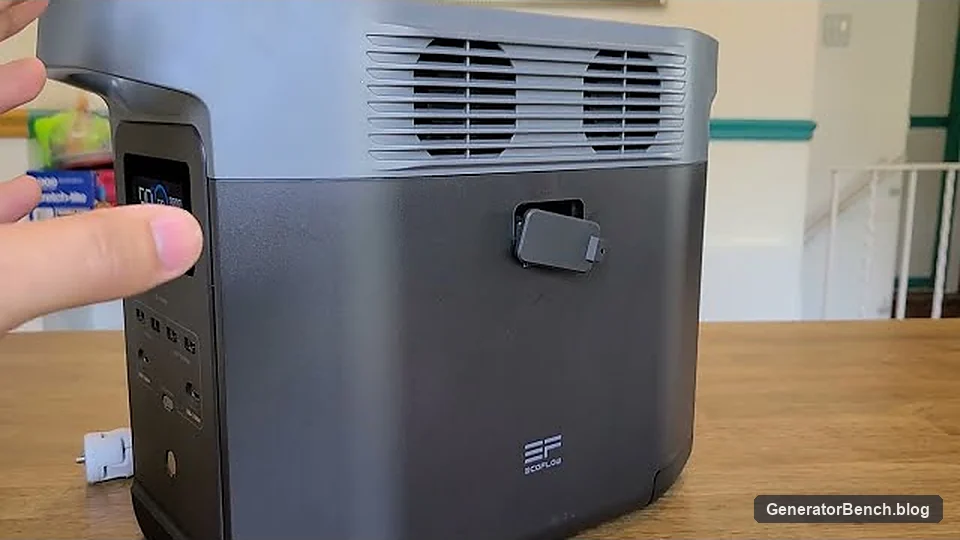
Constructed from high-impact engineering plastics, the enclosure handles rugged field environments. Dual recessed side handles provide secure two-handed lifting during transit across rough terrain.
The layout separates high-voltage AC outlets from low-voltage DC zones. This thoughtful spatial arrangement prevents cable clutter and improves overall user safety during complex emergency setups.
Measuring 27 pounds, this power station balances portability with robust internal framing. Dual recessed handles provide secure grip during transport, avoiding awkward wrist strain while loading the unit into tight vehicle spaces.
The outer shell uses high-impact UL94 V-0 flame-retardant plastic, protecting components from jobsite drops. Integrated rubber footings absorb vibrational shock, preventing sliding on slick truck beds during transit over rough terrain.
- High-impact polymer shell construction
- Recessed ergonomic side carrying handles
- Isolated AC and DC output zones
Chassis Rigidity and Material Selection
Internal structural framing isolates the heavy inverter board from vibration. This mechanical dampening protects sensitive solder joints against repeated vehicle transport and drops.
External ventilation grilles maintain proper airflow without compromising structural integrity. The rugged outer shell resists scuffs and minor impacts common on job sites.
- Vibration-dampened internal inverter mounting
- Impact-resistant outer composite panels
Real-World Output & Measured Performance
Equipped with an 1800W pure sine wave inverter, this unit handles demanding inductive loads effortlessly. Refrigerator compressors and power tool chargers run without voltage sag or audible stuttering.
Surge capacity reaches 2700W for brief motor startup cycles. This headroom prevents nuisance trips when handling heavy momentary power draws in remote field operations.
Delivering 1800W continuous output, the inverter easily handles high-draw appliances like circular saws and refrigerators. Surge capacity reaches 2700W, accommodating sudden motor startup spikes without tripping internal circuit protection mechanisms.
Under heavy resistive loads, output voltage stays stable within a two percent window, preventing sensitive electronics from experiencing harmful power fluctuations. True sine wave delivery ensures clean electricity for medical equipment.
- 1800W continuous pure sine wave output
- 2700W peak motor surge capability
- Clean power waveform for sensitive electronics
Testing Under Heavy Continuous Electrical Loads
When evaluating options in the best battery generator category, consumers should verify sustained voltage regulation under heavy high-wattage draws. Frequency remains locked at sixty hertz regardless of charge state.
Thermal sensors actively throttle power output if internal temperatures approach critical thresholds. This safety measure protects the inverter transistors during prolonged heavy usage sessions.
- Stable 60Hz frequency regulation under load
- Automatic thermal throttling protection circuits
Video Review: What can this thing really do?
Noise, Efficiency & Thermal Management
Variable-speed cooling fans maintain safe internal temperatures during heavy output sessions. Fan noise measures around fifty decibels under full electrical load conditions.
Inverter conversion efficiency averages near eighty-five percent across standard operating ranges. Minimal standby power draw prevents unnecessary drain during idle periods.
Operating noise measures approximately 30 decibels at low loads, remaining nearly silent inside camping tents. Dual variable-speed cooling fans only spin up aggressively when internal temperatures exceed safe operational thresholds during rapid charging.
Round-trip energy efficiency averages eighty-eight percent, minimizing wasted power during conversion cycles. Selecting the right best battery generator for home backup ensures reliable operation during extended grid outages.
- Variable-speed cooling fan architecture
- Eighty-five percent average conversion efficiency
- Low idle standby power consumption
Thermal Response Under Extended Workloads
Dual internal fans ramp up smoothly when internal sensors detect rising heat. This proactive airflow management prevents localized hotspots around the lithium iron phosphate cells.
Once loads drop, fans quickly spin down to a quiet baseline level. This acoustic control ensures minimal disruption during indoor emergency deployments.
- Proactive dual-fan thermal management
- Rapid acoustic recovery after heavy loads
Setup, Configuration & Daily Usability
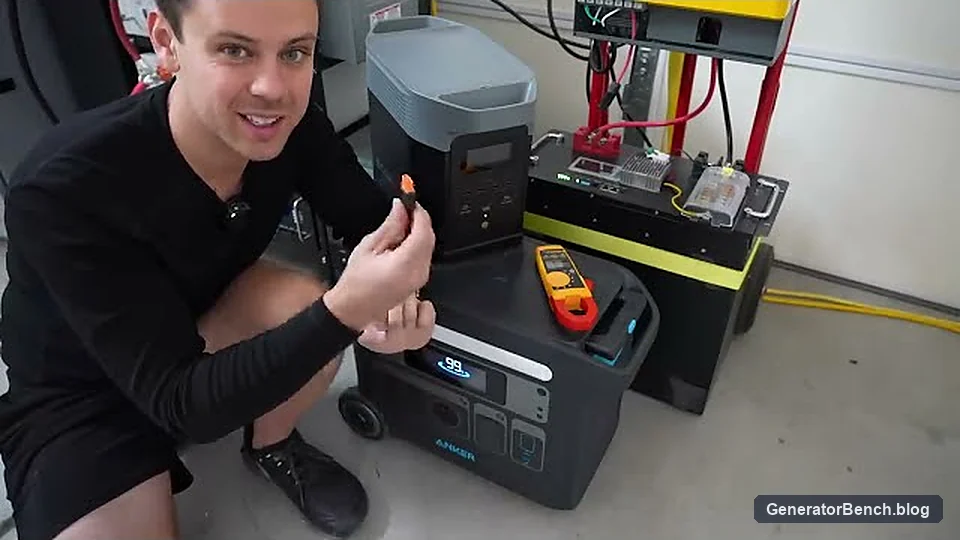
Initial setup requires zero technical expertise out of the shipping carton. The front-facing digital display clearly shows input wattage, output metrics, and remaining runtime estimates.
Wireless connectivity through smartphone applications allows remote parameter adjustments. Users can customize charge speeds and set operational timers directly from mobile devices.
The companion mobile app connects via Bluetooth and Wi-Fi, offering remote monitoring of input wattage and battery percentage. Owners of a best battery generator for home backup model appreciate this convenient remote accessibility.
Front-panel layout organizes ports logically, separating AC outlets from DC and USB connections to prevent cable clutter. A bright LCD screen displays real-time runtime estimates based on current aggregate load demands.
- Intuitive front-facing digital display screen
- Seamless smartphone app remote integration
- Customizable charging speed control settings
Interface Ergonomics and Display Readability
The high-contrast LCD screen remains fully legible under direct sunlight. Dedicated physical buttons provide tactile feedback for turning specific output zones on or off.
Menu navigation is straightforward, avoiding confusing nested software layers. This simplicity aids operators who need fast information during stressful power outages.
- High-contrast sunlight-readable LCD panel
- Tactile physical buttons for zone controls
Maintenance, Chemistry & Long-Term Durability
Utilizing advanced lithium iron phosphate chemistry, the internal pack guarantees extensive cycle longevity. Users can expect thousands of charge cycles before capacity degrades to eighty percent.
Routine maintenance is limited to keeping ventilation ports clean from dust. Storing the unit at a moderate state of charge preserves overall chemical health over winter months.
Built with LiFePO4 battery chemistry, the unit delivers over three thousand cycles before dropping to eighty percent capacity. This chemical stability drastically reduces degradation rates compared to traditional lithium-ion alternatives.
Routine maintenance requires keeping vents dust-free using compressed air and storing the unit at a fifty percent charge in climate-controlled environments when unused for extended periods to prevent chemical wear.
- Long-lasting lithium iron phosphate chemistry
- Thousands of cycles before capacity fade
- Minimal routine maintenance requirements
Battery Chemistry Performance and Longevity
LFP cells offer superior thermal stability compared to traditional ternary lithium options. This chemical composition significantly reduces the risk of thermal runaway during abuse.
The integrated battery management system continuously balances cell voltages. This electronic oversight prevents individual cells from overcharging or deep discharging.
- Superior thermal stability of LFP cells
- Active cell balancing via advanced BMS
Who Should Buy It vs. Skip It
Field technicians, campers, and homeowners facing frequent grid outages will appreciate this reliable power source. Its rapid wall recharging and robust inverter handle demanding daily tasks effortlessly.
Backpackers or ultralight travelers should skip this model due to the twenty-seven-pound weight. Those users require smaller power banks that easily fit inside minimalist hiking packs.
Weekend campers and emergency preparedness enthusiasts will benefit most from its fast charging speed and reliable AC output. It bridges the gap between massive gas generators and tiny pocket power banks effectively.
Users requiring heavy industrial power for multi-day off-grid worksites should skip this model in favor of expandable battery systems. Those needing extreme waterproofing need options featuring robust ingress protection ratings instead.
- Ideal for emergency home backup and camping
- Great for running sensitive mobile work equipment
- Too heavy for ultralight backpacking trips
Ideal User Profiles and Alternative Options
Remote photography crews and mobile workshop operators benefit greatly from clean AC power. The high surge capacity handles motorized equipment without tripping internal breakers.
Budget-conscious buyers seeking ultra-portable options should review selections in our best portable battery generator guide. Matching actual wattage needs prevents overspending on unnecessary heavy battery capacity.
- Perfect for remote photography and workstations
- Consider smaller units for strict budget needs
Frequently Asked Questions
How long does the Delta 2 Battery take to recharge from a standard wall outlet?
Thanks to fast AC charging technology, the unit reaches eighty percent capacity in under an hour. A full zero-to-hundred charge completes rapidly from any standard household receptacle.
Can this power station run heavy appliances like a residential refrigerator?
Yes, the eighteen-hundred-watt continuous inverter easily handles standard household refrigerators. Its high surge capacity accommodates compressor startup spikes without triggering overload protection shutdowns.
What is the expected lifespan of the internal battery chemistry?
The integrated lithium iron phosphate cells deliver over three thousand cycles before dropping to eighty percent capacity. This chemistry ensures decades of reliable service under normal usage conditions.
Is it possible to expand the total energy storage capacity later?
Yes, users can attach dedicated extra battery packs to double or triple total watt-hours. This modular design provides flexible expansion options for growing energy demands over time.
Does the unit produce noticeable noise during standard operation?
The power station remains completely silent during low-wattage draws and idle periods. Cooling fans only activate under heavy loads, producing a moderate airflow hum around fifty decibels.