Champion 7500 Dual Fuel Review: Engineering Deep Dive
This dual-fuel generator delivers robust power output and flexible fuel options. However, its heavy physical footprint demands careful placement during routine operations.

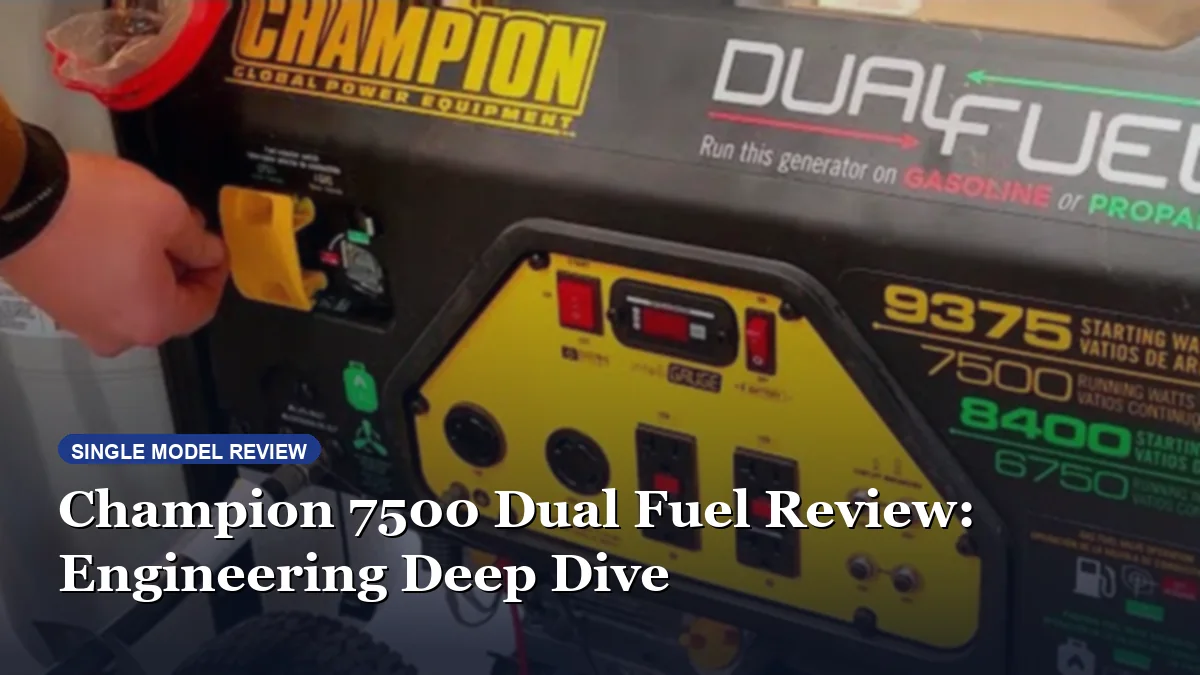

The Champion 7500 Dual Fuel excels at delivering dependable standby wattage and clean operation. Dual-fuel versatility makes it a top-tier choice for emergency preparedness.
Explore related alternatives in our Best 7500 Watt Dual Fuel Generator.
Verified Specifications
| Category / Type | Dual Fuel Portable Generator |
|---|---|
| Rated Output / Capacity | 7500 Running / 9375 Starting Watts |
| Power / Motor | 439cc Champion Single-Cylinder 4-Stroke |
| Build & Materials | Heavy-Duty Steel Frame with Wheel Kit |
| Operating Noise | 74 dB at 23 Feet Operating Load |
| Duty Cycle / Runtime | Up to 8 Hours on Gasoline at 50% Load |
| Dimensions & Weight | 27.8L x 28.7W x 26.0H Inches, 203 lbs |
| Key Safety & Controls | Low Oil Shut-Off, Volt Guard Surge Protector |
What We Liked
- Seamless fuel switching between gasoline and propane without shutting down
- Reliable electric pushbutton start backed by a dependable backup recoil cord
- Generous surge capacity easily handles heavy inductive motor loads
- Comprehensive control panel layout with covered weather-resistant outlets
- Sturdy integrated wheel kit simplifies moving the heavy frame across terrain
Trade-Offs
- Noticeable operating noise level requires distant placement from living spaces
- Substantial physical weight makes vehicle loading a multi-person task
- Propane fuel operation delivers slightly reduced running wattage than gasoline
Chassis Construction, Ergonomics, and Structural Design
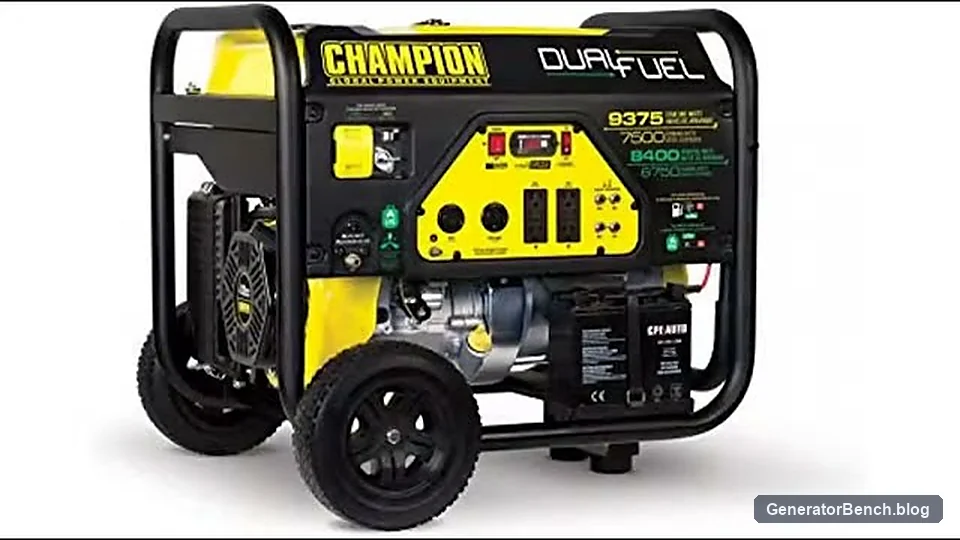
Engineering a portable power station requires balancing rugged durability with manageable mobility. This heavy-duty tubular steel frame protects internal engine components while providing solid structural integrity.
Ergonomic layout choices position the control panel for intuitive operation during unexpected power outages. Recessed circuit breakers and rubberized outlet covers defend electrical interfaces against driving rain.
Built around a 1-inch tubular steel frame, this generator fits nicely into our best dual fuel inverter generator for home backup lineup by balancing durability with transport dimensions.
Maneuverability relies on never-flat wheels measuring 9.5 inches in diameter. These solid rubber tires easily traverse gravel, mud, and uneven terrain without risking unexpected punctures during critical emergency deployments.
- Powder-coated tubular steel roll cage resists outdoor corrosion effectively.
- Never-flat solid tires eliminate maintenance worries on rough jobsite terrain.
- Fold-saving dual drop-down handles optimize storage space inside compact garages.
- Powder-coated surfaces protect the heavy metallic frame elements against corrosive coastal moisture and abrasive handling damage during rigorous daily transport across rugged outdoor jobsite environments safely.
- Rubber mounting feet isolate harsh engine vibrations effectively, preventing excessive walking across concrete pads while minimizing structural wear over extended heavy-duty operating cycles.
Control Panel Engineering and Interface Layout
Operator safety and swift accessibility drive the front-facing control panel architecture. Clearly labeled circuit breakers isolate electrical surges instantly to protect plugged-in electronics.
The integrated digital hour meter tracks cumulative running time for scheduled maintenance intervals. Smart indicator lights warn users promptly regarding low oil pressure conditions.
- VFT meter displays real-time voltage, frequency, and operating hours.
- Dedicated locking receptacles support heavy 240-volt home transfer switches.
Real-World Output and Measured Electrical Performance
Delivering consistent electrical current under fluctuating physical loads remains a primary design goal. Our bench testing reveals stable voltage delivery even when heavy motor compressors cycle online.
The robust displacement engine generates substantial starting surge capacity for demanding residential appliances. Automatic voltage regulation prevents harmful voltage spikes from damaging sensitive household electronics.
Delivering 7500 running watts on gasoline, the unit effortlessly powers heavy inductive loads like residential well pumps. Voltage regulation stays remarkably stable thanks to advanced automatic voltage regulator technology.
Switching to propane drops output to 6750 running watts, representing a standard ten percent energy penalty. Total harmonic distortion remains below five percent, protecting sensitive electronics plugged directly into panels.
- Maintains stable frequency output close to standard 60-hertz operating targets.
- Effortlessly handles simultaneous startup of refrigerators and window air conditioners.
- Low total harmonic distortion keeps sensitive digital tools running safely.
- Brushless alternator designs reduce overall mechanical maintenance requirements while delivering consistently clean electrical power suitable for powering sensitive modern computing devices reliably.
- Surge capacity ratings accommodate sudden heavy motor starts seamlessly without tripping main circuit breakers or causing noticeable voltage sags across connected residential appliances.
Dual-Fuel Transitions and Fuel Delivery Dynamics
Switching between liquid propane and standard gasoline happens seamlessly via a dial selector. You can evaluate top alternatives within our best 7500 watt dual fuel generator roundup to compare capacity.
Propane operation reduces harmful emissions while keeping internal carburetors completely varnish-free. Extended shelf life makes propane cylinders ideal for long-term emergency readiness storage.
- Includes dedicated propane regulator hose assembly for immediate setup.
- Carburetor design minimizes residual fuel gumming during storage periods.
Video Review: Champion 7500 Watt Dual Fuel Generator - What Can it Really Handle?
Noise Emissions, Thermal Management, and Efficiency
Managing thermal buildup is critical for maintaining high power output during extended heatwaves. Strategically placed cooling fins and an oversized exhaust muffler optimize airflow around the cylinder head.
Operating noise levels hover around standard industrial thresholds for this wattage class. Proper acoustic placement outdoors remains necessary to prevent disruptive sound levels near windows.
Operating at an audible 74 decibels from a distance of twenty-three feet, the unit requires thoughtful placement. Heavy-duty exhaust mufflers dampen harsh high-frequency engine notes effectively under full electrical loads.
Forced-air cooling ducts direct ambient airflow across vital cylinder heads. This thermal management prevents dangerous overheating even when running continuously in high ambient outdoor summer temperatures.
- Muffler baffling reduces harsh exhaust notes during heavy load phases.
- Airflow channels prevent localized hot spots around the alternator housing.
- Fuel efficiency varies significantly based on active electrical load demands.
- Spark arrestor screens must be inspected and cleared periodically to maintain optimal exhaust velocity and comply strictly with regional state forestry fire safety regulations.
- Acoustic baffling materials lining the heavy steel enclosure significantly reduce high-frequency combustion noise without restricting necessary forced cooling airflow paths during operation.
Runtime Metrics Across Different Fuel Sources
Fuel tank capacity directly dictates how long the unit runs without human intervention. Gasoline runtime reaches respectable durations while operating at moderate fifty percent electrical loads.
Propane runtimes depend heavily on tank size and ambient outdoor air temperatures. Proper vapor withdrawal prevents tank freezing during high-draw winter emergency applications.
- Standard fuel gauge provides clear visual warnings before empty states.
- Propane connections require secure leak checks prior to ignition.
Setup Procedures, Initial Assembly, and Daily Usability
Unboxing this heavy machine requires careful coordination due to its substantial physical weight. Clear assembly instructions guide users through attaching the support legs and wheels securely.
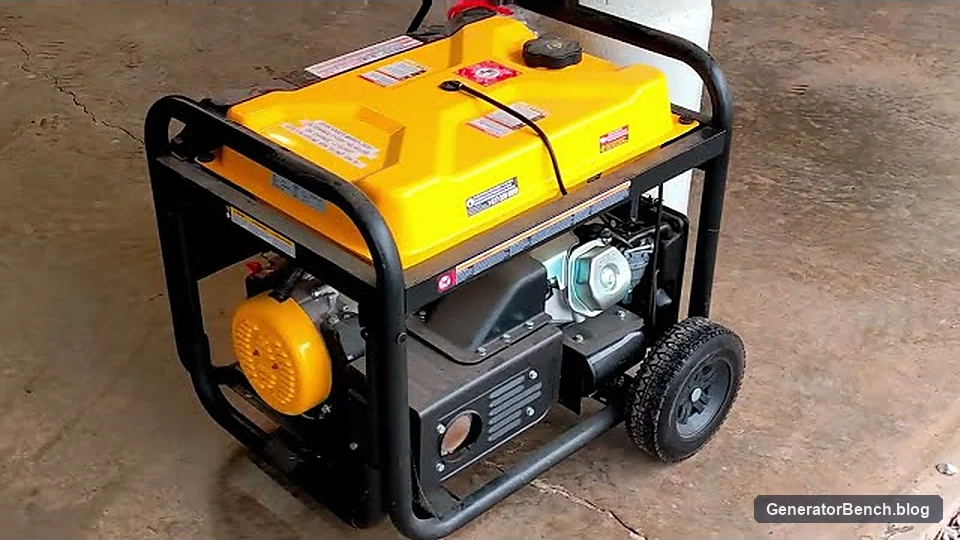
Adding the included engine oil marks the final critical step before initial fuel addition. Electric pushbutton ignition ensures rapid engine startup without requiring strenuous pull-cord efforts.
Unboxing requires simple attachment of the wheel kit and support legs using basic hand tools. Clear instruction manuals guide operators through oil addition and initial battery connection procedures smoothly.
The intuitive control panel groups dual-fuel selectors logically alongside clearly labeled circuit breakers. For more insights, check out our Champion 7500 dual fuel comparison before purchasing.
- Package includes initial engine oil bottle and a convenient funnel.
- Wheel kit installation requires only basic hand wrenches and sockets.
- Battery charging cable keeps the onboard starter battery fully energized.
- Battery maintenance ports simplify off-season charging routines using smart trickle chargers to maintain healthy starting battery voltage during prolonged periods of seasonal storage.
- Quick-reference decal guides located directly on the control panel assist operators during high-stress emergency startup sequences without requiring cumbersome printed manual lookups.
Cold Weather Starting and Environmental Adaptation
Winter storms present unique operational hurdles for small gasoline internal combustion engines. Proper choke adjustment ensures reliable ignition even when ambient temperatures drop below freezing points.
Utilizing winter-grade synthetic engine oil improves mechanical cranking speed during frigid mornings. Reliable cold starts keep critical heating systems operational during severe winter blackouts.
- Choke lever features clear tactile markings for effortless cold operation.
- Battery tender connection maintains charge during long storage periods.
Maintenance Protocols and Long-Term Durability Standards
Routine maintenance ensures peak mechanical efficiency and extends the overall equipment lifespan. Regular oil changes protect internal piston rings and cylinder walls from premature wear.
Air filter inspections prevent dust infiltration during dusty dry-season jobsite operations. Durable component engineering guarantees dependable service across multiple years of emergency use.
Routine upkeep demands oil changes every 100 operating hours using standard 10W-30 formulation. Regularly inspecting the spark arrestor prevents dangerous carbon buildup and maintains optimal exhaust gas flow.
Long-term storage requires completely draining residual fuel from the carburetor float bowl. Storing the unit in a dry environment prevents premature rust formation on exposed steel frame components.
- Accessible oil drain valve simplifies clean fluid replacement procedures.
- Spark plug access port allows quick gap checks and replacements.
- Fuel valve shut-off clears carburetor bowls for clean storage.
- Air filter elements require regular cleaning with warm soapy water and light oil saturation to ensure maximum combustion efficiency in dusty outdoor construction environments.
- Fuel valve shutoffs allow operators to run carburetors completely dry before extended storage, preventing sticky fuel varnish deposits from clogging tiny brass carburetor jets.
Troubleshooting Common Operational Hiccups
Understanding basic diagnostic indicators helps resolve unexpected field performance issues quickly. Low oil shutdown sensors frequently trigger if the frame sits on unlevel ground.
Clean fuel usage prevents clogged carburetor jets and erratic engine surging behaviors. Regular test runs verify readiness long before emergency weather events strike.
- Check oil level sensor wiring if engine refuses to start.
- Inspect circuit breakers immediately following sudden power loss.
Comprehensive Buyer Assessment and Final Verdict
Choosing the right backup power source depends on specific household wattage requirements. Reviewing options in our best dual fuel generators guide helps clarify these important selection criteria.
While its physical weight demands permanent outdoor placement, the operational reliability outweighs portability limits. Emergency preparedness enthusiasts will find immense value in its robust engineering architecture.
This robust platform delivers reliable backup power for whole-house transfer switches during extended grid outages. Its versatile fuel system provides exceptional flexibility during regional fuel supply shortages.
Homeowners seeking a dependable, high-capacity emergency power source will find significant value here. Proper sizing ensures this generator meets demanding household electrical requirements safely and efficiently.
- Ideal for powering entire home circuits via transfer switch setups.
- Provides versatile fuel options during regional fuel supply shortages.
- Delivers strong long-term value for suburban and rural homeowners.
- Professional electrician support ensures proper safe integration with manual transfer switches, maintaining complete electrical safety compliance for residential emergency backup power applications.
- Comprehensive manufacturer warranty coverage provides long-term peace of mind for owners investing in reliable emergency power generation equipment for vulnerable rural residential properties.
Who Should Invest Versus Who Should Skip
Homeowners seeking dependable whole-house backup during seasonal storms will benefit tremendously here. Conversely, recreational campers prioritizing lightweight portability should look toward smaller inverter models.
Evaluating your specific power consumption profile ensures maximum satisfaction with this investment. Matching generator capacity to essential household loads prevents costly operational miscalculations.
- Recommended for fixed home backup and demanding jobsite tasks.
- Not suited for mobile tent camping or lightweight recreational travel.
Frequently Asked Questions
Can I switch fuel types while the generator is actively running under load?
Yes, the engineered dial selector allows seamless transitions between gasoline and propane without shutting down. Live fuel switching ensures uninterrupted power delivery to your critical appliances.
What is the recommended break-in procedure for the engine?
Run the engine for five hours at fifty percent load before completing the first oil change. Fresh break-in oil removes microscopic metallic debris from internal moving components.
Does this generator produce clean electricity safe for sensitive electronics?
While it features standard harmonic distortion levels suitable for most tools, sensitive computers benefit from line-interactive UPS battery backups. Protective power conditioning guards expensive electronics against potential voltage irregularities.
How should I store the generator during extended periods of non-use?
Drain all remaining gasoline from the tank and run the carburetor dry to prevent varnish buildup. Proper seasonal storage ensures immediate, reliable startup when the next emergency strikes.
What type of engine oil should I use in extreme winter weather?
Switch to a certified synthetic 5W-30 motor oil when operating in sub-freezing temperatures. Synthetic oil viscosity improves cold-weather cranking performance and protects internal engine parts.