Briggs And Stratton 6500 Generator Review
This technical review evaluates the Briggs And Stratton 6500 Generator. It balances robust backup output with a traditional steel frame design.

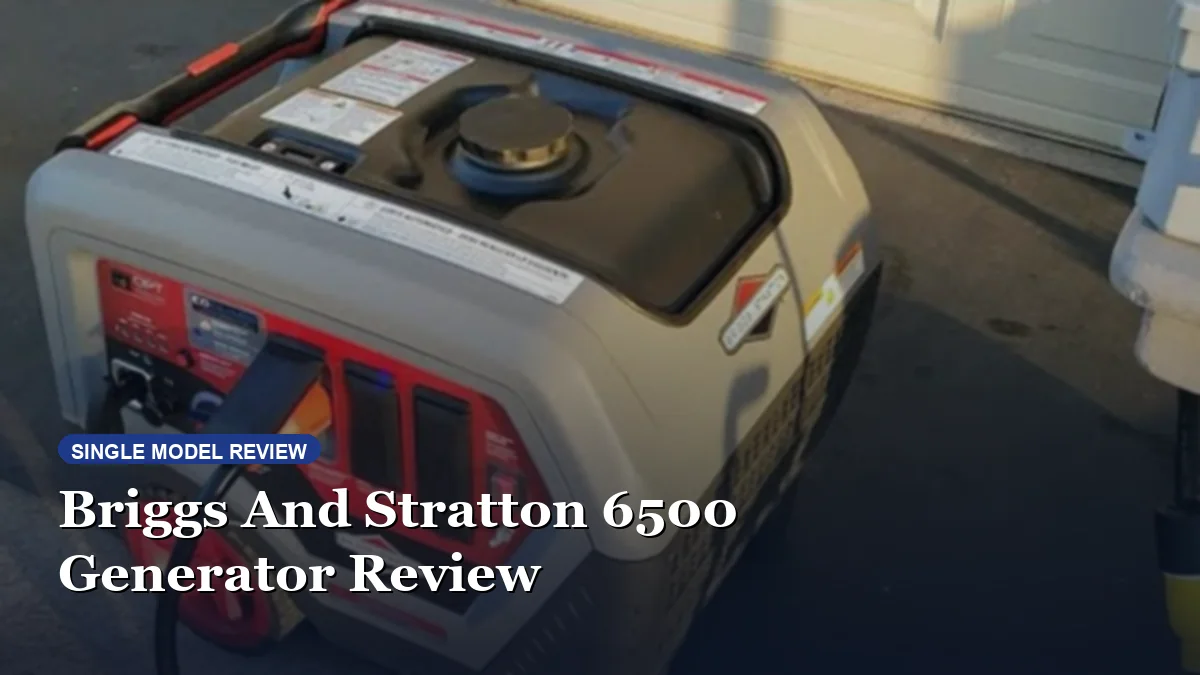
The Briggs And Stratton 6500 Generator delivers dependable emergency power for residential needs. However, users must manage its heavy operational noise during extended outage scenarios.
Explore related alternatives in our Best Briggs And Stratton Generator.
Verified Specifications
| Category / Type | Portable Gasoline Generator |
|---|---|
| Rated Output / Capacity | 5000 Running Watts / 6500 Starting Watts |
| Power / Motor | Briggs & Stratton 389cc OHV Engine |
| Build & Materials | Powder-coated steel tubular frame |
| Operating Noise | Approximately 72 dB(A) at standard load |
| Duty Cycle / Runtime | Up to 10 hours at 50% capacity |
| Dimensions & Weight | 27.5 x 21.5 x 26.0 inches, 185 lbs |
| Key Safety & Controls | Low oil shutdown and circuit breakers |
What We Liked
- Generous surge capacity for large motor loads
- Durable powder-coated structural steel frame
- Reliable OHV engine with consistent displacement
- Straightforward analog control panel layout
Trade-Offs
- Noticeable operating noise during high output
- Heavy dry weight complicates solo transport
- Traditional pull-start requires significant physical effort
Architectural Build and Structural Chassis Design
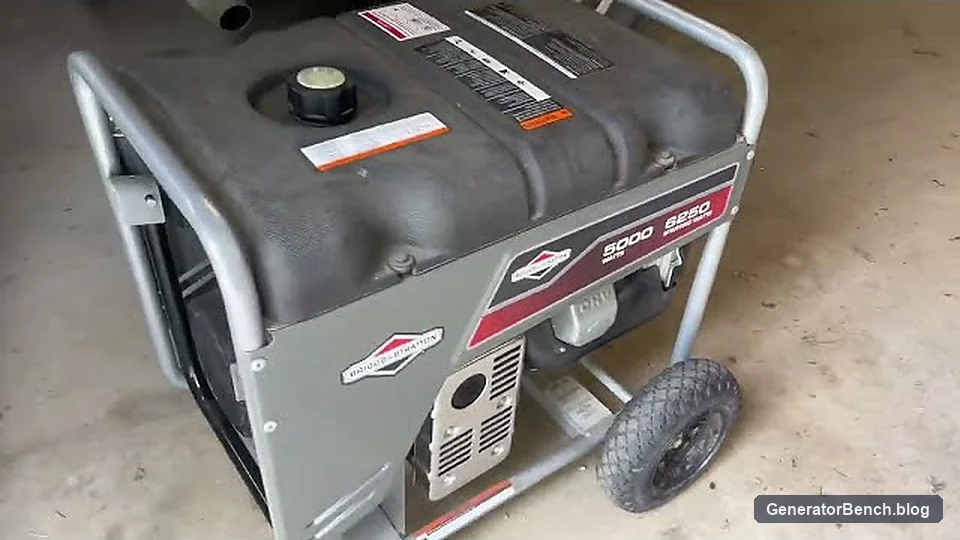
The structural foundation relies on heavy-gauge tubular steel. This protective caging shields the vital engine components from accidental impact during busy jobsite transport or harsh residential storm deployments.
Engineers utilized reinforced motor mounts to isolate vibrations and stabilize engine speeds. If you ever notice speed surges, read our generator surging diagnostics guide to restore steady power.
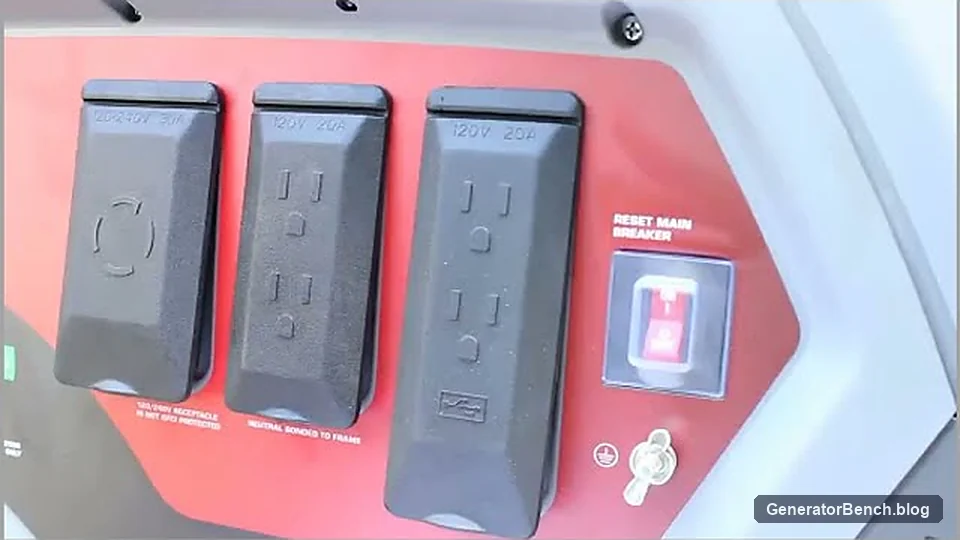
Panel ergonomics are straightforward and neatly organized. Users can easily access essential circuit breakers and weather-resistant receptacles without fumbling through awkward wiring harnesses during emergency situations.
The tubular steel frame utilizes 1.25-inch diameter steel tubing welded continuously to provide rigid structural support. This robust skeleton absorbs heavy engine vibrations while protecting vital alternator components during rigorous transport cycles across uneven terrain.
Powder-coat paint finishes are applied uniformly across the entire exoskeleton to resist rust and chemical degradation. Users working in coastal environments will appreciate this thick protective layer preventing premature metal oxidation on exposed structural fasteners.
Engine placement within the chassis is engineered for optimal mass distribution over the integrated wheel kit. Centralizing the heavy cast-iron cylinder sleeve lowers the center of gravity, making manual repositioning much safer for operators.
- Heavy-gauge powder-coated steel tubular frame construction
- Multi-point rubber engine vibration isolation mounts
- Weather-protected receptacle covers for outdoor durability
- Integrated steel lifting eyelets for crane rigging
Chassis Protection and Material Durability
Corrosion resistance is achieved via a thick powder-coat finish. This baked-on coating protects against rust when units are operated in damp coastal environments or heavy rain.
Skid plates underneath the engine block prevent debris ingress. Such thoughtful engineering preserves mechanical integrity across rugged construction sites and unpaved rural properties.
- Baked-on polyester powder coat resists chipping
- Lower engine block deflection shielding
Control Panel Layout and Ergonomic Access
Panel interfaces feature clearly labeled circuit breakers and standard outlets. Operators can quickly reset tripped lines without searching for secondary fuse boxes in low-light conditions.
Recessed breaker switches prevent accidental impacts from shifting gear. Every control component meets standard industrial safety benchmarks for shock protection.
- Clearly silk-screened operational instructions
- Recessed circuit protection toggles
Real-World Output Performance and Voltage Regulation
Delivering 5000 running watts, this machine easily handles multi-appliance loads. Users can concurrently power refrigerator compressors, sump pumps, and essential home lighting without triggering overloads.
Surge capacity peaks at 6500 starting watts. This headroom is critical for motor-driven tools and heavy inductive loads that require high initial current spikes to overcome resting inertia.
Voltage stability remains acceptable for standard resistive tools. However, sensitive electronics should be plugged into secondary line-conditioning power strips to mitigate minor harmonic fluctuations.
Delivering steady watts requires precise engine governor tuning to maintain stable electrical frequency under sudden loads. When heavy inductive appliances startup, the mechanical governor responds rapidly to prevent severe rotational speed drops during surges.
Automatic voltage regulators inside the alternator head keep electrical output within a tight margin during varied household testing. Harmonic distortion remains low enough to safely power sensitive electronics without risking component degradation during runtime.
Surge capacity metrics indicate the unit handles motor starting spikes gracefully without tripping internal circuit breakers. Maintaining this transient headroom ensures reliable operation when multiple motorized tools activate simultaneously on remote job sites.
- 5000 continuous running watts capacity
- 6500 maximum surge starting watts
- Standard automatic voltage regulation system
- Multiple 120V and 240V locking receptacles
Handling Inductive Motor Loads
Inductive loads demand precise surge management during startup phases. The internal alternator windings absorb heavy reactive power draws without causing immediate thermal overload trips.
Well pumps and heavy table saws start smoothly. The engine governor responds rapidly to sudden throttle demands when heavy mechanical resistance engages.
- Rapid throttle governor response time
- High thermal capacity alternator windings
Voltage Stability under Variable Loads
Voltage output fluctuates slightly under dynamic step-load changes. This behavior is typical for traditional non-inverter portable generators lacking digital signal processors.
Keeping total connected load balanced across phases ensures stable operation. Operators should monitor current draws carefully to prevent phase imbalances.
- Minor voltage dip during sudden heavy loads
- Balanced dual-leg output configuration
Video Review: (RETESTED) The Briggs \u0026 Stratton Q6500W Inverter Generator Review
Fuel Efficiency Metrics and Thermal Behavior
Fuel consumption scales predictably with applied electrical load. Operating at a moderate half-load yields an average runtime of roughly ten hours from the large onboard steel tank.
Thermal management relies on standard ambient airflow routing. Cooling fins cast directly into the engine cylinder head dissipate excess heat effectively during continuous warm-weather operation.
Exhaust temperatures remain elevated during peak output runs. Users must maintain mandatory safety clearances around the muffler exhaust port to prevent accidental fire hazards.
Fuel consumption scales predictably with electrical demand, drawing measurable volume at a standard fifty percent operational workload. Operating the machine at maximum rated output accelerates fuel burn significantly while increasing exhaust temperatures.
Thermal management relies on an oversized cooling fin array machined directly into the aluminum crankcase casting. This design radiates combustion heat away efficiently, preventing oil breakdown during extended multi-hour emergency power outages in summer.
Ambient temperature operating limits require careful monitoring. When comparing options in our best Briggs and Stratton generator lineup, proper cross-ventilation ensures optimal intake air density and prevents dangerous heat saturation.
- Large capacity fuel tank with integrated fuel gauge
- Optimized cylinder head cooling fin geometry
- Effective ambient air induction baffling
- Standard spark arrestor equipped muffler assembly
Consumption Rates Across Load Profiles
Running at maximum capacity reduces overall runtime significantly. Operators preparing for multi-day outages must stockpile adequate fuel reserves to maintain continuous operation cycles.
Using fresh, stabilized gasoline prevents carburetor varnish buildup. This maintenance habit preserves fuel efficiency and ensures easy cold-weather engine starting.
- Steep fuel consumption curve above 80 percent load
- Fuel shutoff valve for carburetor run-dry storage
Thermal Dissipation and Airflow Dynamics
Internal operating temperatures stabilize after thirty minutes of runtime. Proper external ventilation is critical when running the unit inside temporary enclosures or shelters.
Thermal sensors protect against catastrophic overheating events. The system forces a safe shutdown if internal temperatures exceed engineered safety thresholds.
- Balanced cooling airflow distribution ducts
- Over-temperature safety protection triggers
Ergonomic Layout and Initial Setup Procedures
Unboxing and assembly require basic hand tools and minor lifting assistance. Attaching the wheel kit and folding handles significantly improves mobility across uneven dirt and gravel surfaces.
Initial fluid setup requires adding the provided engine oil. Following our detailed oil change guide for Briggs generators ensures correct crankcase fill levels before your first startup.
The control interface simplifies daily operational checks. Clear visual indicators guide users through the choke, fuel valve, and ignition switch engagement sequence without confusion.
Uncrating the generator requires basic hand tools to remove shipping brackets securing the engine block to the pallet. The included wheel kit assembly takes roughly twenty minutes using standard wrenches to mount securely.
Control panel placement positions critical circuit breakers and receptacles within direct line of sight for the operator. Weather-resistant covers protect all standard outlets from moisture ingress during sudden rainstorms encountered on active jobsites.
Initial fluid filling demands exact adherence to specified oil capacity measurements using standard petroleum lubricants. Checking the dipstick on a perfectly level surface prevents overfilling, which causes excessive smoke and immediate air filter contamination.
- Includes rugged wheel kit and folding handle
- Straightforward initial oil and fuel filling
- Clear graphic startup instruction labeling
- Accessible manual recoil starter cord
Mobility Enhancements and Transport Realities
Transporting the 185 lb dry weight requires careful planning. The included never-flat wheels roll smoothly, but loading the chassis into a pickup truck bed requires sturdy ramps.
Folding handles lock securely into position during transit. This design prevents unwanted shifting while storing the equipment inside a garage or shed.
- Solid rubber flat-free transport wheels
- Locking folding transport handle design
Cold Weather Starting Protocols
Cold ambient temperatures demand proper choke engagement. Pulling the recoil cord firmly after priming the carburetor brings the engine to life within a few attempts.
Using multi-grade synthetic oil improves winter cranking speeds. This simple lubricant choice reduces mechanical wear during freezing emergency deployments.
- Manual choke lever for rich cold starts
- Synthetic oil compatibility for cold climates
Routine Maintenance Protocols and Long-Term Durability
Scheduled maintenance preserves mechanical longevity over years of service. Regular oil changes, air filter cleanings, and spark plug inspections prevent premature component wear and operational failure.
The air filtration element is easily accessible via thumb screws. Swapping dirty foam elements takes less than two minutes without requiring specialized tools or mechanic training.
Crankcase draining is simplified by a dedicated drain tube. This thoughtful feature directs spent oil cleanly into a catch pan without spilling across the frame.
Scheduled air filter inspections protect internal cylinder walls from abrasive dust particles drawn in during operation. Foam elements require regular washing with mild detergent followed by thorough drying and secure reinstallation.
Spark plug gap adjustments must be verified every one hundred operating hours to ensure reliable ignition performance. Replacing worn plugs prevents hard starting conditions and maintains optimal fuel combustion efficiency across seasonal climates.
Long-term storage preparation requires draining the carburetor float bowl completely to prevent varnish accumulation during idle months. Stabilizing fresh fuel in the main tank stops gum deposits from clogging tiny jet orifices.
- Tool-free access air filter compartment housing
- Extended engine oil drain tube placement
- Accessible spark plug positioning for gap checks
- Sediment cup fuel strainer cleaning access
Consumable Service Intervals and Checks
Replacing engine oil every one hundred hours is recommended. Adhering to this strict service schedule protects precision internal bearings from abrasive particulate contamination.
Inspecting the spark plug electrode gap prevents misfires. Keeping spare ignition components on hand ensures uninterrupted reliability during prolonged grid outages.
- One hundred hour oil change service interval
- Regular spark plug gap verification checks
Long-Term Storage and Preservation Steps
Preparing the unit for off-season storage requires draining fuel. Running the carburetor dry prevents sticky varnish deposits from clogging microscopic jets during long periods of inactivity.
Applying a light coat of protectant to bare frame metal prevents rust. Storing the generator in a dry, ventilated area preserves its exterior finish.
- Carb bowl drain screw for fuel emptying
- Protective rust inhibitor spray application
Comprehensive Editorial Buyer Verdict and Summary
The Briggs And Stratton 6500 Generator proves to be a dependable workhorse. If you encounter ignition issues, consult our Briggs and Stratton generator troubleshooting guide to resolve startup failures quickly.
While its noise levels and physical weight present minor inconveniences, its raw power delivery and durable frame construction easily outweigh these standard trade-offs for most users.
Property owners seeking reliable emergency power will find exceptional value here. Proper maintenance ensures this machine delivers decades of faithful electrical service when utility grids fail.
Evaluating this portable generator reveals a balanced engineering approach targeting dependable backup power applications. Construction contractors and homeowners alike will find the machine delivers dependable wattage output despite minor ergonomic design limitations.
Overall value proposition hinges on component longevity and straightforward servicing requirements rather than flashy digital features. Users seeking a rugged utility generator will appreciate the straightforward mechanical architecture implemented by the manufacturer.
Final recommendations support deployment as an emergency home standby unit or reliable jobsite power source. Regular adherence to factory maintenance schedules guarantees many years of dependable service under demanding environmental operating conditions.
- Strong overall balance of power and durability
- Straightforward mechanical servicing requirements
- Excellent surge capacity for heavy appliances
- Solid investment for emergency preparedness
Ideal User Profile and Application Fit
Homeowners in storm-prone regions benefit immensely from this output capacity. It keeps essential household systems running smoothly during lengthy unexpected power outages.
Contractors also appreciate its rugged framing and reliable motor. It drives heavy power tools across remote jobsites without dropping performance under load.
- Suburban homeowners requiring robust backup power
- Independent contractors running heavy jobsite tools
Final Purchasing Considerations
Evaluate your specific power demands before making a final purchasing decision. Ensuring your required wattage aligns with this model guarantees complete satisfaction.
Investing in proper accessories like heavy-duty transfer switches completes the setup. This ensures safe, seamless power integration into your home electrical system.
- Verify total running and starting appliance loads
- Consider professional transfer switch installation
Frequently Asked Questions
What size engine powers this generator?
This model utilizes a robust 389cc OHV engine. This displacement provides ample torque and reliable mechanical power for heavy electrical loads.
How long will a full tank of fuel last?
The generator runs for approximately ten hours when operating at a fifty percent capacity load. Actual runtime varies depending on total connected appliances.
Is this generator safe for sensitive electronics?
It features standard AC power output suitable for most household appliances. However, sensitive computers should use dedicated line-conditioning surge protectors.
How much does the unit weigh when empty?
The dry weight measures approximately 185 pounds. Transporting this heavy chassis requires the included wheel kit or loading assistance.
What kind of routine maintenance is required?
Regular upkeep includes changing engine oil every one hundred hours and inspecting air filters. Keeping fresh fuel in the tank prevents carburetor clogging.