How To Determine Portable Generator Size For Home Backup
Calculating your residential backup power needs requires careful electrical load aggregation. Proper sizing prevents equipment damage and ensures safe, reliable operation during grid outages.

Accurately sizing a backup unit involves listing all critical appliance wattage ratings. Summing these values and adding surge safety margins guarantees safe, uninterrupted electrical supply.
Looking for matching picks? See our Best Portable Generator For Home Backup.
Practical Quick-Reference Table
| Scenario / Metric | Recommended Target | Why It Matters |
|---|---|---|
| Refrigerator Power | 600W running / 1200W starting | Protects compressor motor windings. |
| Sump Pump Load | 1000W running / 2000W starting | Prevents basement flooding reliably. |
| Gas Furnace Fan | 800W running / 2350W starting | Maintains vital heating circulation. |
| LED Lighting Circuit | 150W running / 150W starting | Provides basic illumination safely. |
| Window AC Unit | 1200W running / 3600W starting | Manages heavy inductive startup surges. |
| Total Safety Margin | 20 percent buffer minimum | Avoids overload trips during spikes. |
Calculating Running Versus Starting Wattage Requirements
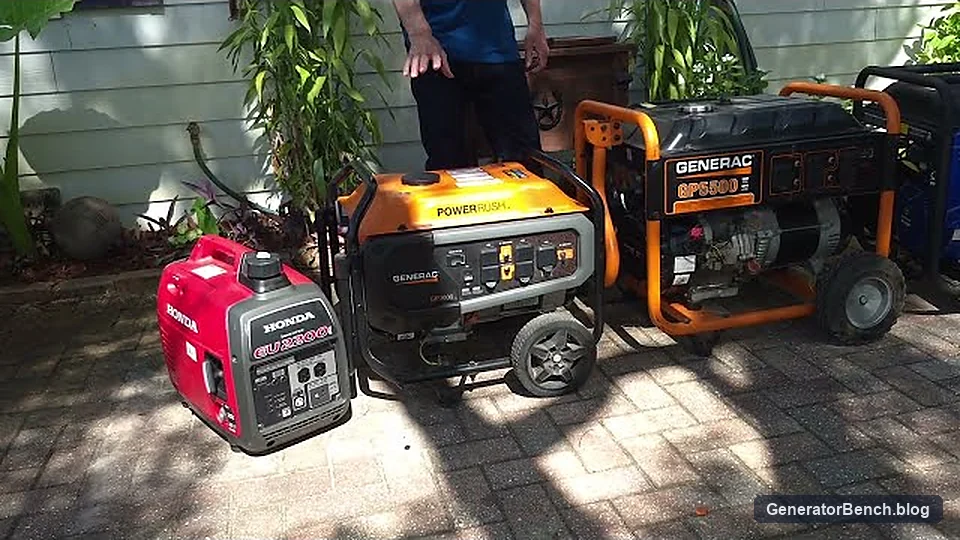
Every motorized appliance demands two distinct power levels during operation. Running wattage represents the continuous power needed to keep equipment functioning smoothly over extended operational periods.
Conversely, starting wattage accounts for the massive surge required to awaken stationary motors. Electric motors often draw up to three times their normal running load when initially cycling on.
Ignoring heavy startup surges causes immediate overload trips. Consult recommendations inside our best size generator for home guide before verifying each appliance manufacturer data plate.
Documenting both specifications prevents frustrating electrical failures during major emergency weather events. Precision during this initial inventory phase ensures long-term operational stability.
- Locate electrical rating plates on all major home appliances.
- Record separate values for continuous running and surge watts.
- Multiply motor starting amperage by operating voltage for watts.
- Compile data into a comprehensive household power spreadsheet.
Isolating Inductive Versus Resistive Electrical Loads
Resistive devices like space heaters and incandescent bulbs require identical running and starting power. Their electrical resistance remains completely stable from the moment of activation onward.
Inductive loads feature internal copper windings that store magnetic energy temporarily. Managing these complex circuits requires factoring in power factor variances during load planning.
- Resistive loads draw predictable, steady electrical current levels.
- Inductive loads demand high initial magnetic field creation energy.
Identifying Essential Household Appliances and HVAC Loads
During a prolonged blackout, running every appliance simultaneously is rarely necessary or practical. Homeowners must prioritize critical systems such as refrigerators, medical devices, and well pumps.
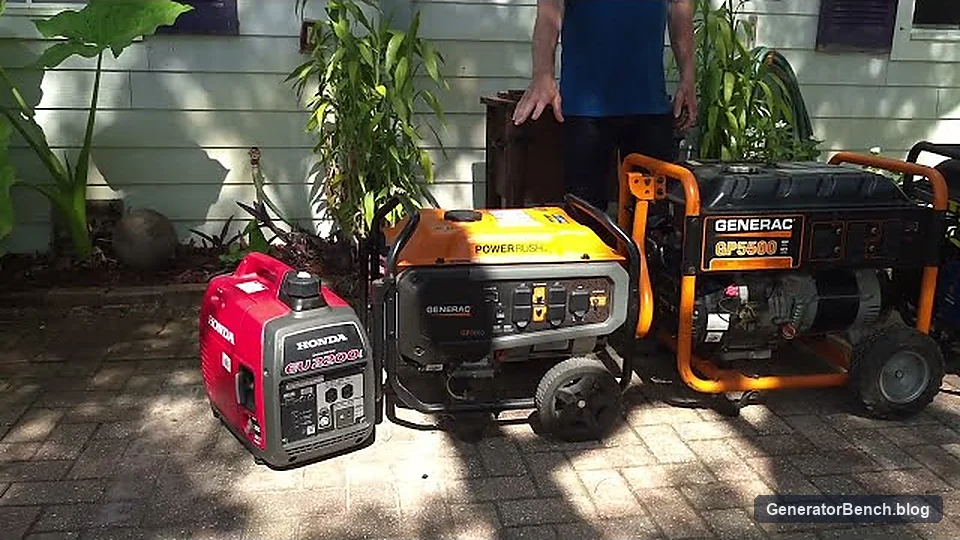
Heating, ventilation, and air conditioning units represent the single largest electrical draws in modern homes. Central air systems demand massive surge capacities that standard portable units struggle to manage.
Instead of powering whole-house central air, options evaluated in our best portable generator for home backup review recommend targeting selective window units to maintain safe running capacity thresholds.
Prioritizing essential loads protects sensitive electronics from unstable voltage drops during heavy compressor cycling. Careful selection ensures fuel reserves last through extended multi-day outages.
- Prioritize refrigeration, water pumps, and essential medical equipment.
- Evaluate central HVAC startup demands against portable output limits.
- Consider deploying strategic window air conditioning units instead.
- Disconnect non-essential luxury items to conserve available wattage.
Managing Well Pump and Sump Pump Surges
Submersible well pumps operate under intense pressure deep underground. Their deep-well motors require substantial starting headroom to overcome initial hydraulic head resistance.
Sump pumps protect basements from catastrophic flooding during severe storms. Accounting for their high startup spikes is non-negotiable for any effective home emergency plan.
- Check well pump depth and pressure switch ratings carefully.
- Account for repetitive cycling of automatic sump pump floats.
Video Walkthrough: What Size GENERATOR Do I Need To POWER My House? SIMPLE!
Accounting for Power Factor and Motor Starting Amps
Real-world electrical systems rarely operate at absolute perfect efficiency levels. Power factor describes the phase relationship between alternating voltage and current within inductive circuits.
Failing to account for less-than-optimal power factors leads to unexpected generator stalls under load. Electrical engineering standards recommend adding a safety buffer for reactive power.
Inductive motor starting amps dictate the absolute minimum peak surge capacity required. Generators must possess robust alternator designs capable of handling these demanding instantaneous spikes.
Consulting professional electrical formulas ensures your generator alternator never suffers thermal overload. Maintaining proper headroom preserves alternator lifespan and prevents premature equipment failure.
- Factor in typical induction motor power factor inefficiencies.
- Ensure peak surge ratings exceed combined motor starting demands.
- Monitor alternator temperature during heavy multi-appliance operation.
- Use true RMS multimeters to measure actual running current draws.
Interpreting Locked Rotor Amperage Specifications
Locked rotor amperage represents the current drawn if the motor shaft is completely jammed. While rare during normal operation, compressors experience brief micro-stalls during startup.
Using LRA data guarantees your generator will not bog down when compressors engage. This metric provides the ultimate safety benchmark for heavy motor applications.
- Locate LRA ratings on heavy compressor data labels.
- Compare locked rotor metrics against maximum surge output.
Evaluating Manual Transfer Switch and Interlock Kits
Connecting a portable generator directly to household wiring requires approved safety hardware. Selecting models from our best portable generator for home guide ensures safe isolation using a manual transfer switch.
Backfeeding power into dead neighborhood utility lines creates severe electrocution risks for lineworkers. Transfer switches completely eliminate this dangerous backfeed hazard during grid repairs.
Interlock kits offer a mechanical sliding plate alternative inside standard breaker panels. They physically prevent utility main breakers and generator breakers from closing simultaneously.
Professional installation by a licensed electrician guarantees compliance with local building codes. Proper hardware integration protects your home electrical infrastructure from catastrophic faults.
- Install a listed manual transfer switch for multi-circuit safety.
- Utilize mechanical interlock kits as a space-saving alternative.
- Never attempt dangerous makeshift backfeeding via standard cords.
- Hire licensed electricians for all permanent panel modifications.
Selecting Generator Inlet Box Placements
An exterior power inlet box provides a weatherproof connection point for your generator cord. Positioning this box near your electrical panel minimizes expensive heavy-gauge copper wiring runs.
Ensure the inlet box is rated for outdoor weather exposure and securely mounted. Proper grounding through this inlet protects all connected household appliances from surges.
- Mount inlet boxes in accessible, weather-protected exterior locations.
- Verify wire gauge matches the maximum amperage output rating.
Calculating Total Fuel Consumption and Runtime Profiles
Generator fuel consumption scales directly with the electrical load applied to the alternator. Operating at maximum capacity drains fuel tanks significantly faster than fifty percent loads.
Gasoline storage requires careful management due to rapid degradation and varnishing risks. Utilizing fuel stabilizers or considering dual-fuel propane options extends storage viability considerably.
Calculating your required runtime helps determine necessary fuel storage quantities for extended outages. Running out of fuel mid-storm disrupts critical appliances and stresses mechanical components.
Inverter generators modulate engine RPM dynamically based on electrical demand, saving fuel. This variable speed capability optimizes runtime efficiency during lighter nighttime power usage periods.
- Estimate fuel burn rates at fifty percent and maximum loads.
- Store fresh gasoline safely in approved, sealed safety containers.
- Add chemical fuel stabilizers to prevent internal carburetor varnishing.
- Evaluate dual-fuel options for cleaner, longer-lasting propane storage.
Assessing Gasoline Versus Propane Fuel Storage
Gasoline offers high energy density but degrades rapidly over several weeks. Proper chemical treatment is mandatory to keep small engine carburetors clean and functional.
Propane cylinders store indefinitely without spoiling or gumming up fuel lines. However, propane delivers slightly lower engine output compared to liquid gasoline combustion.
- Rotate stored gasoline supplies every thirty to sixty days.
- Keep spare propane tanks secured in well-ventilated outdoor sheds.
Factoring Altitude Derating and Temperature Constraints
Internal combustion engines lose power output as elevation increases above sea level. Thinner air reduces oxygen density, requiring specific carburetor jet adjustments for proper combustion.
Standard atmospheric derating rules deduct roughly three percent per thousand feet of elevation. Failing to account for this drop leaves your generator underpowered in mountain regions.
Extreme ambient temperatures also degrade generator electrical output and cooling efficiency. Operating in high heat forces engines to work harder while struggling to dissipate internal thermal loads.
Always review manufacturer altitude charts alongside our interactive wattage sizing calculator tool before finalizing required capacity. Selecting an extra sizing buffer accounts for environmental performance losses.
- Apply standard altitude derating formulas for mountain locations.
- Install high-altitude carburetor jets when operating above thresholds.
- Ensure adequate ventilation clearance to prevent overheating in summer.
- Monitor oil viscosity changes during extreme cold winter weather.
Managing Cold Weather Starting Challenges
Cold winter temperatures thicken engine oil and reduce battery cranking efficiency. Using synthetic multi-weight oils helps engines spin freely during freezing morning startups.
Keep starting batteries charged and stored in moderate temperatures when possible. Block heaters or specialized winter enclosures assist reliable cold weather emergency deployment.
- Switch to synthetic engine oil rated for cold winter climates.
- Test electric start batteries regularly prior to storm seasons.
Verifying Local Electrical Codes and Safety Clearances
Operating portable equipment safely demands strict adherence to spatial and ventilation guidelines. Carbon monoxide emissions pose a lethal hazard if exhaust accumulates near living spaces.
Position generators at least twenty feet away from windows, doors, and intake vents. Pointing exhaust mufflers away from the structure prevents deadly gas infiltration completely.
Local municipal ordinances often enforce specific sound level limits and operating hours. Reviewing regional codes prevents neighbor disputes and costly regulatory citation penalties.
Using heavy-duty, outdoor-rated extension cords prevents overheating and voltage drop hazards. Inspect all cords regularly for insulation fraying or damaged grounding prongs before connection.
- Maintain minimum twenty-foot clearance from all residential structures.
- Install battery-powered carbon monoxide detectors inside living areas.
- Comply with local municipal noise ordinances and safety bylaws.
- Inspect power cords for cuts, abrasions, and missing ground pins.
Preventing Carbon Monoxide Poisoning Hazards
Carbon monoxide is an odorless, colorless gas produced by gasoline engines. Inadequate outdoor placement accounts for numerous preventable fatalities during severe weather outages.
Never operate portable generators inside garages, sheds, or enclosed porches. Even with open doors, toxic fumes can easily accumulate inside attached living spaces.
- Never run generators inside enclosed garages or semi-spaces.
- Test indoor carbon monoxide alarms before every storm season.
Frequently Asked Questions
How do I calculate total wattage needs for my home?
List all essential appliances you plan to run simultaneously during an outage. Sum their running watts and add the highest single motor starting surge to determine the minimum required size.
Can a portable generator power my central air conditioner?
Central AC units demand massive startup surges that typically overwhelm standard portable units. Most homeowners use strategic window air conditioners or soft-start kits instead for reliable cooling.
Why is a transfer switch necessary for home backup?
Transfer switches isolate your home electrical wiring safely from municipal utility lines. This hardware prevents dangerous electrical backfeed that can seriously injure utility repair workers.
How does elevation affect portable generator performance?
Thinner air at higher altitudes reduces internal combustion engine power output significantly. You must apply a standard derating formula and often install high-altitude carburetor jets.
What safety clearances are required when running a generator?
Always position portable generators at least twenty feet away from your home. Direct the exhaust muffler away from all windows, doors, and fresh air intake vents.