How Loud Is 53 Db Generator Acoustic Benchmarks
Technical evaluation of a fifty-three decibel inverter generator output. Understanding sound pressure levels protects residential peace and ensures compliance.

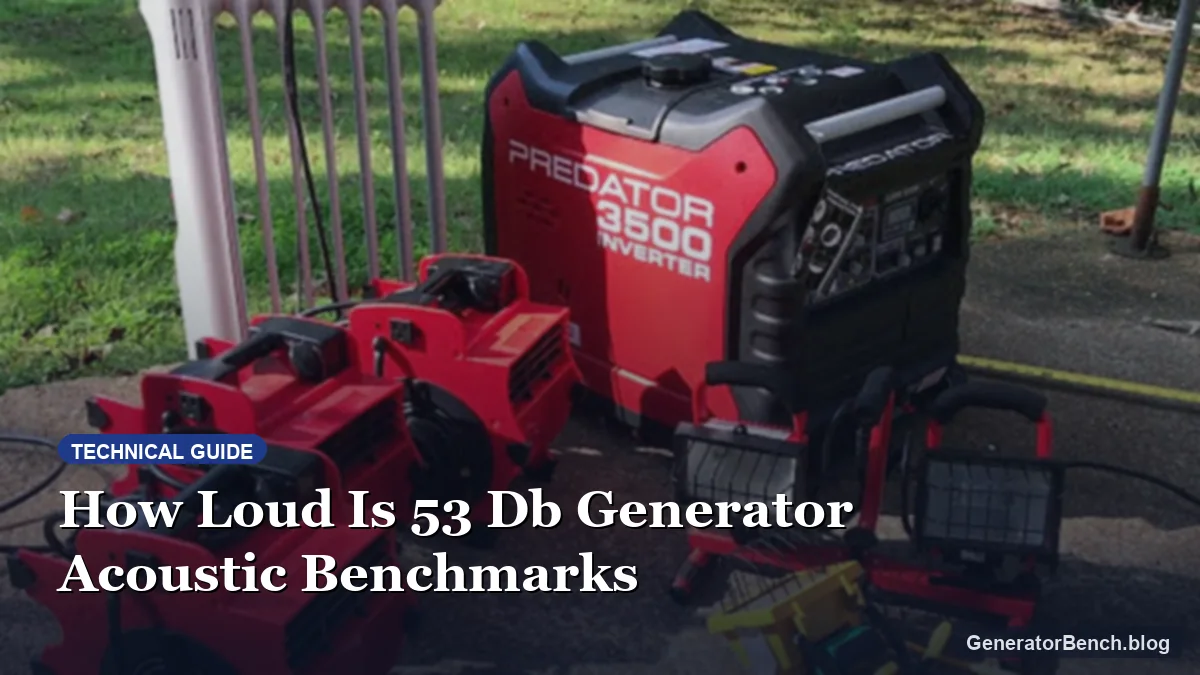
A fifty-three decibel generator matches the sound level of a quiet suburban neighborhood or a modern refrigerator running at a distance of twenty-three feet.
Looking for matching picks? See our Best Electric Generator.
Practical Quick-Reference Table
| Scenario / Metric | Recommended Target | Why It Matters |
|---|---|---|
| Decibel Rating | 53 dB(A) at 23 feet | Ensures normal conversational comfort outdoors. |
| Background Noise | 40 to 50 dB(A) | Blends seamlessly into typical residential zones. |
| Measurement Distance | 7 meters (23 feet) | Standardized testing distance for portable units. |
| Load Condition | 25 percent eco-mode | Maintains lower engine RPM and minimal noise. |
| Enclosure Material | Acoustic foam lining | Dampens high-frequency mechanical vibration effectively. |
| Regulatory Limit | Under 60 dB(A) night | Complies with standard municipal noise ordinances. |
Understanding Decibel Scales and Sound Pressure Levels
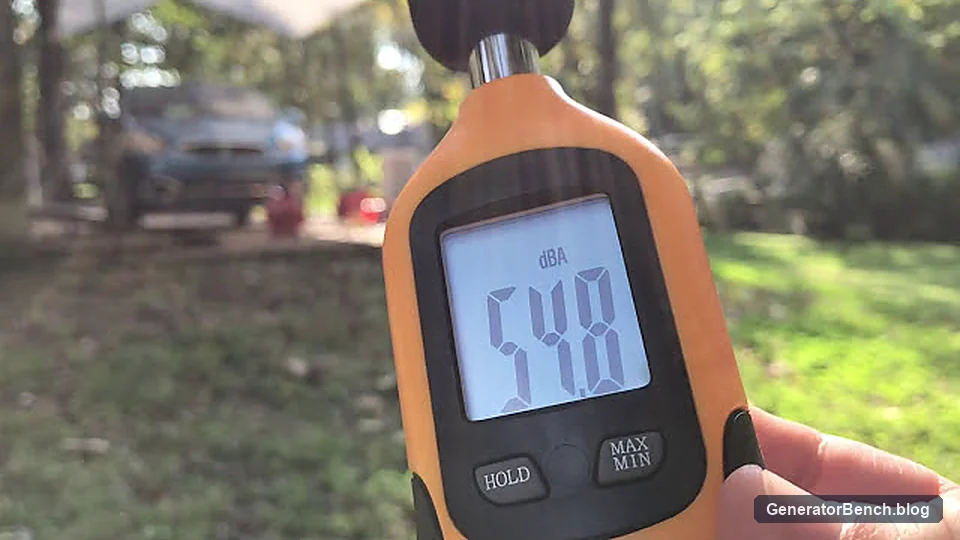
Acoustic measurement relies on a logarithmic decibel scale rather than a linear one. Every increase of ten decibels represents a tenfold amplification in actual sound energy intensity.
Human perception of loudness differs significantly from raw mathematical sound pressure values. A three-decibel change requires a doubling of acoustic power to register as noticeably louder.
Evaluating a fifty-three decibel output requires examining the logarithmic weighting curves used by engineers. Most acoustic meters utilize A-weighting filters to match human ear sensitivity.
Sound pressure level diminishes predictably as distance from the acoustic source increases outdoors. Inverse square law principles dictate that sound intensity drops rapidly across open terrain.
The decibel scale is logarithmic, meaning a small numerical change represents a massive shift in acoustic energy. A 53 decibel rating reflects standard quiet conversational levels experienced during daily operations.
Sound pressure level measurements use the A-weighting filter, abbreviated as dBA, to match human ear sensitivity. This standard curves out extreme low and high frequencies that our biological systems naturally ignore.
Doubling the acoustic power output of an engine increases the sound pressure level by roughly three decibels. Consequently, running two units in parallel noticeably raises ambient noise signatures beyond baseline specifications.
Understanding logarithmic scaling prevents unrealistic expectations regarding quiet inverter generators. Engineers design mufflers specifically to attenuate frequencies that register most harshly within the typical human hearing range.
- Decibel values use a logarithmic base ten scale for calculation.
- A-weighting filters filter out frequencies outside human hearing ranges.
- Sound energy halves with every doubling of distance in free space.
- Perceived loudness doubles roughly every ten decibels of increase.
Logarithmic Sound Calculations in Engineering
Engineers calculate sound pressure ratios using standardized logarithmic formulas to determine exact acoustic output. Precision instruments capture these micro-variations during standardized laboratory run tests.
Understanding these mathematical foundations helps technicians interpret manufacturer sound ratings accurately. Real-world positioning often alters these baseline laboratory measurements significantly.
- Logarithmic formulas map wide sound pressure ranges cleanly.
- Laboratory tests use specialized hemi-anechoic chamber environments.
Comparing Inverter Generator Profiles to Background Noise
A generator running at fifty-three decibels produces sound comparable to a quiet office. When selecting the best home emergency generator, buyers should prioritize models featuring enclosed acoustic housings.
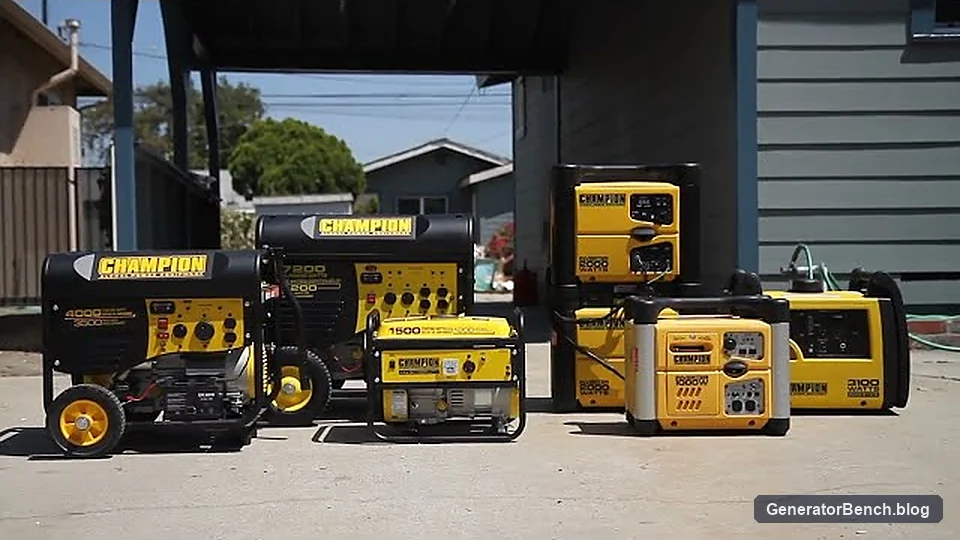
Comparing this output against common household appliances provides a clear frame of reference for users. A standard modern refrigerator hums at roughly forty decibels during normal operation.
Urban environments typically feature ambient background noise levels exceeding sixty decibels during daytime hours. A fifty-three decibel machine often blends completely into urban background sounds.
Rural settings experience much lower ambient sound levels, often dropping below thirty decibels at night. In these quiet zones, a fifty-three decibel engine becomes noticeably audible outdoors.
Ambient suburban environments typically maintain a baseline background noise level between 45 and 55 dBA. A generator operating at 53 decibels blends seamlessly into these everyday neighborhood acoustic profiles.
Inside a typical residential kitchen, refrigerator compressors and HVAC systems generate roughly 50 dBA. Portable inverter units running at low loads produce sound signatures that closely mirror standard household appliances.
Rural properties feature much lower background floors, often dropping below 35 dBA at night. In these quieter settings, a 53 dB inverter becomes distinctly noticeable despite being technically classified as quiet.
Urban areas with heavy traffic routinely exceed 70 dBA, completely masking portable generator emissions. Evaluating local environmental contexts ensures you select equipment that respects nearby property lines and community standards.
- Moderate rainfall registers around fifty decibels on standard meters.
- Quiet suburban streets average forty-five to fifty decibels outdoors.
- Urban traffic easily masks generator sounds up to sixty decibels.
- Rural nighttime quiet makes low-level mechanical hums stand out.
Acoustic Masking in Residential Zones
Ambient background sounds naturally mask generator emissions through a process called acoustic masking. Natural wind rustling through leaves frequently exceeds forty-five decibels.
Strategic placement behind landscaping features utilizes natural sound barriers to enhance environmental masking.
- Foliage and shrubs absorb high-frequency mechanical engine noise.
- Ambient masking reduces the perceived annoyance of running equipment.
Video Walkthrough: How Loud Is a Home Generator? | Sound Level and Decibel Scale Comparison.
Decibel Measurement Methodology and Distance Attenuation
Standardized decibel ratings for portable generators are measured at a specific distance of twenty-three feet. Testing procedures require an open test site free from acoustic reflections.
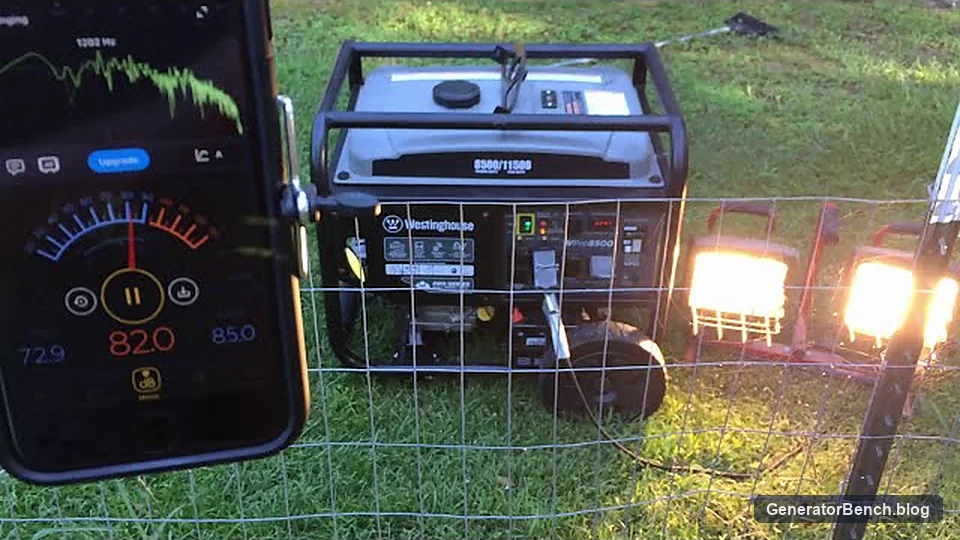
Sound waves bounce off walls, fences, and concrete patios, amplifying the perceived noise level significantly. Measuring equipment must be calibrated using a pistophon before every testing session.
Free-field conditions assume no acoustic obstacles exist between the sound source and the measuring microphone. Introducing hard boundaries alters the sound wave propagation and increases pressure.
Distance attenuation follows predictable physical laws under ideal conditions. When evaluating the best household generator for residential backup, every doubling of distance reduces sound pressure by six decibels.
Manufacturers usually measure generator sound ratings at a standardized distance of seven meters, or roughly twenty-three feet. This controlled testing protocol provides a reliable baseline for comparing different competing generator models.
Sound pressure follows the inverse square law in free-field acoustic environments. Doubling the distance from the noise source typically results in a six decibel drop in sound pressure level measurements.
Placing your inverter generator forty-six feet away reduces the perceived noise signature significantly. Utilizing this distance attenuation protects your campsite or backyard gathering from intrusive mechanical hums and vibrations.
Ground absorption and atmospheric conditions further degrade sound waves over longer distances. Hard concrete surfaces reflect acoustic energy, whereas soft grass and soil absorb high-frequency engine noise components efficiently.
- Standard testing distance equals seven meters or twenty-three feet.
- Hard reflective surfaces amplify measured decibel levels by several units.
- Microphone calibration ensures accuracy before recording acoustic data.
- Free-field propagation prevents ground and wall reflection anomalies.
Calculating Distance Attenuation Factors
Technicians apply mathematical attenuation formulas to estimate sound levels at closer or farther distances. Moving from twenty-three feet to ten feet increases the measured sound pressure.
Conversely, moving fifty feet away drops the sound level well below forty-five decibels.
- Halving the distance increases sound pressure by six decibels.
- Doubling the distance decreases sound pressure by six decibels.
Environmental Factors Influencing Sound Propagation
Outdoor meteorological conditions dramatically affect sound propagation. Wind direction carries acoustic waves further, which matters if you operate a fuel unit instead of the best solar electric generator featuring silent inverter tech.
Temperature inversions trap sound waves near the ground, causing noise to travel much further at night. Humidity levels also impact high-frequency sound absorption in the surrounding air.
Ground surfaces play a major role in acoustic wave reflection and absorption characteristics. Soft grass and soil absorb sound energy, whereas concrete and asphalt reflect waves.
Topographical features like hills and valleys create natural barriers or acoustic resonance chambers outdoors. Strategic placement accounts for these terrain variables to maintain optimal quiet operation.
Atmospheric temperature and relative humidity alter how sound waves travel through open outdoor spaces. Dense, cold air transmits acoustic energy more efficiently than warm, moisture-heavy air during summer months.
Wind direction plays a critical role in how far generator noise carries across a campground. Positioning your unit upwind from your tent prevents prevailing breezes from pushing engine exhaust sounds toward you.
Natural barriers like dense shrubbery and earth berms help scatter high-frequency sound waves. However, low-frequency engine vibrations easily bend around small obstacles, requiring solid acoustic deflection walls for effective blockage.
Hard reflective surfaces such as brick walls or metal siding bounce sound directly outward. Keeping your inverter away from structural corners prevents undesirable acoustic amplification and resonance buildup in yards.
- Downwind positioning carries acoustic energy further across properties.
- Temperature inversions trap sound waves near the ground level.
- Paved surfaces reflect sound waves instead of absorbing them.
- Grassy terrain dampens high-frequency mechanical sound propagation.
Meteorological Impact on Sound Travel
Wind shear bends sound waves upward or downward depending on atmospheric temperature gradients. Operators must evaluate wind vectors before positioning equipment near property lines.
High humidity slightly increases the atmospheric absorption of high-frequency engine whine.
- Crosswinds disperse acoustic energy away from sensitive areas.
- Atmospheric temperature gradients bend sound paths significantly.
Mechanical Sources of Generator Noise and Resonance
Internal combustion engines generate sound through multiple distinct pathways. Combustion pulses inside the cylinder create primary exhaust noise, while running larger loads calculated via our wattage sizing calculator demands effective muffling.
Mechanical friction between moving pistons, bearings, and valvetrains produces high-frequency metallic whines. Cooling fans moving air across the engine block add a steady aerodynamic hiss.
Inverter alternators create electromagnetic hums due to high-frequency electrical switching components inside the housing. Chassis vibration occurs when loose panels resonate with the engine frequency.
Engine load directly dictates throttle position and operating revolutions per minute across modern units. Operating in eco-mode limits engine speed under light loads, keeping noise at minimal levels.
Combustion pulses escaping through the exhaust system represent the primary source of generator noise. High-efficiency spark arrestor mufflers are engineered to suppress these explosive pressure waves before they exit.
Mechanical vibration from the reciprocating engine block transfers directly into surrounding structural chassis panels. Without proper rubber motor mounts, these panels act like speaker cones, amplifying low-frequency mechanical hums.
Cooling fans spinning at high RPMs create distinct aerodynamic whines during heavy electrical loads. Enclosed inverter designs incorporate specialized ducting to direct airflow while dampening high-pitched fan blade turbulence noises.
Loose fasteners, rattling side panels, and vibrating fuel caps introduce metallic rattles into the mix. Routine hardware inspections prevent these annoying secondary noises from elevating your generator acoustic output unnecessarily.
- Exhaust gas pulses form the loudest primary engine noise source.
- Valvetrain friction contributes continuous high-frequency mechanical whines.
- Cooling fans generate constant aerodynamic air rushing sounds.
- Chassis panel resonance amplifies underlying structural vibrations.
Minimizing Mechanical Resonance Issues
Isolating engine blocks with rubber motor mounts prevents vibration transfer to outer plastic casings. Tightening all exterior fasteners eliminates annoying rattles caused by structural panel resonance.
Routine maintenance ensures internal components operate smoothly without excessive mechanical friction.
- Rubber dampeners isolate engine vibration from outer housing panels.
- Securing loose hardware stops rattling noises immediately.
Video Walkthrough: 67 Decibels? This Generac Generator Proves Quiet Power is Possible
Advanced Acoustic Mitigation and Enclosure Engineering
Engineers utilize specialized multi-chamber exhaust mufflers to suppress loud combustion pressure waves. Acoustic foam lining inside the outer plastic enclosure absorbs high-frequency airborne noise.
Labyrinth airflow paths allow cooling air to enter while trapping and diffusing sound waves. Double-walled enclosure designs create an effective acoustic barrier around the internal powertrain.
Placing the generator on a vibration-dampening rubber mat prevents ground-borne structural resonance. Proper exhaust routing directs hot gases and associated noise away from living areas.
Custom acoustic sheds or baffles can further reduce measured sound output during prolonged operation. Maintaining adequate ventilation clearance remains vital to prevent dangerous overheating.
Modern inverter generators utilize fully enclosed plastic shells lined with sound-deadening acoustic foam. This internal insulation traps high-frequency mechanical noises while maintaining critical airflow pathways for engine cooling.
Constructing a custom DIY baffle box requires careful attention to thermal management limitations. Restricting airflow causes engine overheating, while proper labyrinth intake designs block direct sound paths without choking ventilation.
Decoupling the generator frame from hard wooden decks using heavy-duty rubber pads stops resonance. Isolating structural vibrations prevents structural members from acting as soundboards that transmit noise across campsites.
Extended exhaust routing using flexible metal tubing can direct harmful gases and noise away. Always calculate backpressure limits carefully to protect your engine from premature wear and efficiency losses.
- Multi-chamber mufflers neutralize aggressive exhaust pressure pulses.
- Acoustic foam absorbs high-frequency mechanical and fan noise.
- Rubber isolation mats stop ground-borne vibration transmission.
- Labyrinth air vents trap sound while maintaining cooling airflow.
Designing Custom Acoustic Enclosures
Building custom enclosures requires fireproof insulation materials rated for high engine temperatures. Ventilation openings must be carefully sized to maintain necessary airflow for combustion and cooling.
Improperly sealed enclosures can cause thermal throttling and permanent powertrain damage.
- Use certified fire-resistant acoustic insulation inside enclosures.
- Ensure intake and exhaust vent sizes match manufacturer specs.
Regulatory Compliance and Residential Sound Ordinances
Many municipalities enforce strict noise ordinances limiting decibel outputs in residential zones. Daytime limits often hover around sixty decibels, while nighttime thresholds drop to fifty decibels.
A fifty-three decibel generator typically complies with daytime residential codes without special waivers. Nighttime operation might require strategic placement to remain safely below local limits.
National parks and campgrounds enforce strict acoustic caps to preserve natural serenity for visitors. Units rated at fifty-three decibels generally meet these stringent recreational sound restrictions.
Homeowners associations often maintain independent bylaws regarding emergency power equipment noise levels. Checking local regulations prevents costly fines and disputes with neighboring property owners.
Many municipalities enforce strict nighttime decibel limits that drop below fifty decibels after dark. Operating a quiet inverter generator requires adherence to local ordinances to avoid costly neighborhood fines.
National parks and public campgrounds enforce specific maximum sound thresholds for motorized equipment. Compliance officers frequently measure sound pressure levels at boundary markers using calibrated decibel meters.
Homeowners associations often implement restrictive covenants regarding emergency power equipment operation durations. Checking local bylaws before major storm seasons ensures your backup power plans remain fully compliant.
Commercial job sites must balance productivity with Occupational Safety and Health Administration noise guidelines. Portable generators operating under sixty dBA help contractors maintain compliant, safe working environments for crews.
- Municipal daytime noise limits usually average sixty decibels.
- Nighttime restrictions frequently demand noise levels under fifty decibels.
- Campground rules often limit generator noise to protect quiet hours.
- HOA bylaws may mandate specific decibel caps for emergency gear.
Navigating Local Noise Bylaws Effectively
Reviewing local municipal codes helps owners select appropriate operating hours during emergencies. Communicating with neighbors beforehand fosters goodwill and reduces complaints about equipment noise.
Keeping equipment properly maintained ensures it never exceeds its rated decibel threshold.
- Consult local municipal codes for exact residential decibel limits.
- Inform adjacent neighbors before running equipment during outages.
Maintenance Practices for Preserving Low Sound Output
Regular maintenance directly preserves the low acoustic profile of an inverter generator over time. Worn mufflers develop internal leaks that significantly increase exhaust noise and harsh tones.
Dirty air filters force engines to work harder, increasing combustion noise and fuel consumption. Loose fasteners and degraded motor mounts allow mechanical vibrations to rattle housing panels.
Lubricating moving valvetrain components reduces friction-induced mechanical whines during operation. Inspecting spark arrestors prevents carbon buildup that can alter exhaust backpressure and sound.
Replacing degraded acoustic foam inside the enclosure maintains proper high-frequency sound absorption. Adhering to a strict service schedule ensures quiet, reliable long-term operation.
Carbon buildup inside the exhaust muffler restricts gas flow and increases engine noise levels significantly. Regularly cleaning or replacing the spark arrestor screen preserves optimal factory sound attenuation properties.
Worn-out rubber motor mounts lose their elasticity over years of heavy operational vibration. Replacing degraded isolation mounts stops metal-on-metal contact, preventing structural rattling from elevating your generator sound profile.
Maintaining proper oil levels and using clean air filters reduces internal engine strain. A well-lubricated motor runs smoother and quieter, preventing mechanical friction from creating harsh operating frequencies over time.
Inspecting acoustic foam lining inside access panels ensures no degradation has occurred from heat. Securing loose exterior fasteners eliminates annoying buzzes, keeping your inverter running smoothly at baseline specifications.
- Inspect exhaust mufflers regularly for cracks or internal leaks.
- Clean or replace air filters to maintain smooth engine loading.
- Replace worn rubber motor mounts to eliminate panel rattles.
- Service spark arrestors to prevent carbon-induced backpressure.
Troubleshooting Sudden Increases in Generator Noise
A sudden spike in operating noise usually indicates an exhaust leak or loose housing bolt. Technicians should inspect the muffler gasket and secure all exterior panels immediately.
Unusual mechanical knocking requires immediate shutdown to prevent catastrophic internal engine failure.
- Check exhaust gaskets and manifold bolts for tightness.
- Stop the engine immediately if unusual knocking sounds occur.
Frequently Asked Questions
Is a 53 dB generator considered quiet for home use?
Yes, a fifty-three decibel output is very quiet, matching the sound level of a modern household refrigerator. It allows for normal conversation nearby without raising your voice.
How far away do you need to stand for 53 dB?
Manufacturers typically measure this rating at a standard distance of twenty-three feet in open space. Standing closer will increase the perceived loudness slightly.
Will a 53 dB generator wake up neighbors at night?
In most suburban settings, background ambient noise easily masks this low sound level. However, very quiet rural areas might make the steady hum noticeable at night.
Why is my 53 dB generator sounding louder than expected?
Hard reflective surfaces like concrete patios and brick walls bounce sound waves and amplify noise. Placing the unit on soft grass helps absorb these acoustic reflections.
Does running eco-mode reduce the decibel output?
Yes, eco-mode lowers engine revolutions per minute under light electrical loads, which directly reduces mechanical and exhaust noise. Keeping loads low keeps the unit whisper quiet.