Generator Fuel Consumption Chart: Technical Sizing Specs
Understanding engine fuel burn rates helps operators estimate runtime and plan fuel reserves. This technical reference clarifies sizing calculations for diverse load profiles.

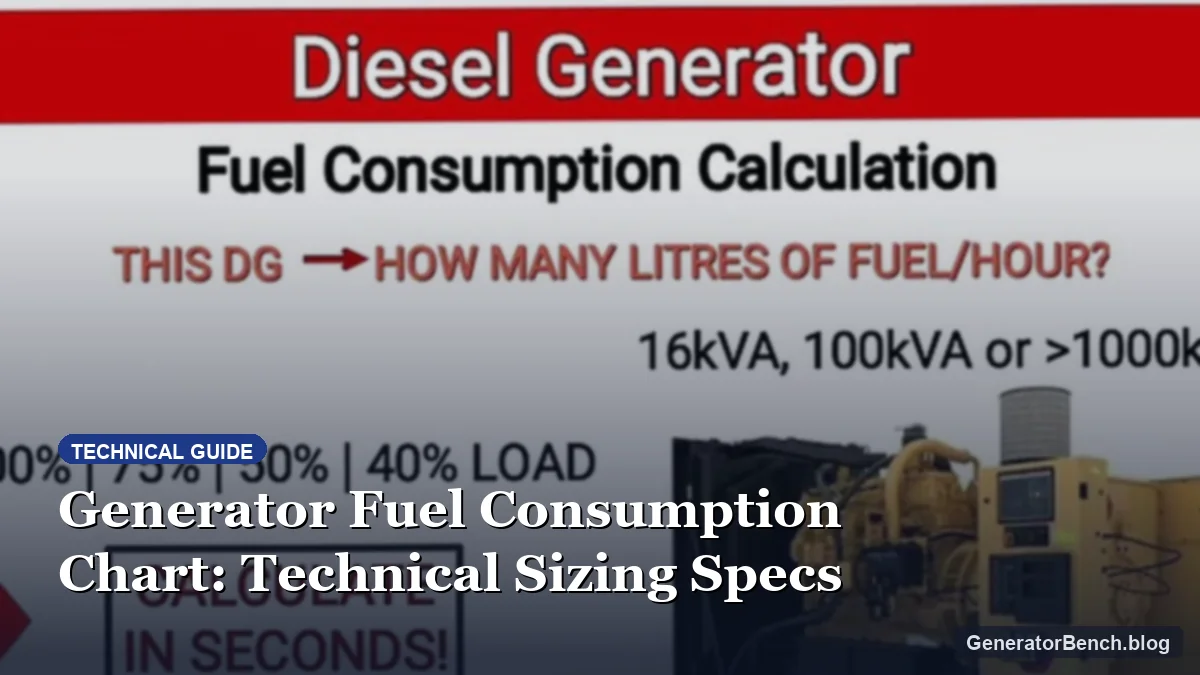
Consulting a generator fuel consumption chart allows technicians to map exact fuel burn against variable electrical loads. Always calculate runtime using fifty percent load benchmarks for operational reliability.
Looking for matching picks? See our Best Dual Fuel Generators.
Practical Quick-Reference Table
| Scenario / Metric | Recommended Target | Why It Matters |
|---|---|---|
| 2000W Inverter (25% Load) | 0.20 Gal/Hr Gasoline | Maximizes runtime efficiency |
| 2000W Inverter (100% Load) | 0.55 Gal/Hr Gasoline | Meets surge demands safely |
| 5000W Portable (50% Load) | 0.45 Gal/Hr Propane | Reduces carbon build-up |
| 5000W Portable (100% Load) | 0.95 Gal/Hr Propane | High thermal output demand |
| 7500W Unit (50% Load) | 0.68 Gal/Hr Gasoline | Balanced fuel efficiency |
| 10000W Unit (100% Load) | 1.25 Gal/Hr Diesel | Heavy commercial duty cycle |
Core Fundamentals and Sizing Principles
Evaluating a generator fuel consumption chart requires understanding how electrical loads directly impact internal combustion engines. Using our generator wattage sizing calculator helps determine exact continuous running watts.
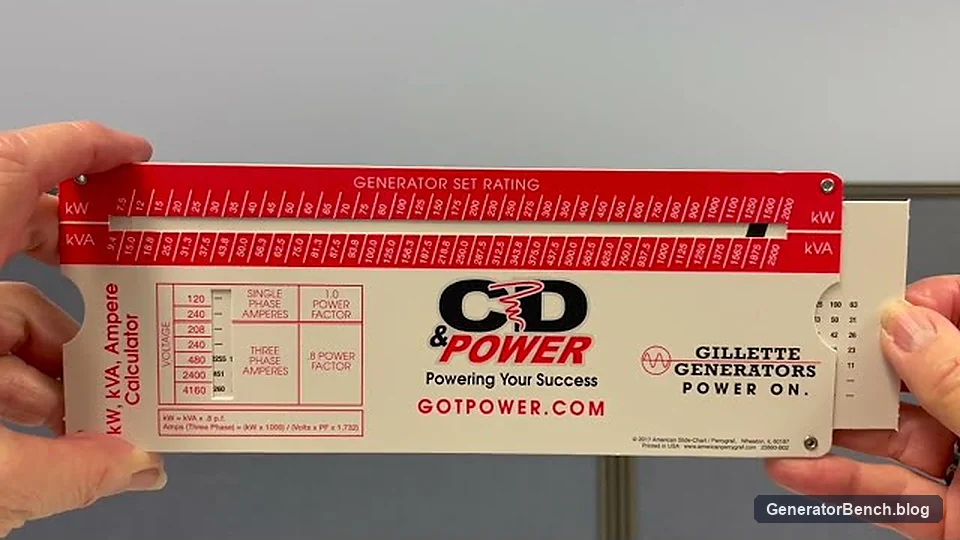
Portable units typically express fuel burn in gallons per hour at quarter, half, and full loads. Technicians must analyze continuous running watts rather than peak starting surges when estimating runtime.
Inverter models vary burn rates by modulating engine speed dynamically. Variable throttle design significantly reduces fuel consumption during partial electrical loads compared to synchronous fixed-speed alternatives.
Ambient temperature and operational elevation also alter overall efficiency. Internal combustion engines lose approximately three percent power output per thousand feet of elevation gain above sea level.
- Always measure total connected running wattage before consulting fuel charts.
- Factor in fuel specific energy differences between gasoline, diesel, and propane.
- Inspect carburetor jets regularly to prevent fuel delivery inefficiencies.
- Maintain clean air filters to ensure optimal stoichiometric air-fuel ratios.
Engine Displacement Mechanics
Larger displacement engines burn more fuel at idle due to increased internal friction. Selecting the correct wattage class prevents unnecessary fuel waste during minor power outages.
Engine stroke design dictates thermal efficiency across varying load conditions. Four-stroke overhead valve configurations provide superior fuel economy compared to legacy side-valve motor designs.
- Match displacement size directly to expected average electrical loads.
- Avoid oversized generators that operate continuously under light load thresholds.
Step-by-Step Setup and Calibration Procedures
Proper initial setup ensures your generator fuel consumption chart calculations match real-world performance. Selecting the best tri fuel generator option requires placing the unit on a level concrete pad to prevent carburetor float sticking.
Verify fuel line integrity and check inline filters for accumulated sediment or debris. Clean fuel lines prevent erratic fuel flow that distorts expected hourly consumption metrics during runtime.
Calibrate the electronic governor linkage to maintain steady rotational frequency under shifting loads. Consistent engine speed prevents sudden fuel surges that prematurely deplete external fuel storage tanks.
Perform a controlled baseline test by applying a known resistive load bank. Measure exact fuel volume consumed over a precise sixty-minute window to verify manufacturer specification accuracy.
- Use fresh fuel treated with stabilizing additives during calibration tests.
- Record ambient temperature and barometric pressure during baseline runs.
- Secure all fuel fittings using proper torque specifications to prevent leaks.
- Calibrate digital hour meters to track maintenance intervals accurately.
Resistive Load Bank Testing
Applying certified resistive load banks helps validate true operational fuel burn. Technicians step loads upward in twenty-five percent increments while recording exact consumption rates.
Documenting these precise measurements establishes a reliable baseline for emergency preparedness planning. Compare empirical test results against standard factory charts to identify hidden mechanical inefficiencies.
- Monitor exhaust gas temperatures during heavy load bank testing.
- Allow engine to cool completely before recording final fuel drops.
Video Walkthrough: Diesel Generator Fuel Consumption | Diesel Consumption of DG | Diesel Generator Consumption Chart
Common Operational Mistakes and Troubleshooting
Operators frequently misread a generator fuel consumption chart by ignoring parasitic loads. Phantom power draws from plugged-in transformers can skew expected runtime estimates by significant margins.
Using degraded or ethanol-laced fuel introduces moisture that clogs microscopic fuel jets. Restricted jets force engines to run lean, creating erratic combustion cycles and unexpected fuel efficiency drops.
Overloading the alternator beyond rated running capacity forces maximum throttle engagement continuously. This continuous high-load operation drains fuel reserves much faster than standard intermittent household usage profiles.
Neglecting routine spark plug inspections leads to incomplete combustion and wasted fuel. Fouled spark plugs demand longer ignition dwell times, reducing overall thermal conversion efficiency across all load states.
- Drain stale fuel from float bowls before storing equipment long-term.
- Replace clogged fuel filters immediately to restore proper pressure.
- Check for binding mechanical choke linkages restricting airflow.
- Avoid mixing oil-gas ratios incorrectly on two-stroke generator variants.
Diagnosing Excessive Fuel Burn
When fuel consumption exceeds chart predictions, inspect the air induction system first. Restricted airflow forces automated chokes to remain partially closed, enriching the fuel mixture excessively.
Inspect fuel pressure regulators on propane and natural gas conversion kits. Reviewing propane vs gas generator fuel consumption data helps diagnose secondary regulator pressure issues causing extreme consumption spikes.
- Measure manifold vacuum to detect internal valve sealing issues.
- Verify carburetor float height meets factory service manual tolerances.
Comprehensive Maintenance and Safety Protocols
Integrating safety checks into your generator fuel consumption chart routine prevents catastrophic failures. Always store reserve fuel containers in certified, well-ventilated outdoor enclosures away from ignition sources.
Inspect fuel hoses annually for dry rot, cracking, or softening caused by modern additives. Degraded rubber lines create dangerous fire hazards and allow volatile fuel vapors to escape.
Maintain proper crankcase oil levels to minimize internal friction and protect piston rings. High internal friction forces the engine to burn extra fuel simply to overcome mechanical resistance.
Clean cooling fins regularly to prevent excessive cylinder head temperatures during extended operation. Overheated engines experience thermal degradation, which drastically reduces fuel-to-energy conversion efficiency over time.
- Ground the generator frame securely using a heavy-duty copper earth rod.
- Keep fire extinguishers rated for Class B fires nearby during fueling.
- Never refuel a hot engine while it is actively running.
- Inspect exhaust spark arrestors monthly for carbon accumulation clogs.
Fuel Storage and Stabilization
Gasoline loses volatile components rapidly when stored in unsealed plastic containers. Treat stored fuel with professional chemical stabilizers to maintain combustion integrity during extended storage periods.
Rotate stored fuel reserves every three to six months to prevent varnish buildup. Fresh fuel ensures reliable cold starts and accurate consumption rates during emergency grid outages.
- Use metal Jerry cans approved for hazardous fluid containment.
- Keep storage areas cool and shielded from direct sunlight exposure.
Fuel Type Comparisons and Efficiency Metrics
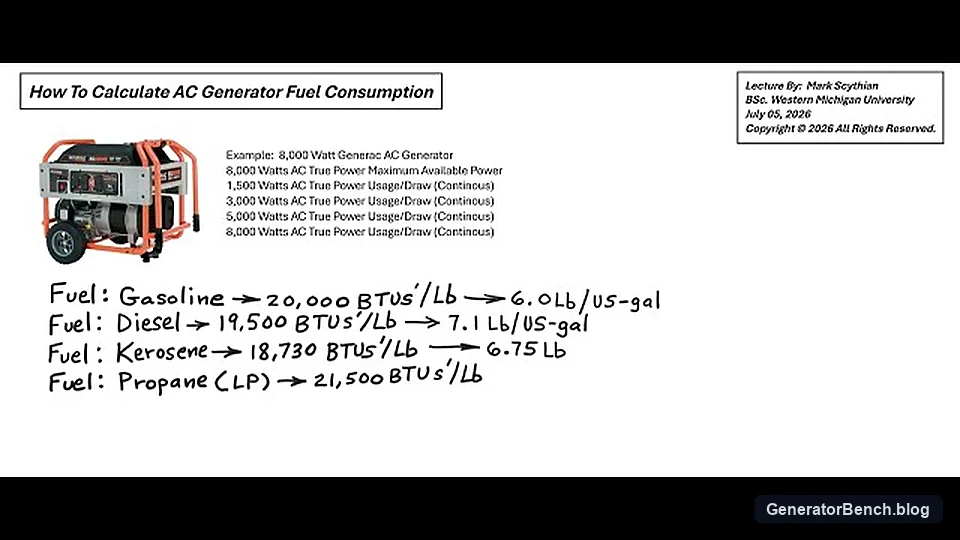
Analyzing fuel efficiency on a generator fuel consumption chart requires evaluating energy density. Gasoline contains approximately 114,000 BTUs per gallon, providing a balanced standard for portable generator performance.
Propane offers cleaner combustion and indefinite storage stability but yields fewer BTUs. Running a generator on propane typically increases hourly fuel consumption by approximately ten to fifteen percent.
Diesel fuel delivers superior energy density at roughly 138,000 BTUs per gallon. Compression-ignition diesel generators achieve exceptional fuel economy, making them ideal for long-duration continuous industrial power applications.
Natural gas provides endless utility pipeline supply but reduces rated generator output. Conversion kits operating on natural gas demand significantly larger volumetric flow rates to match gasoline capacity.
- Compare local fuel prices against BTU content for true cost efficiency.
- Ensure adequate pipe sizing when plumbing permanent natural gas supplies.
- Store propane tanks upright in secured outdoor rack assemblies.
- Factor seasonal fuel grade switches into winter runtime expectations.
BTU Density Impact Analysis
Fuel energy density dictates how many kilowatt-hours you extract per gallon. Understanding these chemical differences helps operators budget precise fuel reserves for extended emergency scenarios.
Multi-fuel generators require manual jet or regulator adjustments when switching sources. Incorrect adjustments severely compromise fuel economy and risk damaging internal combustion chamber components.
- Calculate cost per kilowatt-hour across different fuel options.
- Verify conversion kit certifications before altering factory fuel setups.
Video Walkthrough: Cd and Power Fuel Consumption/Generator Calculator by American Slide Chart | Perrygraf
Environmental Factors and Altitude Compensation
Environmental conditions heavily influence data found on any generator fuel consumption chart. Barometric pressure drops at higher elevations, reducing the oxygen mass available for proper fuel combustion.
Technicians must install appropriate high-altitude carburetor jets when operating above two thousand feet. Failing to swap jets results in a rich fuel mixture, sluggish performance, and wasted fuel.
Ambient humidity levels also alter engine breathing efficiency and volumetric output capacity. Extremely humid air displaces oxygen molecules, forcing the engine control unit or carburetor to adjust flow.
Extreme cold weather increases engine warm-up times and thickens crankcase lubricants. This prolonged viscous drag forces the motor to consume extra fuel before reaching optimal operating temperatures.
- Install altitude-specific main jets according to local topographical maps.
- Use synthetic multi-viscosity oils to ease cold-weather starting friction.
- Shield portable generators from heavy wind and blowing snow drifts.
- Monitor intake air temperature sensors on electronic fuel injection units.
High-Altitude Jetting Procedures
Swapping main jets requires precision tools and a clean workshop environment. Always consult the manufacturer service manual to select the exact jet size matching your operational elevation.
Test the engine under load after jet installation to confirm smooth acceleration. Proper high-altitude tuning restores stoichiometric balance and eliminates unnecessary fuel waste during operation.
- Mark modified carburetors clearly to avoid future tuning confusion.
- Keep spare gasket sets on hand before opening carburetor bowls.
Advanced Load Management and Runtime Optimization
Maximizing runtime beyond standard generator fuel consumption chart guidelines requires strategic load shedding. Staggering heavy motor startup surges prevents momentary overload conditions that spike fuel burn.
Utilizing manual transfer switches allows operators to prioritize essential household circuits efficiently. Turning off non-essential heating or cooling loads drastically reduces continuous electrical demand and fuel consumption.
Digital monitoring systems provide real-time feedback on wattage usage and fuel reserves. Integrating smart sensors allows automated load controllers to disconnect secondary circuits before fuel depletion occurs.
Regular synchronization of inverter generators enables parallel operation for scalable power delivery. Choosing the best dual fuel inverter generator for home backup often consumes less fuel than operating one large portable generator.
- Label heavy appliance breakers clearly for fast manual load shedding.
- Implement automated transfer switches for seamless emergency power management.
- Monitor daily fuel consumption logs to identify efficiency drift trends.
- Schedule preventive maintenance based on exact operating hours logged.
Parallel Inverter Synchronization
Parallel kits link two matching inverter generators to combine electrical output safely. This modular approach allows operators to run a single unit during low-load nighttime hours.
Activating the second unit only when daytime electrical demand spikes conserves precious fuel. This dynamic scaling strategy optimizes fuel efficiency across fluctuating 24-hour operational cycles.
- Verify parallel cable connections are rated for maximum combined amperage.
- Ground both inverter units to a common earth point securely.
Frequently Asked Questions
How do I read a generator fuel consumption chart?
Locate your specific generator wattage model and trace across to your expected electrical load percentage. This cross-reference reveals the estimated gallons per hour required for continuous operation.
Why does my generator burn more fuel than the chart states?
High electrical loads, dirty air filters, or high-altitude operation without proper jetting can increase fuel consumption significantly. Ensure your unit receives regular tune-ups and operates within rated capacities.
Does running a generator on propane use more fuel than gasoline?
Propane has lower energy density than gasoline, typically increasing hourly fuel consumption by ten to fifteen percent. However, propane offers cleaner emissions and eliminates carburetor gumming issues entirely.
How does elevation affect generator fuel efficiency?
Air density decreases at higher altitudes, causing engines to run rich unless fitted with high-altitude jets. This oxygen deficit reduces overall thermal efficiency and wastes available fuel reserves.
What is the most fuel-efficient load percentage for portable generators?
Operating a portable generator around fifty percent load provides the best balance of fuel efficiency and mechanical longevity. Avoid running units continuously at maximum capacity to conserve fuel.