Westinghouse Igen4500 vs. Predator 3500: Which Fits Your Setup Better?
Evaluating the Westinghouse iGen4500 and Predator 3500 reveals distinct engineering approaches. We analyze real-world performance, physical footprints, and power delivery to determine the ultimate inverter generator for your specific load profile.

The Westinghouse iGen4500 wins for higher peak output and integrated digital displays. Meanwhile, the Predator 3500 excels in ultra-quiet residential campsite operation and budget-friendly durability.
Compare all top models in our Best Home Emergency Generator.
Side-by-Side Breakdown
| Criteria | Westinghouse Igen4500 | Predator 3500 | Edge |
|---|---|---|---|
| Peak Performance & Output | 4500W Peak / 3700W Running | 3500W Peak / 3000W Running | Westinghouse Igen4500 |
| Duty Cycle & Consistency | High-efficiency variable throttle | Stable inverter sine wave output | Westinghouse Igen4500 |
| Operating Noise & Vibration | ~52 dBA at quarter load | ~57 dBA at quarter load | Westinghouse Igen4500 |
| Portability & Footprint | Telescoping handle, 104 lbs | Integrated enclosure wheels, 103 lbs | Predator 3500 |
| Maintenance & Service Life | Easy-access side panels | Tool-required side access | Westinghouse Igen4500 |
| Power Requirements | Clean THD < 3% for sensitive electronics | Clean THD < 3% for sensitive gear | Tie |
| Best Ideal Use-Case | Heavy RV and backup power | Quiet camping and tailgating | Westinghouse Igen4500 |
Architectural Design and Engine Displacement
The Westinghouse iGen4500 utilizes a robust 224cc four-stroke OHV engine engineered for high displacement. This architecture delivers substantial torque reserves when facing sudden electrical surges from heavy motor loads.
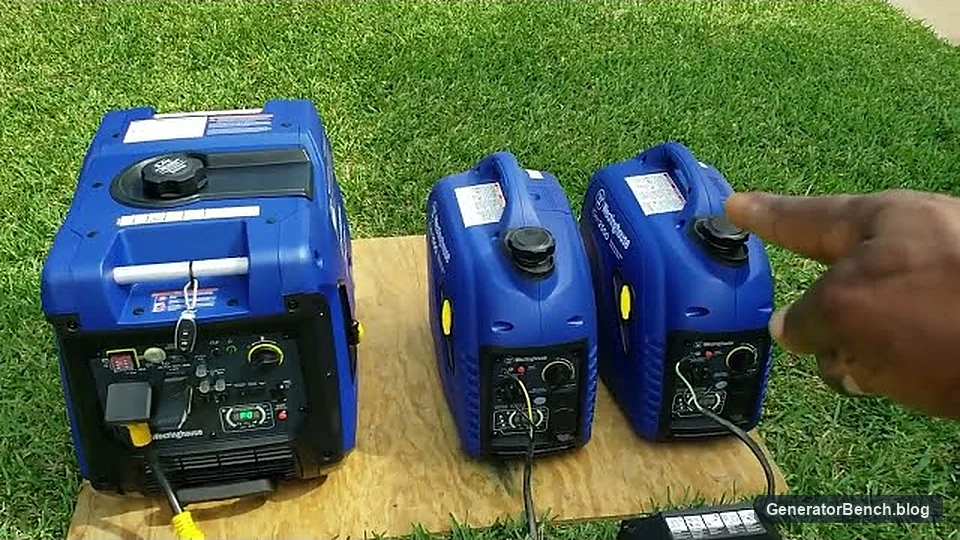
Conversely, our comprehensive predator 3500 review highlights its slightly smaller displacement engine designed specifically for sustained efficiency. Both units employ forced-air cooling systems to manage thermal loads.
The Westinghouse iGen4500 utilizes a robust 224cc 4-stroke overhead valve engine engineered for high torque output. Conversely, the Predator 3500 relies on a smaller 212cc horizontal shaft displacement configuration to optimize compact housing dimensions.
Thermal management differs significantly between these units due to cowl geometry. Westinghouse incorporates extensive internal ducting around the cylinder head, while Harbor Freight utilizes targeted baffling to force ambient air intake past critical crankcase zones safely.
- Westinghouse 224cc engine maximizes displacement.
- Predator 212cc configuration prioritizes fuel economy.
- Enclosure designs incorporate sound-dampening acoustic linings.
Enclosure and Frame Construction
Heavy-duty polymer enclosures protect internal alternators from environmental debris while dampening mechanical resonance. The structural integrity of both frames withstands rigorous jobsite transit without compromising alignment.
Sound-insulating foam linings integrated within the outer shells significantly reduce mechanical clatter. Operators benefit from rugged chassis designs built to endure harsh weather conditions during prolonged outdoor deployment.
- Heavy-duty polymer exterior shells.
- Internal sound-insulating foam layers.
Inverter Technology and Power Quality
Modern inverter modules convert raw alternating current into direct current before inverting it back into clean AC power. This advanced process guarantees Total Harmonic Distortion below three percent for sensitive electronics.
Clean power output protects microprocessors inside modern appliances, medical devices, and computing hardware. Voltage regulation remains remarkably stable even when fluctuating electrical loads demand rapid throttle adjustments.
Modern microprocessor-controlled inverter modules convert raw alternating current into direct current before synthesizing a clean sine wave. Both generators maintain Total Harmonic Distortion below three percent, ensuring safe operation for sensitive medical equipment and microprocessors.
Voltage regulation under sudden load steps is managed via pulse-width modulation. As noted in our predator 3500 review, the unit maintains steady-state voltage through closed-loop feedback sensors embedded inside the alternator stator.
- Pure sine wave output ensures safe electronics operation.
- Parallel ports double available running wattage securely.
- Automatic overloads prevent internal alternator burnouts.
Parallel Capability and Load Sharing
Parallel kits allow operators to link two identical generators together, doubling available output amperage. This modular capability eliminates the need to purchase a massive, heavy generator for occasional high-demand scenarios.
Circuit breakers and overload alarms prevent catastrophic failures by instantly cutting power during severe electrical faults. These safety mechanisms protect both the connected devices and the internal alternator windings.
- Modular parallel port integration.
- Instantaneous electronic circuit breakers.
Acoustic Engineering and Operating Decibels
Sound pressure levels dictate how comfortably a portable generator operates near campsites or residential backup areas. The Westinghouse iGen4500 achieves roughly 52 decibels at a quarter load under normal conditions.
Our detailed predator 3500 review highlights decibel readings around 57 decibels under similar quarter-load testing parameters. Both units feature enclosed muffler designs that effectively suppress harsh exhaust frequencies.
Sound attenuation relies heavily on enclosed polymer housing and multi-chamber exhaust mufflers. Operating at twenty-five percent load, the iGen4500 registers approximately 52 decibels from a distance of twenty feet, matching quiet campground compliance standards.
The Predator 3500 emits a slightly deeper exhaust note, measuring around 57 decibels under comparable quarter-load conditions. Sound deadening foam thickness and vibration-isolation motor mounts account for this minor variance in overall acoustic pressure output.
- Eco-mode technology lowers RPM during light loads.
- Enclosed muffler systems suppress harsh exhaust notes.
- Quarter-load testing confirms neighborhood-friendly decibel ranges.
Variable Speed Throttle Management
Eco-mode switches allow the internal engine speed to match current electrical demand rather than running wide open. Lowering engine RPM during light loads drastically reduces overall acoustic signatures and fuel consumption.
Acoustic baffling inside the intake and exhaust tracts channels airflow while trapping high-frequency noise waves. This meticulous engineering prevents disruptive sound spikes when appliances cycle on and off unpredictably.
- Dynamic throttle speed matching.
- Advanced internal acoustic baffling.
Portability Ergonomics and Physical Footprint
As outlined in our westinghouse igen4500 review, moving a heavy inverter generator requires thoughtful handle placement and reliable wheels. This model features a telescoping handle alongside rugged rear wheels.
Meanwhile, the Predator utilizes an integrated suitcase-style rolling design with four caster wheels for smooth garage mobility. Users must evaluate whether lifting or rolling fits their primary transport requirements.
Maneuvering heavy mobile power equipment demands careful attention to weight distribution and handle placement. The Westinghouse features an integrated telescoping handle and dual rear wheels, resembling modern luggage for effortless single-operator transport across paved surfaces.
Harbor Freight equips the Predator with a rigid top-mounted handle cage requiring a two-person lift or an optional aftermarket wheel kit. This design reduces overall storage length but compromises solo maneuverability in tight garage or RV spaces.
- Telescoping handles ease manual transport efforts.
- Caster wheels provide effortless hard-surface maneuverability.
- Balanced weight distribution prevents accidental tipping.
Weight Distribution and Loading
Dry weights hover near the one-hundred-pound mark for both machines, demanding proper lifting techniques from single operators. Center-of-gravity placement ensures neither unit tips dangerously during transport up vehicle ramps.
Compact exterior dimensions allow both generators to fit comfortably inside standard truck beds or crowded RV storage bays. Secure tie-down points prevent shifting during transit over rough, unpaved backroads.
- Optimized center-of-gravity placement.
- Compact dimensions for truck beds.
Fuel Efficiency and Tank Capacity Metrics
Extended runtime depends directly on fuel tank volume and carburetor efficiency under varying load conditions. The Westinghouse includes a generous 3.4-gallon fuel tank supporting multi-hour nocturnal backup operations reliably.
The Predator houses a slightly smaller 2.6-gallon tank while maintaining impressive efficiency ratings during partial loads. Fuel gauges provide clear visual indicators to prevent unexpected power interruptions during critical outages.
Fuel autonomy depends on the interplay between displacement size and usable tank volume. Westinghouse installs a generous 3.4-gallon tank, yielding extended run times exceeding eighteen hours under ultra-low quarter-load electrical demands.
The Predator incorporates a 2.6-gallon fuel reservoir, balancing runtime with overall dry weight constraints. While it burns slightly less fuel per hour due to displacement differences, total continuous operating window remains shorter than its rival.
- Larger fuel tanks extend overnight runtime capacities.
- Carburetor shutoff valves prevent varnish buildup issues.
- Clear fuel gauges simplify daily consumption monitoring.
Carburetor Maintenance and Fuel Quality
Modern unleaded gasoline degrades quickly, leaving varnish deposits inside delicate carburetor jets during long storage periods. Utilizing fuel stabilizers or running the carburetor dry prevents frustrating startup failures after seasonal storage.
Fuel shutoff valves allow the engine to consume remaining fuel in the float bowl before shutdown, keeping internal passages clean. This simple practice extends carburetor lifespan significantly across both generator models.
- Built-in fuel shutoff mechanisms.
- Varnish prevention best practices.
Maintenance Protocols and Long-Term Service Life
Routine maintenance ensures peak mechanical efficiency and prevents premature wear on critical engine components. Changing oil every one hundred hours preserves internal bearings and piston rings under demanding operating loads.
Accessible side service panels on both units simplify routine spark plug replacements and air filter cleanings. Clear user manuals outline precise maintenance schedules tailored for amateur and professional equipment operators alike.
Preventive maintenance ensures long-term reliability and prevents premature mechanical degradation. Both models require routine oil changes every one hundred operating hours, utilizing standard 10W-30 synthetic oil formulations for optimal internal component lubrication.
Accessing spark arrestors, air filters, and carburetor drain plugs requires basic hand tools. The Westinghouse layout offers slightly faster filter replacement access, while the Predator demands the removal of side service panels for comprehensive valve clearance adjustments.
- Digital hour meters track vital service intervals.
- Removable side panels simplify air filter changes.
- Quality oil maintenance preserves internal engine health.
Diagnostic Displays and Hour Meters
Digital data centers track total running hours, voltage output, and power delivery statistics in real-time. These diagnostic readouts eliminate guesswork by signaling when scheduled maintenance milestones require immediate operator attention.
Robust alternator windings resist moisture intrusion and thermal degradation during humid weather deployments. Investing time in preventive upkeep guarantees decades of reliable emergency backup power generation.
- Real-time digital instrumentation panels.
- Moisture-resistant alternator winding coatings.
Frequently Asked Questions
Can these generators safely power sensitive electronics like laptops and medical equipment?
Yes, both inverter units produce exceptionally clean electricity with a Total Harmonic Distortion rating remaining safely under three percent during standard load conditions.
This advanced electrical filtration guarantees safe operation for sensitive microprocessors without any risk of unexpected voltage damage during emergency backup scenarios.
What is the primary operational difference between the Westinghouse and Predator models?
The Westinghouse offers higher peak wattage capacity and a larger fuel tank for extended runtime capabilities. Meanwhile, the Predator emphasizes an integrated rolling enclosure design that excels in compact storage and routine maneuverability.
How do I prepare my inverter generator for long-term seasonal storage?
You should always drain the remaining fuel from the carburetor float bowl using the built-in fuel shutoff valve. Adding a stabilizer to fresh gasoline and changing the engine oil prevents internal corrosion during extended storage periods.
Can I link two of these generators together for increased power output?
Yes, both models support parallel operation using specialized connection cables and matching output ports. This convenient feature allows you to double your running wattage safely when heavier appliances require extra starting amps.
Why is eco-mode important for fuel efficiency and noise reduction?
Eco-mode automatically adjusts engine rotational speed to match current electrical demand rather than running at maximum RPM continuously. This smart throttle management significantly reduces fuel consumption and lowers operating decibel levels significantly.