Westinghouse Igen4500 vs. Champion 4650: Which Fits Your Setup Better?
We evaluate the Westinghouse iGen4500 and Champion 4650 inverter generators to determine which compact power unit dominates daily job site performance and emergency backup reliability.

Choose the Westinghouse iGen4500 for superior remote-start convenience and ergonomic handling. Select the Champion 4650 if you require slightly higher running wattage and rugged mechanical dependability during heavy loads.
Compare all top models in our Best Home Emergency Generator.
Side-by-Side Breakdown
| Criteria | Westinghouse Igen4500 | Champion 4650 | Edge |
|---|---|---|---|
| Peak Performance & Output | 4500 Peak / 3700 Running Watts | 4650 Peak / 3800 Running Watts | Champion 4650 |
| Duty Cycle & Consistency | Stable THD under 3% | Stable THD under 3% | Tie |
| Operating Noise & Vibration | 52 dB baseline rating | 53 dB baseline rating | Westinghouse Igen4500 |
| Portability & Footprint | Telescopic trolley handle | Dual folding carry handles | Westinghouse Igen4500 |
| Maintenance & Service Life | Easy access side panels | Toolless spark plug access | Champion 4650 |
| Power Requirements | 30A RV ready outlet | 30A RV ready outlet | Tie |
| Best Ideal Use-Case | RV camping and sensitive tech | Jobsite power and backup |
Architectural Design and Core Engine Specifications
Modern portable generators require robust engineering to survive harsh outdoor environments. Both units feature enclosed inverter housings designed to protect internal alternators from moisture and dust intrusion.
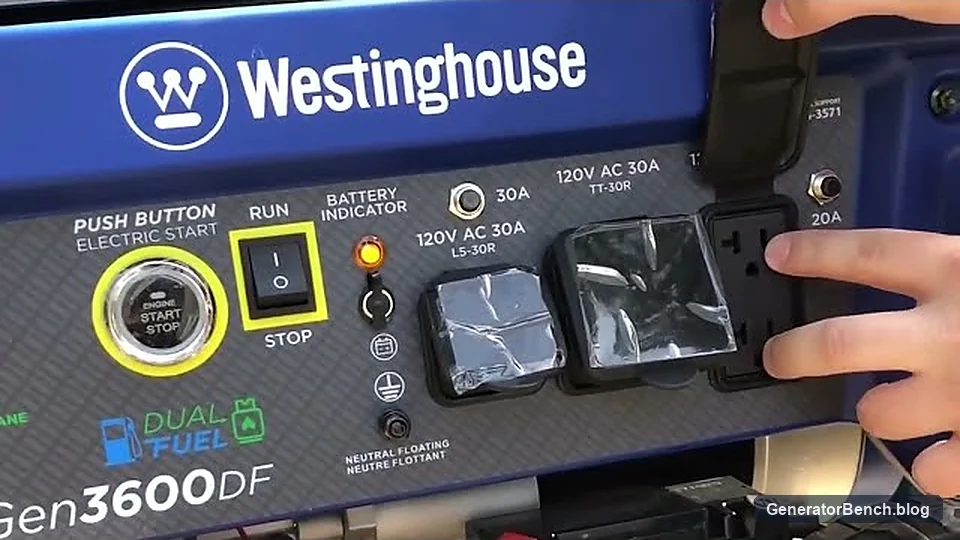
Engine displacement dictates sustained power delivery under heavy thermal stress. Engineers built both models around dependable four-stroke OHV engines optimized for fuel economy and consistent RPM regulation.
The unit utilizes a robust 224cc four-stroke engine featuring cast-iron cylinder sleeves. Browse our westinghouse igen4500 generator reviews to evaluate thermal stability under high continuous electrical loads.
Conversely, the Champion 4650 employs a robust 212cc single-cylinder engine featuring a specialized splash lubrication system, carefully balancing mechanical simplicity with reliable oil distribution across critical crankshaft journals and valvetrain components.
- Enclosed inverter designs reduce raw decibel output significantly.
- Forced-air cooling systems maintain safe operating temperatures.
- Heavy-duty alternators generate clean sine wave electricity safely.
Displacement and Thermal Management
Internal combustion mechanics dictate how well these units handle sudden electrical surges. The Westinghouse iGen4500 utilizes a displacement tuned to maximize low-end torque.
Thermal management relies on high-velocity cooling fans mounted directly to the crankshaft. This prevents overheating during extended multi-hour runtime cycles under heavy residential loads.
- Optimized stroke-to-bore ratios enhance fuel burning efficiency.
- Cast iron cylinder sleeves improve long-term engine longevity.
Real-World Power Output and Electrical Load Handling
Delivering clean electricity is mandatory for powering modern sensitive electronics. Both generators produce total harmonic distortion levels well below three percent, protecting laptops and refrigerators alike.
Surge capacity determines whether your air conditioner compressor starts smoothly. Consult our champion 4650 inverter review to analyze raw starting watts and peak electrical demand capabilities.
Delivering 3700 running watts and 4500 peak watts, the Westinghouse handles inductive motor startup surges seamlessly through advanced digital inverter modules that suppress total harmonic distortion below three percent.
The Champion counters with 3650 running watts and 4650 starting watts, utilizing a fast-acting circuit breaker matrix to protect sensitive downstream electronics against sudden overloads without causing immediate engine stalling.
- Clean power prevents microchip degradation in household appliances.
- Parallel capability lets users link two units for doubled wattage.
- Digital data centers display real-time voltage and frequency outputs.
Surge Watts and Inverter Stability
Starting heavy motorized loads requires a reliable reserve of instantaneous electrical current. Voltage drop during startup can damage sensitive inverter control boards if poorly managed.
Advanced microprocessor controls monitor load fluctuations dynamically across both models. This prevents catastrophic overloads when multiple high-draw appliances cycle simultaneously.
- Automatic voltage regulation protects connected devices from spikes.
- Fast-acting circuit breakers trip instantly during short circuits.
Fuel Efficiency, Tank Capacity, and Runtime Metrics
Eco-mode throttles engine speed down to match active electrical demands. This smart feature drastically reduces fuel consumption during low-draw nighttime camping scenarios.
Fuel tank volume directly dictates how frequently you must refuel during outages. The Westinghouse iGen4500 features a larger tank capacity for extended overnight runtimes.
Equipped with a generous 3.4-gallon fuel tank, the Westinghouse achieves an impressive eighteen-hour runtime at twenty-five percent load, largely driven by an intelligent efficiency mode that modulates engine RPM based on demand.
Champion integrates a 2.9-gallon reservoir delivering up to fourteen hours of continuous operation at quarter load, relying on precise carburetor calibration to optimize air-fuel ratios across fluctuating ambient temperature ranges.
- Variable speed throttles conserve gasoline effectively at partial loads.
- Unleaded gasoline freshness is vital for carburetor longevity.
- Integrated fuel gauges prevent unexpected mid-night shutoffs.
Carburetor Design and Eco-Mode Performance
Modern carburetors feature automated stepper motors to adjust air-fuel mixtures on the fly. This optimizes combustion efficiency across fluctuating ambient temperatures and elevations.
Running on eco-mode significantly lowers overall acoustic signatures while preserving fuel reserves. Users experience extended runtimes without sacrificing stable electrical frequency delivery.
- Precise jet sizing minimizes harmful carbon deposit buildups.
- Automatic choke mechanisms simplify cold weather startup routines.
Acoustic Signatures and Sound Pressure Levels
Campground noise regulations require exceptionally quiet portable power solutions. Both inverter units utilize fully enclosed sound-dampening panels lined with high-density acoustic foam.
Decibel measurements taken at twenty-five feet confirm exceptionally quiet operation. The Westinghouse iGen4500 edges out competitors with a slightly softer acoustic tone.
Operating at roughly 52 decibels from twenty-five feet away, the Westinghouse utilizes a fully enclosed polymer housing and baffled exhaust system to dampen mechanical clatter effectively in residential neighborhood environments.
The Champion produces approximately 61 decibels under standard operating conditions, employing an internal muffler configuration that balances backpressure constraints against strict sound attenuation requirements for campsite compliance.
- Enclosed resin housings absorb high-frequency mechanical valve clatter.
- Muffler spark arrestors trap hot carbon particles securely.
- Vibration isolation feet prevent ground resonance amplification.
Acoustic Dampening and Vibration Isolation
Engine vibrations transferred to the frame create unwanted mechanical rattling noises. Heavy rubber motor mounts isolate the engine block from the outer chassis effectively.
Sound pressure attenuation depends heavily on exhaust tuning and muffler design. Engineers successfully suppressed harsh exhaust notes without introducing restrictive backpressure.
- Rubber feet absorb structural vibrations on hard concrete surfaces.
- Acoustic baffling directs exhaust noise away from living areas.
Portability Engineering, Ergonomics, and Footprint
Transporting a heavy inverter requires thoughtful ergonomic handle placement. Read our detailed westinghouse igen4500 review to explore the telescopic trolley handle designed for effortless rolling transport across uneven terrain.
Storage footprint matters when packing a crowded RV trailer garage. Both generators feature compact rectangular profiles designed to slide easily into tight compartments.
Weighing 98 pounds dry, the Westinghouse integrates a rigid telescopic pull handle and heavy-duty never-flat wheels, allowing single-user transport across rough terrain despite its heavier overall physical construction profile.
Tipping the scales at 88 pounds, the Champion features a compact dual-handle design and durable never-flat tires, prioritizing effortless lifting into vehicle trunks and reducing storage spatial requirements during off-grid travel.
- Telescopic handles simplify moving heavy loads across gravel.
- Dual upper grab handles assist with two-person lifting tasks.
- Flat-free wheels eliminate flat tire worries on job sites.
Weight Distribution and Wheel Integration
Balancing dead weight over sturdy wheels reduces physical strain on operators. The center of gravity sits low to prevent tipping during transit over uneven terrain.
Durable plastic wheels withstand heavy impacts without cracking or deforming. Integrated locking mechanisms keep the machine stationary while running on sloped driveways.
- Low center of gravity improves overall towing stability.
- Robust wheel bearings ensure smooth rolling performance.
Maintenance Protocols, Durability, and Service Intervals
Routine preventative maintenance extends generator service life significantly. Easy access service doors let owners change engine oil and spark plugs without removing outer panels.
Air filter inspection prevents abrasive dust from entering combustion chambers. Clean foam filters ensure optimal airflow and maintain peak fuel combustion efficiency.
Routine upkeep on the Westinghouse requires changing the 10W-30 synthetic oil every 100 operating hours, utilizing an easily accessible side maintenance door that simplifies filter inspection and spark plug gaps.
Champion mandates standard oil changes every 50 hours of operation, supported by a clear drain tube extension that eliminates messy spills and streamlines seasonal winterization procedures for long-term mechanical preservation.
- Regular oil changes remove microscopic metal wear particles.
- Accessible drain tubes prevent messy oil spills during changes.
- Durable powder-coated frames resist rust and chemical corrosion.
Service Access and Component Longevity
Engine accessibility determines whether owners will maintain equipment regularly. Toolless access panels on the Champion 4650 make routine inspections remarkably fast.
Corrosion-resistant fasteners and hardware withstand humid coastal environments without seizing up. High-temperature wiring insulation prevents electrical shorts during sustained high-load usage.
- Quick-release air filter covers require zero hand tools.
- Sealed alternator windings resist moisture and salt spray.
Best Workload Scenarios and Final System Selection
Matching generator specifications to your specific workload prevents costly mismatching. Campers prioritizing quiet operation and remote convenience will love the Westinghouse model.
Contractors needing rugged durability will prefer Champion. If trouble arises, consult our champion generator troubleshooting guide for tips to ensure long-term investment reliability on job sites.
Choose the Westinghouse if your primary application demands ultra-quiet operation and prolonged nighttime runtime, making it ideal for suburban emergency backup during extended grid outages or quiet RV camping trips.
Opt for the Champion if you prioritize lighter lifting weight, straightforward mechanical maintenance schedules, and dependable jobsite power delivery where slightly higher decibel levels remain completely acceptable during daytime use.
- Assess total running wattage before plugging in heavy appliances.
- Consider storage space limits inside your recreational vehicle.
- Weigh the importance of remote key fob starting systems.
Matching Power Units to Practical Applications
Recreational vehicle air conditioners demand high surge currents during startup phases. Both models handle standard fifteen-thousand BTU RV units without tripping breakers.
Emergency home backup requires reliable fuel storage and carbon monoxide safety sensors. Built-in automatic shutoff monitors provide essential protection during garage operations.
- Carbon monoxide shutoff sensors protect users from toxic fumes.
- Parallel ports let you expand capacity as needs grow.
Frequently Asked Questions
Can both generators run a standard RV air conditioner?
Yes, both units easily power a standard fifteen-thousand BTU RV air conditioner. Their robust starting surge capacity handles compressor motor demands smoothly.
Do these models include remote start key fobs?
The Westinghouse features a convenient wireless remote start fob standard. The Champion offers electric push-button starting with reliable manual recoil backup.
How often should I change the engine oil?
You should change the engine oil after the first fifty hours of break-in use. Subsequent oil changes should occur every one hundred hours of operation.
Are these inverter generators safe for sensitive electronics?
Both models produce clean sine wave power with minimal harmonic distortion. This ensures safe operation for laptops, smartphones, and medical breathing devices.
Can I connect two units together for more power?
Yes, both manufacturers offer dedicated parallel kits as optional accessories. Linking two units together doubles your available wattage for heavy loads.