Quiet Generator vs. Standard Generator: Which Fits Your Setup Better?
When choosing between a portable inverter generator and a conventional frame model, understanding acoustic dampening and total harmonic distortion dictates your long-term real-world success.

Choose the quiet generator for sensitive electronics and residential camping where noise ordinances matter. Select the standard generator for heavy jobsite framing tools and high-draw emergency backup demands.
Compare all top models in our Best Home Emergency Generator.
Side-by-Side Breakdown
| Criteria | Quiet Generator | Standard Generator | Edge |
|---|---|---|---|
| Peak Performance & Output | Inverter tech capped at lower max | Standard models push high raw wattage | Standard Generator |
| Duty Cycle & Consistency | Inverter provides clean sine wave | Standard offers robust continuous power | Quiet Generator |
| Operating Noise & Vibration | Enclosed mufflers achieve 50-60 dB | Open frames exceed 75-85 dB | Quiet Generator |
| Portability & Footprint | Compact enclosed housing | Heavy steel tubular frame | Quiet Generator |
| Maintenance & Service Life | Complex inverter boards require care | Simple alternators endure harsh elements | Standard Generator |
| Power Requirements | Clean THD under 3 percent | Standard THD can exceed 15 percent | Quiet Generator |
| Best Ideal Use-Case | RV camping and tailgating | Construction sites and whole-home backup | Split / Application Dependent |
Acoustic Engineering and Sound Pressure Mechanics
Acoustic engineering separates modern portable power units from conventional open-frame alternatives through advanced sound-dampening enclosures. Manufacturers utilize multi-layered sound-absorbing foam to drastically reduce engine decibel output during standard operation.
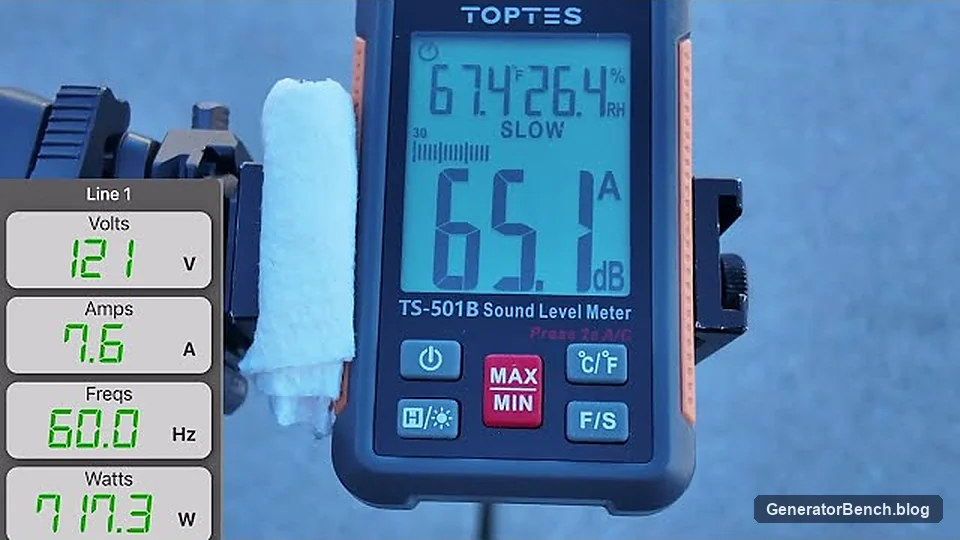
Decibel measurements operate on a logarithmic scale, meaning small numerical decreases represent massive reductions in perceived human hearing volume. A standard unit running at eighty decibels sounds twice as loud as an enclosed inverter running at seventy decibels.
- Enclosed inverter housings capture mechanical engine vibration effectively.
- Open-frame standard alternators radiate high-frequency mechanical noise directly outward.
- Muffler baffling designs dictate low-frequency exhaust tone harshness.
Sound Suppression Technologies
Specialized composite plastic casings isolate the internal combustion engine from the external environment. This physical barrier stops acoustic waves from projecting across open campsites or residential backyards.
Exhaust routing through internal expansion chambers further tames the sharp pop of single-cylinder overhead valve motors. Acoustic dampening transforms a roaring industrial machine into a tolerable background hum.
- Molded resin panels seal sound leaks efficiently.
- Rubber gasket seals isolate vibration transfer.
Alternator Architecture and Power Quality
Power quality determines whether sensitive modern appliances can safely plug into your portable power source without sustaining electrical damage. Standard generators produce raw alternating current tied directly to engine rotational speed.
Selecting units from our best quiet generator list ensures you get advanced models that decouple engine RPM from electrical frequency. This rectification process delivers a clean sine wave matching residential wall outlets.
- Inverter units maintain total harmonic distortion below three percent consistently.
- Standard alternators often exhibit voltage spikes under sudden heavy motor loads.
- Inverter microchips protect smart devices, laptops, and medical CPAP machines.
Total Harmonic Distortion and Electronics
Electrical noise inside standard alternator windings introduces erratic voltage fluctuations that overheat sensitive circuit boards over time. Clean electrical output prevents premature failure in microprocessor-controlled heating and cooling appliances.
Jobsite tools care very little about pure sine waves, but digital charging stations demand pristine electrical delivery. Choosing the right architecture prevents costly equipment replacement down the road.
- Microprocessors smooth out raw electrical currency waves.
- Brushed alternators create higher electrical ripple effects.
Fuel Efficiency and Variable Engine Speeds
Traditional generators must maintain a constant three thousand six hundred revolutions per minute to generate sixty hertz electrical frequency. This rigid mechanical constraint burns excessive fuel regardless of whether your connected load is minimal.
Inverter generators feature intelligent throttle systems that automatically adjust engine speed to match current electrical demand. Variable engine speeds conserve fuel reserves during low-draw operational periods seamlessly.
- Eco-throttle modes dramatically extend overnight runtime on a single tank.
- Constant speed designs sacrifice fuel efficiency during light appliance loads.
- Carbureted systems require careful fuel management during storage periods.
Smart Throttle Integration
Sensors monitor electrical current draw in real-time, signaling the electronic governor to dial back throttle plates instantly. Fuel consumption drops significantly when powering only a refrigerator and a few LED lights.
Standard generators lack this modulation capability, forcing pistons to pump at maximum velocity continuously. Operational efficiency becomes a major factor during extended multi-day grid outages.
- Stepper motors adjust carburetor butterfly valves dynamically.
- Fuel consumption scales precisely with active load.
Portability, Weight Distribution, and Enclosure Design
Weight and physical dimensions dictate how easily a single operator can load power equipment into a truck bed. Enclosed inverter units utilize lightweight composite shells and integrated luggage handles for ergonomic transport.
Standard models rely on heavy tubular steel frames requiring rugged wheels and lifting coordination. Exploring our best camping generator rankings reveals how ergonomic portability makes these enclosed units vastly superior for mobile recreation.
- Compact suitcases fit easily inside crowded vehicle trunks and storage lockers.
- Open-frame rolling chassis demand reinforced loading ramps for transport.
- Center of gravity placement impacts physical lifting strain significantly.
Ergonomics and Transport Logistics
Maneuverability around tight campsites or crowded tailgating areas highlights the physical advantages of modern plastic-molded enclosures. Recessed grab points allow comfortable lifting without awkward wrist angles or pinched fingers.
Conventional frame units trade away user comfort for rugged structural integrity designed to withstand chaotic construction site environments. Selecting your model depends heavily on your physical handling capabilities.
- Telescoping pull handles mimic travel luggage designs.
- Open steel frames require awkward lifting grips.
Structural Durability in Harsh Environmental Conditions
Jobsite environments test the physical resilience of mechanical equipment through dust, moisture, and accidental physical impacts. Standard open-frame generators expose their engine blocks and alternators directly to airborne jobsite debris.
Enclosed quiet models trap cooling airflow inside tighter channels, raising operating temperatures in extreme ambient heat. Reviewing top models in our best quiet generator for rv guide proves effective thermal management remains critical.
- Open frames allow superior natural convective cooling during heavy continuous use.
- Plastic shells protect internal electronics from driving rain and mud splashes.
- Vibration isolators prevent frame fatigue over thousands of operating hours.
Environmental Resilience
Heavy-duty steel framing withstands rough handling from heavy equipment operators on active construction sites without cracking. Composite inverter panels offer excellent corrosion resistance against coastal salt air and moisture exposure.
Understanding your operating climate helps determine whether you need robust impact protection or weather-resistant electronic housings. Each architecture solves specific environmental hazards differently.
- Powder-coated steel resists rust in damp climates.
- UV-stabilized plastics prevent sun fading on job sites.
Maintenance Protocols and Component Serviceability
Routine maintenance keeps internal combustion engines running reliably over thousands of cumulative operating hours. Standard generators offer wide-open access to spark plugs, carburetors, and oil drain plugs for effortless servicing.
Quiet inverter units require removing multiple acoustic panels just to check routine fluid levels. Exploring options in our best quiet generator for home review shows why simplified serviceability benefits DIY mechanics.
- Quick-access side panels reduce routine oil change times significantly.
- Complex inverter control boards demand professional diagnostic tools for repairs.
- Carburetor cleaning is easier on accessible traditional overhead valve engines.
DIY Repair and Servicing
Mechanics appreciate the straightforward wiring harnesses and exposed components found on traditional open-frame power equipment. Troubleshooting electrical faults takes minimal time when every connection remains clearly visible.
Inverter electronics integrate circuit boards that resist field repairs, often requiring complete module replacement when components fail. Long-term ownership costs reflect these underlying design differences.
- Exposed terminal blocks simplify multimeter testing.
- Housed inverters require partial disassembly for testing.
Financial Investment and Long-Term Operating Costs
Initial purchase price and ongoing fuel consumption dictate the true cost of generator ownership over time. Standard models provide high raw wattage output at a remarkably low initial financial investment.
Quiet inverter generators command premium retail pricing due to complex microprocessors and sophisticated acoustic enclosure manufacturing. Long-term investment value depends on balancing your specific power needs against budget limits.
- Traditional frames deliver maximum raw watts per dollar spent upfront.
- Inverter fuel savings accumulate rapidly during light-load overnight camping trips.
- Resale values favor well-maintained portable inverter units significantly.
Cost Analysis and Value
Budget-conscious buyers often gravitate toward conventional generators when outfitting a remote workshop or storm kit. Premium inverter buyers pay for acoustic comfort and delicate electronics protection.
Evaluating your anticipated runtime hours reveals whether fuel efficiency savings offset higher initial equipment costs. Strategic purchasing ensures you never overpay for unnecessary engineering features.
- Upfront savings appeal to emergency-only homeowners.
- Fuel economy rewards frequent recreational users.
Frequently Asked Questions
Can quiet generators power heavy construction tools like circular saws?
Most parallel-capable units handle heavy startup surges, but single standard models excel at continuous high-draw demands. Standard generators remain the preferred choice for heavy-duty jobsites.
Why are quiet generators significantly more expensive than standard models?
Complex microprocessor inverters and precision acoustic dampening enclosures require advanced manufacturing processes. These integrated technologies drive up production costs while delivering clean sine wave power.
Are standard generators too loud for typical residential neighborhood use?
Open-frame exhaust noise easily exceeds seventy-five decibels, irritating nearby neighbors during extended power outages. Quiet enclosures are much better suited for populated residential zones.
Do inverter generators require special maintenance procedures?
Internal combustion engines follow standard oil and filter schedules, but electronic inverter boards need dry storage. Protecting sensitive control modules prevents costly electrical failures.
Can I run two smaller quiet generators together for more power?
Parallel connection kits allow linking matching inverter units to double your total available amperage output safely. This modular flexibility makes parallel setups popular for RV owners.