Manual Start Generator vs. Electric Start Generator: Which Fits Your Setup Better?
Choosing between a pull-cord and a button-start involves balancing mechanical simplicity against modern convenience. Evaluate how these starting mechanisms impact daily operation and overall reliability.

For remote job sites requiring absolute bare-bones reliability, the manual start generator wins on durability. For home backup and frequent use, the electric start generator is the superior choice.
Compare all top models in our Best Home Emergency Generator.
Side-by-Side Breakdown
| Criteria | Manual Start Generator | Electric Start Generator | Edge |
|---|---|---|---|
| Peak Performance & Output | Identical engine displacement yields equivalent electrical output ratings. | Comparable raw wattage delivered via standard alternator heads. | Tie |
| Duty Cycle & Consistency | Reliable operation unaffected by dead starting batteries or relays. | Dependent on 12V battery health and starter solenoid integrity. | Manual Start Generator |
| Operating Noise & Vibration | Standard mechanical hum with zero added starter motor weight. | Slightly heavier flywheel assembly housing starter ring gears. | Manual Start Generator |
| Portability & Footprint | Lighter overall curb weight due to missing battery and cables. | Added weight from onboard lead-acid or lithium starter batteries. | Manual Start Generator |
| Maintenance & Service Life | Fewer electrical failure points and zero battery replacements needed. | Requires routine battery charging, terminal cleaning, and fuse checks. | Manual Start Generator |
| Power Requirements | Zero auxiliary electrical draw required to initiate combustion cycle. | Demands sufficient reserve charge in the starting battery to crank. | Manual Start Generator |
| Best Ideal Use-Case | Emergency backup, deep wilderness camping, and rugged job sites. | Home standby integration, frequent cycling, and effortless operation. | Electric Start Generator |
Mechanical Architecture and Ignition Fundamentals
Understanding how mechanical recoil systems operate reveals the core engineering behind pull-start units. A spring-loaded reel engages the crankshaft directly when pulled, spinning the flywheel past ignition coils.
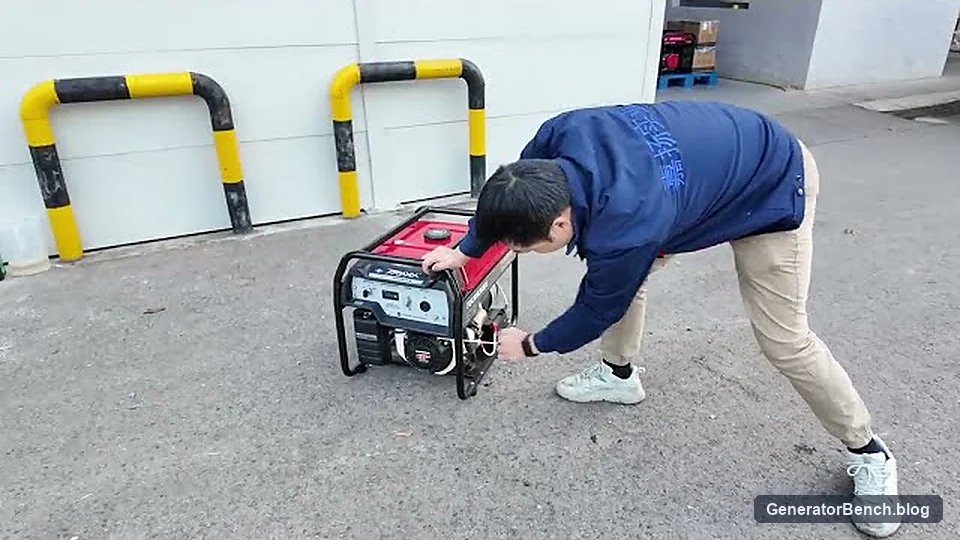
This direct linkage eliminates intermediate electrical dependencies. Operators generate the rotational velocity required to spark the combustion chamber entirely through physical leverage and upper body strength.
Engineers design these systems for maximum mechanical efficiency. Minimal components mean fewer potential points of failure when operating in harsh, debris-filled environments or extreme weather conditions.
Manual recoil systems rely on a spring-loaded pulley and a robust nylon cord to spin the crankshaft directly. This mechanical simplicity eliminates parasitic drag and reduces total dry weight significantly.
Ignition timing on pull-start models depends on a flywheel magneto generating high voltage during rapid rotation. Without battery dependency, these units spark reliably even after prolonged outdoor storage periods.
Conversely, upgrading to the best electric start generator incorporates a ring gear welded to the flywheel periphery. This structural modification slightly increases rotational inertia, which stabilizes engine speed under fluctuating electrical loads.
- Direct mechanical linkage to crankshaft
- Zero electrical power required for ignition
- Reduced overall unit weight and complexity
Recoil Mechanics and Physics
The physics of a pull-cord mechanism rely on rapid rotational acceleration. You must overcome compression stroke resistance instantly to generate a strong spark at the plug.
Cold weather dramatically increases oil viscosity, making initial pulls significantly harder. Proper maintenance of the starter rope and internal dog clutch ensures reliable engagement every single time.
- Overcomes high compression stroke resistance
- Affected by ambient temperature and oil thickness
Electrical Starter Systems and Battery Integration
Push-button units integrate a 12-volt starter motor, solenoid, and battery charging circuit. Turning the key or pressing the start switch engages a small pinion gear with the flywheel ring.
This configuration shifts the physical burden from the operator to an onboard power source. Consequently, users enjoy instant ignition without the physical exertion typically required by recoil cords.
However, this convenience introduces complex electrical dependencies. If the starting battery loses its charge or terminal corrosion occurs, the generator will refuse to crank regardless of fuel levels.
Electric start generators integrate a 12-volt DC starter motor that engages the flywheel ring gear via a solenoid-actuated bendix drive. This system demands robust cabling to handle high initial starting current spikes safely.
Battery health dictates reliability in units like our recommended best 5000 watt electric start portable generator, requiring regular trickle charging. AGM batteries are commonly preferred over flooded lead-acid variants to prevent electrolyte leakage during transport.
Alternator charging coils continuously replenish the starting battery while the engine runs at rated RPM. However, short runtime cycles prevent complete battery recovery, eventually necessitating external maintenance charging protocols.
- Onboard starter motor and solenoid integration
- Requires periodic battery maintenance and charging
- Eliminates physical strain during startup sequences
Battery Chemistry and Maintenance
Most units utilize sealed lead-acid or lightweight lithium starting batteries. Maintaining these power sources is critical for ensuring reliable emergency response capability during sudden utility outages.
Trickle chargers or solar maintainers are often necessary accessories. Neglecting battery health can leave you stranded with a full tank of fuel and zero electrical output.
- Utilizes sealed lead-acid or lithium cells
- Demands routine trickle charging or monitoring
Performance & Real-World Output Analysis
Evaluating raw electrical output reveals that starting mechanism types do not influence running wattage. A 5000-watt generator produces identical AC power whether initiated by a cord or a switch.
Engine displacement, alternator winding quality, and carburetor tuning dictate actual power delivery. The ignition method is simply a mechanical convenience feature rather than a performance multiplier.
Users must focus on running watts and surge capacity rather than how the engine starts. Voltage regulation and total harmonic distortion remain comparable across both equipment categories.
Starting mechanisms do not alter fundamental alternator output, meaning both types deliver identical surge wattage capacities. Voltage regulation remains tied entirely to the automatic voltage regulator and engine governor response times.
Real-world voltage stability depends heavily on maintaining precise engine speed under heavy inductive loads. Selecting the best dual fuel electric start generator provides digital frequency controls that stabilize power delivery better than legacy mechanical governors.
Environmental conditions impact both designs differently, with cold weather thickening crankcase oil. Manual pulls require more physical effort, whereas electric starters demand adequate cold cranking amps from the auxiliary battery.
- Starting method does not alter running wattage
- Engine displacement dictates true power output
- Voltage regulation remains consistent across types
Surge Capacity and Motor Starting
Heavy inductive loads require substantial surge wattage during initial startup phases. Both system types handle motor starting identically if engine displacement and alternator specs match.
The primary difference lies in how quickly auxiliary systems recover. Electric models draw minor power for controls, while manual models rely purely on magnetic induction.
- Identical inductive load handling capabilities
- Surge wattage depends on alternator sizing
Build Quality, Maintenance & Durability Standards
Rugged build quality is a hallmark of traditional recoil-start generators. With fewer electrical relays, fuses, and starter motors, these machines endure severe vibrations and harsh weather exceptionally well.
Maintenance routines focus primarily on carburetor cleaning, oil changes, and spark plug inspections. There are no battery terminals to clean or starter bendix gears to lubricate over time.
Conversely, push-button models require multifaceted maintenance schedules. Technicians must inspect electrical connections, verify charging output from the stator, and test battery reserve capacity annually.
Recoil assemblies feature fewer failure points, avoiding electrical relay failures or starter motor brush wear. Routine maintenance focuses on inspecting the pull cord fraying and lubricating the internal recoil return spring periodically.
Units featured in our best quiet portable generator electric start lineup introduce complex wiring harnesses and switches vulnerable to moisture ingress. Technicians must inspect terminal corrosion regularly to ensure uninterrupted circuit continuity during emergencies.
Frame reinforcements are frequently heavier on electric start models to accommodate the battery mounting tray. Manufacturers utilize vibration-dampening rubber motor mounts to protect delicate starter components from excessive mechanical resonance.
- Recoil units boast fewer electrical failure points
- Push-button models require battery health checks
- Both demand rigorous engine oil and filter service
Long-Term Storage Considerations
Preparing equipment for long-term storage differs notably between variants. Manual units simply require fuel stabilization and a drained carburetor bowl before being stored away securely.
Electric models require the additional step of disconnecting or removing the starting battery. Leaving a battery connected during prolonged storage risks deep discharge and sulfation damage.
- Storage requires carburetor draining for both types
- Battery disconnection is mandatory for electric units
Noise, Efficiency & Physical Footprint Metrics
Acoustic output profiles between these two generator types are surprisingly similar. The mechanical combustion noise of the engine dwarfs any minor sound differences produced by starter mechanisms.
Fuel efficiency is governed strictly by displacement and inverter throttle modulation. Neither ignition style inherently consumes more gasoline or propane during steady-state operation under load.
However, physical footprint and weight metrics favor traditional pull-start models. Omitting the starting battery and heavy starter motor saves valuable pounds when transporting equipment frequently.
Acoustic output between the two starting variants remains virtually identical at standard operating loads. The primary mechanical noise difference occurs during the brief starter motor engagement phase on electric units.
Fuel efficiency stays consistent since displacement and carburetor tuning dictate overall consumption rates. Auxiliary charging coils draw negligible parasitic load, resulting in insignificant fuel penalties during normal continuous operation.
Physical footprints expand slightly when accommodating onboard batteries and heavy-duty starter hardware. Compact inverter generators balance this by integrating internal battery compartments that preserve sleek exterior dimensions.
- Acoustic profiles remain nearly identical overall
- Fuel efficiency depends on engine design
- Manual units offer a lighter physical footprint
Weight Distribution and Portability
Weight distribution affects how easily a generator rolls across uneven terrain. Electric models carry extra weight concentrated around the starter motor and battery tray areas.
This offset weight requires robust frame construction to prevent structural stress fractures. Manual units maintain a balanced, centralized mass that is easier to lift.
- Batteries add concentrated weight to electric units
- Manual generators maintain balanced central mass
Ergonomics, Safety & Operational Usability
Ergonomic factors play a massive role during emergency scenarios or freezing weather conditions. Pulling a stiff recoil cord requires physical stamina and proper technique to avoid shoulder strain.
Push-button ignition transforms user accessibility entirely. Elderly users or operators with limited mobility can activate the generator effortlessly with a single key turn or switch flip.
Safety interlocks on electric models prevent accidental cranking while the engine is running. Manual units rely on operator attentiveness to prevent rope snap-back injuries.
Ergonomic considerations heavily favor electric start systems for users with limited upper body strength. Actuating a key switch or push button removes physical strain, ensuring reliable operation for diverse user demographics.
Safety interlocks on electric models often include neutral safety switches preventing engagement while running. Manual units rely purely on operator attentiveness to avoid re-engaging the recoil during active engine rotation.
Emergency response times improve drastically with electric ignition, minimizing critical downtime during sudden grid failures. Remote key fobs further enhance operational convenience from inside climate-controlled structures during storms.
- Recoil cords demand physical strength and technique
- Push-button switches offer universal accessibility
- Safety interlocks protect electric starter gears
Emergency Preparedness and Accessibility
During severe storm outages, accessibility becomes paramount for household safety. An electric start unit ensures anyone in the home can restore power without physical exertion.
Maintenance diligence remains the deciding factor for emergency readiness. An unmaintained battery renders the easiest switch completely useless when grid power fails.
- Universal access benefits residential emergency users
- Battery readiness is crucial for outage response
Which Option Fits Your Specific Workload Best?
Selecting the ideal generator depends heavily on your intended application and operational environment. Contractors working on remote job sites often prefer the infallible nature of recoil starters.
Homeowners seeking seamless emergency backup prefer electric start convenience. Integrating these units with automatic transfer switches requires reliable battery-powered starting capabilities.
Carefully weigh your physical capabilities against your maintenance willingness. Choosing the right ignition system ensures frustration-free operation when you need portable power the most.
Jobsite applications demanding maximum portability and rugged simplicity benefit greatly from manual recoil systems. These units withstand harsh weather and rough transport without risking dead battery failures on remote work sites.
Home backup scenarios and medical equipment power supplies require the failsafe reliability of electric start. Automated transfer switches demand two-wire start compatibility that only battery-equipped electric generators can natively support.
Balancing upfront weight limits against daily operational comfort dictates your final purchasing decision. Assess your physical capacity, storage environment, and emergency readiness needs before selecting a specific starting architecture.
- Job sites favor rugged, simple recoil starters
- Home backup benefits from effortless button starts
- Match your maintenance habits to your equipment
Matching Power Sources to Applications
Recreational campers and tailgaters benefit from lightweight manual units. Conversely, stationary backup roles demand automated electric capability for seamless operation.
Assess your typical operating environment before making a final purchasing decision. Proper alignment with your workload guarantees long-term satisfaction and reliable performance.
- Campers benefit from lightweight pull-starts
- Stationary backups require automated systems
Frequently Asked Questions
Can an electric start generator be started manually if the battery dies?
Many models feature a backup recoil pull-cord alongside the electric starter motor. Always verify backup cord availability before relying on it for remote emergencies.
Do manual start generators require less overall maintenance?
Yes, they eliminate electrical starting components and batteries entirely. Fewer failure points translate directly to simpler long-term engine upkeep routines.
Why is my electric start generator failing to crank when I press the button?
This issue typically stems from a discharged battery or loose terminals. Check battery voltage levels and clean corrosion from the starter solenoid connections.
Are manual start generators harder to operate in freezing winter weather?
Cold temperatures thicken engine oil and increase internal mechanical resistance. Proper cold-weather oil weights make pulling the recoil cord significantly easier.
Do push-button generators consume more fuel than pull-start models?
No, the starting mechanism does not affect fuel consumption during running operation. Engine displacement and load size dictate total fuel burn rates.