Inverter Generator vs. Whole House Generator: Which Fits Your Setup Better?
Choosing between portable inverters and permanent standby units requires careful analysis of your daily power demands, installation space, and emergency readiness. We evaluate the core engineering differences to help you select the ideal power source.

For flexible backup and mobile work, the Inverter Generator excels with clean power. For automated home protection, the Whole House Generator wins decisively.
Compare all top models in our Best Home Emergency Generator.
Side-by-Side Breakdown
| Criteria | Inverter Generator | Whole House Generator | Edge |
|---|---|---|---|
| Peak Performance & Output | 2,000 to 15,000 Watts | 12,000 to 48,000 Watts | Whole House Generator |
| Duty Cycle & Consistency | Moderate continuous hours | Continuous multi-day runtime | Whole House Generator |
| Operating Noise & Vibration | As low as 48 dB at load | 60 to 70 dB standard | Inverter Generator |
| Portability & Footprint | Wheels, handles, compact chassis | Permanent concrete pad mount | Inverter Generator |
| Maintenance & Service Life | 200-hour oil change intervals | Automatic weekly self-tests | Whole House Generator |
| Power Requirements | Sensitive electronics protection | Heavy central HVAC systems | Whole House Generator |
| Best Ideal Use-Case | Recreation and targeted backup | Automated blackout defense | Whole House Generator |
Architectural Foundations and Power Generation Core
Modern portable units utilize variable-speed engines paired with advanced microprocessors. This design converts raw AC power into DC and inverts it back into a stable, clean AC waveform.
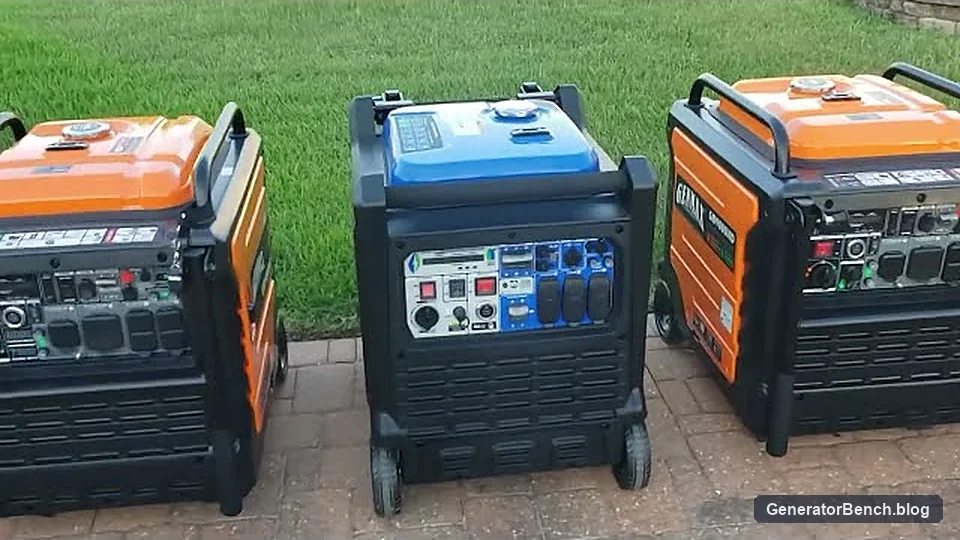
Engineering standards dictate that pure sine wave output maintains total harmonic distortion below three percent. This protects microprocessors inside modern appliances from voltage spikes and erratic frequency variations.
Standby alternatives rely on large rotating alternators connected to industrial engines. They spin at constant RPMs to match standard grid frequency directly without digital conversion steps.
- Inverters use multi-stage digital rectification
- Standby units use direct electromagnetic induction
- Total harmonic distortion stays exceptionally low
Pure Sine Wave Inverters vs Alternator Output
Digital microprocessors inside portable inverters modulate engine speed dynamically based on active electrical load. This saves fuel and reduces mechanical wear significantly during partial load operations.
Industrial standby alternators maintain rigid thirty-six hundred RPM speeds to produce sixty hertz current. This mechanical rigidity guarantees unwavering frequency stability under heavy, fluctuating household loads.
- Dynamic engine throttling lowers fuel burn
- Fixed RPM alternators ensure absolute frequency lock
Load Capacity, Surge Dynamics, and Electrical Demand
Evaluating total running watts requires summing every appliance you plan to power simultaneously. Portable inverters typically cap their maximum output below fifteen thousand watts for standard models.
Selecting the best whole house inverter generator ensures massive continuous capacity. These heavy-duty systems easily handle central air conditioners, electric water heaters, and large kitchen ranges simultaneously.
Motor surge requirements demand high initial starting wattage. Standby alternators handle these heavy inductive kicks without dropping voltage across the main electrical service panel.
- Portable units suit targeted essential circuits
- Standby models energize entire residential panels
- Inductive motor loads require careful surge planning
Managing Motor Start Currents and Continuous Loads
Compressors and sump pumps demand triple their running wattage during initial startup phases. Inverter models must feature adequate surge headroom to prevent sudden overload shutdowns.
Permanent standby units incorporate oversized alternators specifically engineered to absorb heavy motor starting surges without starving other active household appliances of necessary voltage.
- Surge headroom prevents unexpected trip events
- Oversized alternators absorb heavy inductive spikes
Mechanical Infrastructure and Permanent Installation
Portable generators require manual setup, extension cord routing, and careful positioning outdoors. You must manually deploy them away from windows and doors during stormy weather.
Permanent standby installations require professional site preparation, dedicated gas plumbing, and heavy electrical trenching. A concrete pad ensures the heavy steel enclosure remains level permanently.
Automatic transfer switches monitor utility grid voltage continuously. When power fails, the switch signals the standby engine to start and transfers the home load automatically.
- Manual deployment requires physical user intervention
- Standby units bolt securely to concrete pads
- Transfer switches handle grid isolation safely
Concrete Pads, Enclosures, and Automatic Transfer Switches
Weatherproof aluminum enclosures protect permanent generators from severe rain, snow, and corrosive coastal salt spray. These enclosures feature sound-dampening acoustic foam lining the interior walls.
The automatic transfer switch isolates your home electrical wiring from the public utility lines. This prevents dangerous backfeeding that could injure utility linemen working nearby.
- Weatherproof housing protects against environmental elements
- Transfer switches prevent dangerous utility backfeeding
Acoustic Engineering and Neighborhood Noise Compliance
Operating noise levels dictate how pleasant a generator is to live with during extended outages. Enclosed portable inverters utilize fully insulated plastic or metal cases to mumble exhaust notes.
Decibel ratings for portable inverters often hover near fifty-five decibels at normal loads. This allows normal conversation nearby without raising voices over the engine hum.
Larger standby engines lack the compact sound-deadening geometry of small portables. They rely on heavy automotive-style mufflers inside rigid enclosures to keep noise near sixty-five decibels.
- Fully enclosed inverters offer quiet operation
- Acoustic insulation absorbs high-frequency exhaust noise
- Standby units meet strict residential zoning limits
Sound Enclosures and Decibel Rating Metrics at Load
Measuring sound pressure at a distance of twenty-three feet provides a standardized comparison metric. Inclosed portable designs perform exceptionally well in tight neighborhood spaces.
Opting for the best whole house electric generator involves careful acoustic management. Their large steel enclosures use baffling pathways to redirect harsh exhaust sound waves away from neighboring properties.
- Standardized testing measures true acoustic pressure
- Baffling pathways redirect resonant exhaust tones
Fuel Delivery Architecture and Runtime Efficiency
Fuel logistics represent a major operational challenge during prolonged emergency grid failures. Portable inverters typically burn gasoline, propane, or natural gas stored in portable jugs.
Manually refueling portable generators every eight to twelve hours requires venturing outside into hazardous weather conditions. Storing large quantities of gasoline also introduces safety risks.
Selecting the best natural gas generator for whole house models connects directly to your municipal utility line or buried tank. This guarantees continuous fuel delivery without manual intervention.
- Portable generators require frequent manual refueling
- Standby units tap permanent municipal gas supplies
- Direct fuel plumbing eliminates fuel storage hazards
Natural Gas Plumbing vs Gasoline and Propane Jugs
Natural gas provides unlimited runtime during extended regional emergencies since municipal pipelines rarely fail. However, maximum power output drops slightly compared to liquid propane.
Gasoline offers high energy density but degrades quickly over time. Adding chemical fuel stabilizers is mandatory to prevent sticky varnish buildup inside the carburetor jet.
- Municipal gas lines offer limitless emergency runtime
- Gasoline requires stabilizers to prevent varnish
Maintenance Protocols, Service Life, and Durability
Selecting the quietest whole house generator requires balancing enclosure design with mechanical reliability. Portable units demand frequent oil changes every one hundred hours of active operation.
Industrial standby engines feature pressure lubrication systems with automotive-style oil filters. This allows extended service intervals reaching up to two hundred hours between routine changes.
Automated weekly exercise cycles keep standby engines healthy by circulating warm oil and charging the starting battery. This proactive routine prevents mechanical components from seizing up.
- Portable models need frequent oil replacements
- Standby systems utilize automotive oil filters
- Weekly self-tests ensure instant startup readiness
Liquid-Cooled V-Twin Service Intervals vs Portable Engines
Commercial-grade V-twin engines utilize liquid cooling systems to stabilize operating temperatures. This thermal management dramatically increases overall engine longevity and reliability.
Air-cooled portable engines run hotter under heavy loads and require clear ambient airflow. Keeping cooling fins clean from dust and debris is essential for longevity.
- Liquid cooling stabilizes internal operating temperatures
- Air-cooled engines require clean cooling fin paths
Mobility, Deployment Logistics, and Emergency Readiness
Mobility defines the core advantage of portable inverter technology. Integrated wheel kits and folding pull handles allow single-user deployment across uneven terrain.
Parallel connection kits let users link two smaller inverters together to double their available wattage. This modular approach provides flexible power scaling for changing needs.
Permanent standby systems offer zero mobility once installed on their concrete foundations. However, their hands-off automation provides unmatched peace of mind during unexpected storms.
- Wheels and handles enable easy terrain movement
- Parallel kits double output using two units
- Standby systems require zero user setup effort
Wheel Kits, Parallel Pairing, and Standby Reliability
Heavy-duty never-flat wheels make transporting bulky portable generators manageable over gravel and grass. Folding handles lock securely into place during active storage.
Permanent standby units remain anchored in place year-round. Their weather-resistant steel housings protect internal mechanical components from harsh ultraviolet rays and freezing temperatures.
- Rugged wheels handle rough outdoor terrain easily
- Anchored housings protect against severe weather
Frequently Asked Questions
Can an inverter generator power my entire house safely?
Smaller inverters only power essential circuits using extension cords. However, larger models wired through a transfer switch can handle modest household loads with pure sine wave safety.
Why do whole house generators cost more to install?
Installation requires professional electrical work, gas line plumbing, and concrete pad pouring. These specialized labor requirements drive up the initial capital investment considerably.
How often do standby generators run their self-tests?
Most automatic standby units perform a short weekly exercise cycle. This brief automated run ensures the battery stays charged and internal engine parts remain lubricated.
Are inverter generators truly safe for sensitive electronics?
Yes, their advanced digital microprocessors clean and condition the electrical output. This produces a stable sine wave with extremely low harmonic distortion suitable for computers.
What fuel source is best for long emergency outages?
Natural gas connected directly to municipal utility lines offers unlimited runtime. This eliminates the need for storing hazardous gasoline jugs during extended blackout events.