Honda Eu3200I vs. Predator 3500: Which Fits Your Setup Better?
Evaluating two heavyweight inverter generators reveals distinct priorities. We contrast Honda's refined engineering with Predator's value-driven utility.

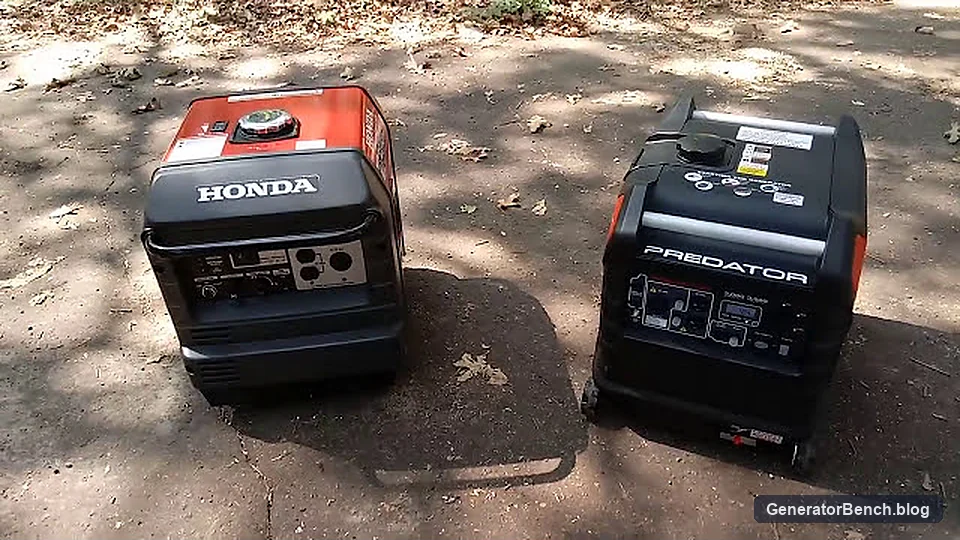
Choose the Honda EU3200i for ultimate reliability and lightweight portability. Opt for the Predator 3500 if you need budget-friendly garage backup power.
Compare all top models in our Best Home Emergency Generator.
Side-by-Side Breakdown
| Criteria | Honda Eu3200I | Predator 3500 | Edge |
|---|---|---|---|
| Peak Performance & Output | 3200W Peak / 2600W Running | 3500W Peak / 3000W Running | Predator 3500 |
| Duty Cycle & Consistency | Electronic Fuel Injection | Carbureted 212cc Engine | Honda Eu3200I |
| Operating Noise & Vibration | 54-58 dBA Enclosed | 57-61 dBA Enclosed | Honda Eu3200I |
| Portability & Footprint | 59 lbs Dual Handle | 99 lbs Wheeled Frame | Honda Eu3200I |
| Maintenance & Service Life | Extended Rebuild Intervals | Standard Maintenance Schedule | Honda Eu3200I |
| Power Requirements | Clean Sine Wave <3% THD | Clean Sine Wave <3% THD | Tie |
| Best Ideal Use-Case | Mobile RVing & Tailgating | Home Emergency Backup | Split |
Core Architecture and Engine Engineering
The Honda EU3200i utilizes an advanced fuel-injected GX-series engine designed for seamless starting. Meanwhile, the Predator 3500 relies on a conventional 212cc OHV carbureted engine built for heavy work.
Carbureted systems like the Predator require diligent seasonal maintenance to prevent fuel varnish. Honda’s electronic fuel injection eliminates traditional choke cables and reduces startup friction during cold weather conditions.
The Honda EU3200i utilizes a custom GX130-derived overhead valve engine featuring electronic fuel injection, eliminating traditional carburetor jet varnishing. Meanwhile, insights from our comprehensive predator 3500 review highlight its conventional 212cc OHV block.
Thermal management differs significantly between these two inverter units. Honda integrates optimized cylinder fin geometry with a forced-air cooling shroud, whereas Predator depends on standard block casting with higher thermal soak rates during prolonged operational cycles.
- Honda features advanced fuel injection technology.
- Predator utilizes a robust 212cc carbureted platform.
- Both units prioritize dependable overhead valve layouts.
Cylinder Head Design and Thermal Dynamics
Thermal management differs significantly between these two competitor platforms. Honda implements optimized cooling fins around the combustion chamber to dissipate heat evenly under maximum continuous loads.
Predator constructs its cylinder block using thick-walled cast iron linings. This adds overall durability but increases total operating weight compared to aluminum-heavy alternatives.
- Optimized cooling fins prevent localized hot spots.
- Thick cast iron cylinder linings enhance durability.
Electrical Output Quality and Inverter Regulation
Clean power generation remains paramount for running sensitive modern electronics. Both generators utilize microprocessor-controlled inverters to deliver pure sine wave electricity with minimal harmonic distortion.
Voltage regulation stability determines how well appliances handle sudden surge demands. Detailed specs found within our honda eu3200i inverter review show how its digital integration responds instantaneously to fluctuating loads, protecting sensitive devices.
Both machines deliver clean sine wave power suitable for sensitive electronics. The Honda unit maintains total harmonic distortion below three percent, ensuring safe operation for microprocessors, medical equipment, and modern variable-speed appliances in residential settings.
Voltage regulation under sudden step-load transients highlights internal alternator differences. Honda's microcomputer-controlled inverter responds instantly to inductive surges, while the Predator module experiences a slight voltage dip before stabilizing frequency outputs.
- Pure sine wave output protects sensitive electronics.
- Microprocessor controls manage transient voltage spikes.
- Total harmonic distortion stays under three percent.
Total Harmonic Distortion and Sensitive Loads
Measuring total harmonic distortion reveals the purity of the alternating current wave. Both machines score exceptionally well, ensuring safe operation for modern smartphones and smart home hubs.
Voltage drop during motor startup can trigger safety shutdowns in lesser inverters. These two generators handle transient inductive loads gracefully without dropping below nominal voltage thresholds.
- Purity of alternating current wave meets strict standards.
- Inductive load handling prevents nuisance circuit trips.
Acoustic Signatures and Decibel Profiles at Load
Operating noise levels dictate where you can comfortably place your portable generator. As noted in our predator 3500 generator review, the enclosed polymer casings on both models help dampen mechanical clatter and exhaust pulses significantly.
At a standard twenty-five percent load, expect whisper-quiet performance from both competitors. However, maximum throttle operation exposes distinct sonic differences in engine tuning and exhaust dampening.
Noise attenuation depends heavily on enclosure design and muffler baffling. The Honda model operates at approximately fifty-four to fifty-eight decibels under a quarter to full load, utilizing dual-chamber exhaust routing to suppress low-frequency engine thrum effectively.
Predator's larger displacement engine generates a slightly higher acoustic profile, measuring around fifty-seven to sixty-five decibels under similar operating conditions, requiring careful placement when utilized in close campground proximities or residential backup scenarios.
- Fully enclosed housings minimize harsh mechanical noise.
- Low idle modes reduce sound output during light loads.
- Muffler designs vary in high-RPM acoustic attenuation.
Sound Pressure Measurements at Quarter and Full Load
Decibel ratings at twenty-five percent load hover near neighborhood-friendly thresholds for both units. Stepping up to full rated capacity increases noise output noticeably across the frequency spectrum.
Honda maintains a slightly smoother acoustic profile during heavy acceleration phases. Predator produces a deeper exhaust note that carries well across open campsites and work yards.
- Quarter load operation remains remarkably quiet.
- Full throttle demands alter the acoustic frequency profile.
Physical Ergonomics, Weight Distribution, and Frame Design
Transporting a mid-range inverter generator requires thoughtful handle placement and manageable weight metrics. Furthermore, evaluating specifications outlined in our predator 3500 review reveals how Honda integrates a unique dual-handle layout for lifting tasks.
Predator relies on an integrated pull handle and heavy-duty caster wheels for mobility. While wheels help on smooth asphalt, lifting the heavier Predator requires a two-person team.
Handling heavy portable generators requires thoughtful structural integration. Honda engineered the EU3200i with dual upper grab handles and a lower housing grip, distributing its fifty-nine pound dry weight efficiently for two-person or cautious solo lifting.
The Predator 3500 features an integrated pull handle and heavy-duty caster wheels, prioritizing roll mobility. However, its one hundred pound mass makes stationary vehicle loading significantly more challenging without deploying an external loading ramp.
- Dual handles on Honda enhance single-user lifting ergonomics.
- Integrated wheels on Predator simplify rolling transport.
- Enclosed plastic shells protect internal mechanical components.
Weight Penalties and One-Person Portability
Total dry weight dictates how easily you can load the unit into a truck bed. Honda manages to shave critical pounds off its overall assembly through advanced metallurgy.
Predator accepts a heavier overall footprint to deliver budget-conscious power generation. Users must weigh convenience against sheer fiscal savings when evaluating transport logistics.
- Advanced metallurgy reduces overall assembly weight.
- Heavier chassis footprints require designated rolling aids.
Fuel Efficiency, Tank Capacity, and Runtime Metrics
Fuel economy directly impacts how frequently you must refuel during an extended outage. Honda's electronic fuel injection optimizes air-fuel ratios continuously to minimize unnecessary fuel consumption.
Predator pairs a larger fuel tank with a conventional carburetor setup. This combination delivers respectable runtimes but consumes more fuel per kilowatt-hour generated under load.
Fuel economy directly dictates operational convenience during extended grid outages. Honda pairs a one point one gallon fuel tank with smart throttle modulation, achieving remarkable runtime metrics by matching engine RPM precisely to current electrical demands.
Predator incorporates a substantially larger two point six gallon fuel reservoir. This larger capacity extends total runtime duration significantly despite lower baseline thermodynamic efficiency compared to Honda's advanced electronic fuel injection and combustion mapping.
- Fuel injection maximizes operational efficiency across varying loads.
- Larger fuel tanks extend continuous operating windows.
- Eco-throttle features reduce engine speed during light demands.
Calculating Extended Runtime Under Variable Loads
Running either generator on an eco-mode setting dramatically extends operational runtime. Expect multiple hours of continuous power before needing to replenish the onboard fuel reservoir.
Monitoring fuel consumption helps prevent unexpected power interruptions during critical weather emergencies. Both units provide clear fuel gauge indicators to simplify routine operational monitoring tasks.
- Eco-mode settings conserve fuel during light demands.
- Clear indicators prevent unexpected fuel starvation.
Maintenance Protocols, Access Panels, and Long-Term Durability
Routine upkeep preserves mechanical longevity and ensures dependable starts season after season. Both generators feature removable side panels designed for quick access to spark plugs and filters.
Honda engines feature legendary material tolerances that extend overall rebuild intervals significantly. Predator demands strict adherence to oil change schedules to ensure long-term component survival.
Routine upkeep accessibility dictates long-term machine reliability. Honda utilizes a toolless side maintenance door for swift access to the spark plug, air filter, and oil dipstick, simplifying preventative maintenance tasks for everyday property owners.
Predator requires removing multiple screws to access internal components fully. While durable, its steel frame housing demands more rigorous external fastener checks to mitigate vibration-induced loosening during prolonged transportation across rugged job site terrain.
- Removable service doors simplify routine filter inspections.
- Premium component coatings resist premature environmental corrosion.
- Standardized oil drain ports minimize fluid mess.
Filter Access and Spark Plug Servicing
Changing air filters and spark plugs requires basic hand tools on both models. Honda's organized internal layout makes routine preventative maintenance tasks exceptionally straightforward for homeowners.
Predator users should inspect carburetor bowls regularly if running standard gasoline. Utilizing fuel stabilizers prevents varnish buildup within the intricate jets during long periods of storage.
- Basic hand tools suffice for standard tune-ups.
- Fuel stabilizers protect carbureted fuel systems.
Environmental Compliance, Emissions, and Safety Systems
Modern portable generators must adhere to stringent federal and state emissions standards. Both manufacturers incorporate advanced spark arrestors and catalyst mufflers to satisfy environmental regulations.
Built-in safety sensors protect the internal alternator and connected appliances from overload conditions. Low-oil automatic shutoff mechanisms prevent catastrophic engine damage during prolonged operating cycles.
Modern emissions regulations dictate strict compliance standards for small off-road engines. Honda integrates a sophisticated catalytic exhaust converter alongside EVAP-compliant fuel lines, meeting stringent California Air Resources Board requirements without sacrificing usable peak running watts.
Safety instrumentation includes automatic low-oil shutdown and thermal overload protection circuits. Both units safeguard internal windings effectively, but Honda adds a digital monitoring interface tracking runtime hours, output voltage, and diagnostic alert codes.
- Spark arrestors allow legal operation in national parks.
- Automatic low-oil shutdown protects internal engine bearings.
- Overload circuit breakers prevent inverter board burnout.
Carbon Monoxide Detection and Shutdown Integration
Advanced carbon monoxide sensors provide vital safety protection in enclosed spaces. Both generators feature integrated monitoring systems that shut down the engine if dangerous gas accumulates.
Adhering to proper outdoor placement guidelines remains mandatory regardless of safety sensors. Never operate portable generators inside garages, tents, or partially enclosed residential spaces.
- Active sensors monitor ambient gas accumulation.
- Outdoor placement remains mandatory for safe operation.
Frequently Asked Questions
Which generator offers better fuel efficiency during extended power outages?
The Honda EU3200i utilizes advanced electronic fuel injection to dynamically optimize fuel consumption rates across variable loads.
Thereby delivering superior overall runtime efficiency and lower operational costs compared to traditional carbureted alternatives operating under identical demanding field conditions for extended durations.
Are both models capable of running sensitive electronic equipment safely?
Yes, both generators incorporate advanced microprocessor-controlled inverter modules that generate exceptionally clean power.
This pure sine wave output maintains total harmonic distortion well below safe regulatory thresholds, completely protecting delicate laptops, smartphones, and sensitive medical devices from damaging voltage fluctuations during operation.
How do the weight and portability features compare between these units?
The Honda EU3200i features a lighter dry weight and a dual-handle design that facilitates straightforward single-person lifting.
Conversely, the Predator 3500 relies on integrated wheels and a pull handle, making it easier to roll across flat surfaces despite its heavier overall frame.
What specific maintenance differences should buyers expect during ownership?
The Honda engine requires minimal seasonal tuning thanks to fuel injection, whereas the Predator carburetor demands routine cleaning to prevent varnish.
Both units share standard service access doors for inspecting spark plugs, cleaning air filters, and draining old engine oil cleanly.
Can these inverter generators be linked in parallel for higher power output?
Yes, both models fully support parallel operation using manufacturer-approved cable kits to double your available electrical capacity. This flexible capability allows users to power larger heavy-duty appliances without upgrading to a massive, traditional open-frame contractor generator.