Generac vs. Tesla: Which Fits Your Setup Better?
When comparing Generac standby combustion units to Tesla chemical battery ecosystems, understanding your core backup needs dictates the entire architectural choice. System design matters.

Choose Generac for indefinite fuel autonomy during long grid collapses, or select Tesla for seamless solar integration and zero-emissions daily load shifting.
Compare all top models in our Best Home Emergency Generator.
Side-by-Side Breakdown
| Criteria | Generac | Tesla | Edge |
|---|---|---|---|
| Peak Performance & Output | Up to 24kW continuous via Guardian series | 11.5kW continuous per Powerwall 2/3 unit | Generac |
| Duty Cycle & Consistency | Unlimited run time via natural gas/propane | Dependent on solar recharge or battery capacity | Generac |
| Operating Noise & Vibration | 65-68 dB(A) at normal operating load | Silent operation with zero mechanical noise | Tesla |
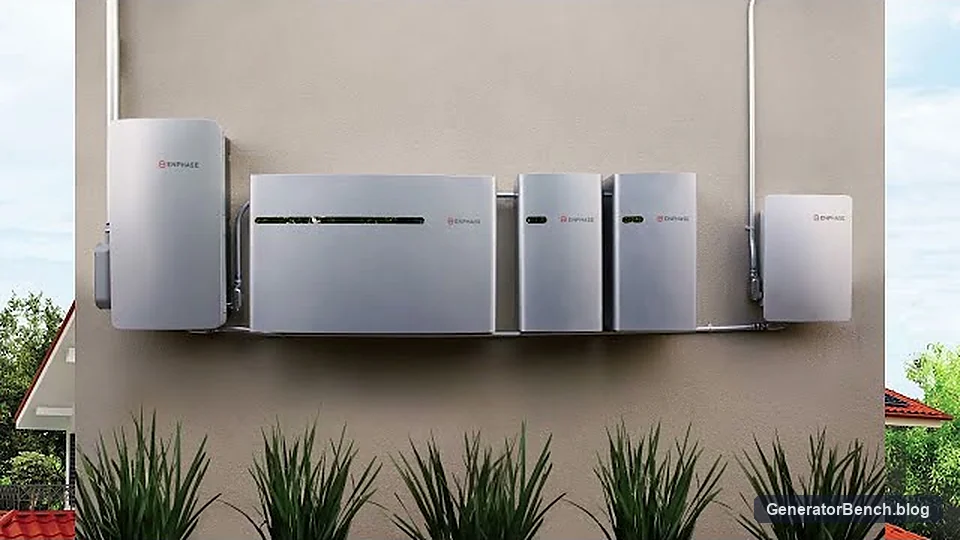
| Portability & Footprint | Fixed concrete pad required outdoors | Wall-mounted or floor-stacked modular units | Tesla |
| Maintenance & Service Life | Bi-annual oil, filter, and plug service | Zero routine mechanical maintenance required | Tesla |
| Power Requirements | Dedicated liquid propane or natural gas line | Heavy-duty electrical wiring and grid tie | Split |
| Best Ideal Use-Case | Extended rural outages and heavy HVAC loads | Suburban self-consumption and solar pairing | Split |
Architectural Power Foundations
Evaluating backup power requires looking at fundamental physics. Generac relies on internal combustion engines running on fossil fuels, whereas Tesla deploys advanced lithium-ion chemistry paired with sophisticated bi-directional inverters.
Generac units generate electricity through mechanical rotation, delivering massive surge capacity for inductive loads like heavy central air conditioners and well pumps without stuttering under initial startup amperages.
Generac standby units rely on internal combustion engines converting chemical fuel into mechanical energy, driving alternators to produce 120V/240V split-phase AC power directly at standard grid frequencies without intermediate inversion stages.
Tesla Powerwall systems operate entirely on stored DC energy within lithium-ion battery modules, requiring a bi-directional inverter to convert power into synchronized AC electricity matching local utility grid phase angle requirements seamlessly.
- Generac uses robust internal combustion engines.
- Tesla utilizes high-density lithium-ion cells.
- Both integrate with automatic transfer switches.
Chemical Versus Mechanical Energy Generation
Tesla stores chemical energy inside sealed cabinet enclosures, delivering instantaneous electricity through solid-state switching components without mechanical lag or warm-up cycles during sudden blackouts.
Mechanical generators require a brief two-to-five second startup window. Following our oil change tutorial ensures your engine maintains optimal rotational speed and peak operational efficiency.
- Tesla offers instant sub-second response times.
- Generac requires a brief engine cranking phase.
Fuel Dynamics, Storage, and Continuous Run Limits
Fuel availability dictates how long your backup system can operate independently during catastrophic regional grid failures lasting multiple weeks or months of severe weather events.
Standby units featured in our quietest generator roundup pull fuel directly from municipal lines or large onsite propane tanks, offering unlimited run times during grid failures.
Standby generators demand steady liquid propane or natural gas delivery, bound only by utility supply pipelines or bulk tank capacities, allowing endless runtime during prolonged catastrophic grid failures if fuel replenishment occurs.
Battery energy storage systems possess fixed capacity limits, typically bounded at 13.5 kWh per unit, forcing strict load management to preserve reserves when solar panels cannot recharge modules during extended severe weather events.
- Generac provides limitless runtime on piped gas.
- Tesla relies on stored battery capacity and solar.
Managing Energy Depletion Scenarios
Tesla Powerwall systems feature finite storage capacities typically ranging between thirteen and fourteen kilowatt-hours per unit, necessitating strict load management or solar generation to survive extended cloud cover.
Without sufficient sunlight, multi-day winter storms can leave battery owners rationing stored electrical reserves while combustion generators continue running uninterrupted under heavy household loads.
- Tesla systems require strict energy budgeting.
- Combustion generators ignore overcast weather limitations.
Surge Capacity and Motor Starting Demands
Electric motors demand significantly more power during initial startup than they do during steady-state operation, challenging the inverter topology of modern backup solutions.
Generac air-cooled V-twin engines easily absorb heavy motor starting surges, preventing voltage drops that might otherwise cause sensitive digital appliances to reset or experience brownout conditions.
Heavy inductive loads like central air conditioners require massive starting current surges, which heavy-duty alternators on Generac units absorb easily through robust momentary overload ratings exceeding nominal running wattage specifications significantly.
Inverter-based battery arrays manage surge limits through sophisticated software controls, though continuous heavy motor starts can trigger protective shutdowns if total surge current exceeds the maximum threshold of the inverter hardware.
- Generac handles high inductive motor loads effortlessly.
- Tesla uses parallel inverters to boost surge ratings.
Handling Heavy HVAC and Appliance Startup
Tesla addresses surge demands by stacking multiple Powerwall units in parallel, combining their internal inverter capabilities to handle sudden compressor activations across the household.
Single-unit battery setups may struggle with large central air conditioning units unless equipped with soft-starter kits designed to minimize initial locked-rotor amperage draws.
- Multiple Powerwalls increase total surge headroom.
- Air conditioner soft-starters protect battery inverters.
Installation Footprint and Siting Requirements
Physical placement rules dictate where your backup equipment can live, balancing municipal zoning codes, noise ordinances, and aesthetic preferences around your residential property.
Generac units must be installed outdoors on a level concrete pad, maintaining strict clearance distances from windows, doors, and flammable structures due to carbon monoxide exhaust risks.
Combustion generators mandate strict outdoor placement adhering to local building codes regarding window clearances and exhaust gas dispersion to prevent lethal carbon monoxide accumulation near habitable residential structure openings.
Wall-mounted or floor-standing battery systems offer flexible indoor or outdoor siting options, provided ambient temperatures remain within manufacturer specifications to prevent severe battery degradation caused by extreme cold or heat.
- Generac requires outdoor concrete pad placement.
- Tesla units can mount indoors or outdoors.
Flexibility of Indoor Versus Outdoor Placement
Tesla engineering allows for flexible indoor or outdoor mounting configurations, letting homeowners install battery cabinets inside climate-controlled garages to protect chemistry from extreme temperatures.
Outdoor Generac enclosures face direct weather exposure, requiring durable aluminum or steel housing treated to resist rust, heavy snow loads, and wind-driven rain penetration.
- Tesla protects batteries from extreme outdoor weather.
- Generac uses heavy-duty weather-resistant metal enclosures.
Operating Noise, Vibration, and Environmental Impact
Acoustic signatures matter immensely when backup systems run continuously through quiet neighborhood nights, especially during prolonged multi-day community power outages.
Generac standby generators produce noticeable mechanical noise, averaging around sixty-five decibels at normal operating loads due to internal combustion engine firing and cooling fan rotation.
Running combustion engines generate substantial mechanical noise and vibration, often measuring near 65 to 70 decibels at normal operating loads, requiring careful placement away from bedrooms and neighboring property lines.
Chemical battery systems operate with near-silent electronic efficiency, producing zero direct emissions and only minimal cooling fan noise, making them ideal for dense neighborhoods with strict noise ordinance regulations.
- Generac produces moderate engine and fan noise.
- Tesla operates with completely silent solid-state electronics.
Achieving Zero Emission Operation with Batteries
Tesla energy storage systems operate in absolute silence, emitting zero local exhaust emissions or mechanical vibrations during either normal charging or emergency discharging cycles.
This quiet operation makes battery backups ideal for densely populated suburban neighborhoods where strict local noise ordinances restrict nighttime generator usage entirely.
- Silent operation complies with strict HOA rules.
- Zero local emissions improve immediate environmental air.
Maintenance Regimens and Mechanical Longevity
Mechanical complexity introduces ongoing maintenance requirements that every homeowner must weigh against the desire for truly hands-off emergency infrastructure.
Using our Generac 6485 maintenance kit guide, homeowners can easily manage bi-annual oil changes, air filter replacements, and spark plug inspections to ensure long-term mechanical reliability.
Internal combustion generators require rigorous preventive maintenance schedules, including regular oil changes, filter replacements, and spark plug inspections to ensure mechanical reliability during emergency power transition demands.
Battery storage systems require virtually zero mechanical upkeep, lacking moving parts, though owners must monitor firmware updates and environmental controls to maximize long-term operational lifespan without catastrophic chemical failure.
- Generac requires scheduled oil and filter changes.
- Tesla systems feature virtually zero mechanical upkeep.
Long-Term Durability and Component Degradation
Tesla storage batteries degrade slowly over thousands of chemical charge cycles, gradually losing maximum capacity over a decade while requiring virtually zero physical maintenance.
Generac mechanical components experience wear and tear over time, but engine rebuilds or component swaps can theoretically extend operational service life indefinitely with proper care.
- Lithium batteries experience slow calendar capacity loss.
- Combustion engines can be serviced and repaired indefinitely.
Smart Control Ecosystems and Software Integration
Modern power management relies heavily on advanced mobile software applications, giving users real-time visibility into energy consumption, generation, and storage metrics.
Mobile software integration aligns with our maintenance schedule guide, providing remote status monitoring, diagnostic alerts, and reminders so owners track exercise cycles seamlessly.
Modern standby units utilize remote monitoring applications that track battery voltage, exercise cycles, and fuel pressures, alerting homeowners to potential faults before actual grid outage events strike unexpectedly.
Integrated software platforms in battery systems offer granular circuit-level control, allowing users to prioritize critical appliances, track real-time solar generation, and optimize daily usage against dynamic utility pricing tariffs.
- Generac offers Mobile Link diagnostic monitoring apps.
- Tesla provides advanced energy forecasting via software.
Advanced Load Management and Weather Forecasting
Tesla integrates sophisticated machine learning algorithms that analyze local weather forecasts, automatically charging batteries ahead of predicted severe storms or grid instability events.
Both platforms offer circuit-level load shedding capabilities, allowing users to prioritize essential appliances like refrigerators and medical equipment during capacity constraints.
- Tesla software predicts weather to prep battery reserves.
- Both systems support smart circuit load shedding.
Frequently Asked Questions
Can a Tesla Powerwall run my entire house like a Generac standby generator?
A single Powerwall cannot match the continuous peak output of a large Generac standby unit. Multiple units are required to power heavy central HVAC systems.
How long will a Generac generator run compared to a Tesla battery during an outage?
Generac units run indefinitely as long as natural gas or propane supply flows steadily. Tesla batteries have finite capacity and depend heavily on solar recharging.
Does a Tesla storage system require routine mechanical maintenance like an engine?
Tesla units require zero mechanical maintenance because they feature no moving parts or combustion fluids. Only software updates and occasional visual inspections are necessary.
Can I install a Generac standby generator inside my attached garage?
Generac standby generators must never be installed indoors due to deadly carbon monoxide exhaust risks. Outdoor concrete pad placement is strictly mandated by safety codes.
Which system is better suited for homes without solar panel installations?
Generac standby generators perform better without solar because they generate electricity independently from fuel sources. Tesla batteries need grid power or solar panels to recharge.