Belt Driven Generator vs. Direct Drive Generator: Which Fits Your Setup Better?
Understanding mechanical power delivery is critical when choosing between belt driven and direct drive generators. This technical guide evaluates their engineering trade-offs.

Choose direct drive units for compact portability and minimal maintenance demands. Opt for belt driven generators when you need custom speed ratios and heavy industrial vibration isolation.
Compare all top models in our Best Home Emergency Generator.
Side-by-Side Breakdown
| Criteria | Belt Driven Generator | Direct Drive Generator | Edge |
|---|---|---|---|
| Peak Performance & Output | High adaptability via custom pulley ratios | Direct 1:1 ratio with zero slippage | Direct Drive Generator |
| Duty Cycle & Consistency | Absorbs harsh mechanical torque shocks | Maintains rigid operational speed consistency | Belt Driven Generator |
| Operating Noise & Vibration | Superior vibration dampening via belt flex | Transfers engine vibrations directly to housing | Belt Driven Generator |
| Portability & Footprint | Larger footprint due to pulley spacing | Compact housing saves valuable cargo space | Direct Drive Generator |
| Maintenance & Service Life | Requires periodic belt tension and alignment checks | Minimal moving parts reduce routine upkeep | Direct Drive Generator |
| Power Requirements | Flexible engine-to-alternator speed tuning | Demands strict engine governor accuracy | Belt Driven Generator |
| Best Ideal Use-Case | Heavy-duty industrial and custom RPM setups | Compact portable service vehicle applications | Direct Drive Generator |
Core Mechanical Architecture and Power Transmission Dynamics
Belt driven generators utilize pulleys and flexible rubber or fabric belts to transfer rotational energy from the engine to the alternator head. This mechanical setup allows engineers to easily alter pulley size ratios.
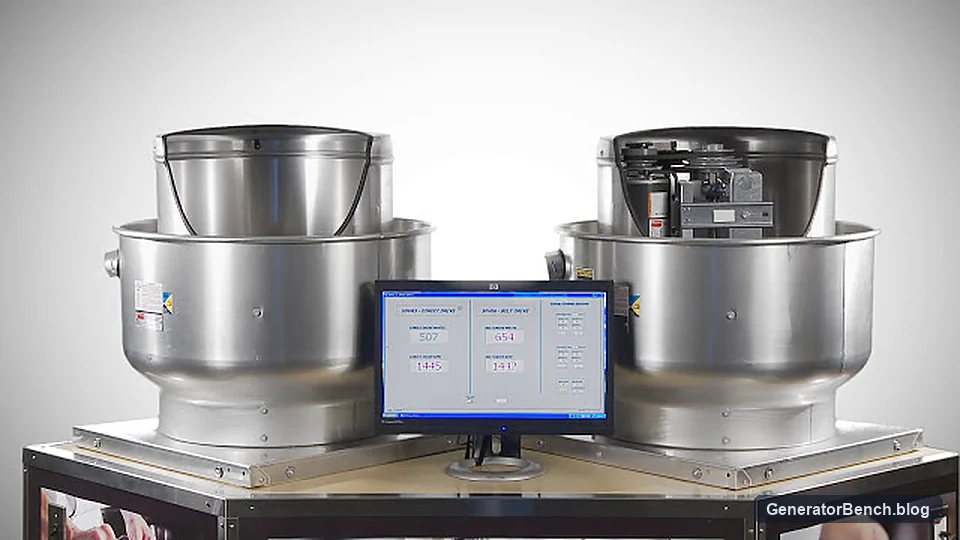
Direct drive systems couple the alternator rotor directly to the engine crankshaft via a rigid shaft adapter. Eliminating intermediate transmission components creates a solid, unified assembly that reduces mechanical slip and alignment drift over time.
Belt-driven systems utilize elastomeric V-belts or synchronous toothed belts to connect the engine crankshaft to the alternator rotor, introducing mechanical flexibility that absorbs sudden torque spikes during heavy motor starting surges.
Direct drive architectures couple the engine flywheel directly to the generator rotor shaft via tapered hubs. When selecting the best home emergency generator, you should evaluate these mechanical coupling differences carefully.
- Belt systems isolate rotational torque effectively.
- Direct couplings ensure zero mechanical slippage.
- Engine alignment dictates overall service life.
Pulley Ratios and Speed Matching
Adjusting the diameter of drive and driven pulleys lets technicians modify alternator rotational speed independently of engine RPM. This flexibility optimizes electrical frequency generation across diverse industrial operational workloads.
Direct drive assemblies lock the alternator rotation strictly to engine crankshaft speed. Maintaining exact 1:1 ratios means engine RPM drops directly impact electrical frequency output without intermediary mechanical gear adjustment capabilities.
- Variable pulley sizes alter output speeds.
- Rigid couplings enforce strict 1:1 ratios.
Operational Efficiency and Load Handling Performance
Power transmission efficiency differs notably between these two distinct mechanical topologies. Direct drive configurations boast efficiency ratings near ninety-eight percent because rigid shafts waste virtually zero mechanical energy during rotational transfer phases.
Belt driven options typically experience minor energy losses due to friction, belt flexing, and slight slippage under heavy loads. However, this elasticity acts as a mechanical buffer against sudden torque spikes and severe electrical surges.
Mechanical energy losses in belt systems typically range from three to seven percent due to continuous internal hysteresis and pulley friction, reducing overall fuel efficiency compared to rigidly coupled alternative designs.
Direct drive setups deliver superior power transfer efficiency exceeding ninety-five percent, yet they lack the transient compliance needed to cushion severe inductive kickbacks generated by large agricultural compressors or deep-well pumps.
- Direct drive maximizes raw mechanical efficiency.
- Belts absorb sudden electrical load shocks.
- Friction losses affect overall fuel burn.
Transient Shock Absorption Capacities
Handling sudden heavy motor starts requires robust mechanical shock absorption. When evaluating the best household generator, flexible belts yield slightly under extreme torque demands, protecting sensitive internal alternator components from sudden failure.
Rigid direct drive shafts transmit every single transient torque spike straight into the alternator rotor. Engineers must integrate heavy-duty electronic safeguards to prevent sudden load surges from damaging connected electrical equipment.
- Belts cushion severe mechanical shock events.
- Rigid shafts transfer transient spikes instantly.
Vibration Dampening and Acoustic Performance Profiles
Excessive vibration degrades internal alternator windings and accelerates bearing wear. When shopping for the best solar electric generator, belt drive systems excel at isolating the alternator head from aggressive engine pulses.
Direct drive generators transmit mechanical vibrations directly from the engine block into the alternator housing. Manufacturers must install heavy-duty rubber motor mounts to counteract this rigid coupling and maintain acceptable operational noise thresholds.
Flexible belt mediums naturally isolate high-frequency torsional oscillations, resulting in reduced acoustic emissions and smoother sound signatures that make belt-driven units preferable for residential neighborhoods and mobile command vehicles.
Rigidly mounted direct drive generators transmit crankshaft pulses straight to the enclosure, generating higher decibel ratings and necessitating heavy-duty rubber isolation mounts to prevent structural resonance across the entire chassis frame.
- Belts dampen high-frequency engine harmonics.
- Rigid shafts require robust isolation mounts.
- Acoustic output scales with engine RPM.
Routine Maintenance Demands and Component Longevity
Routine maintenance schedules heavily favor direct drive units due to their minimal moving parts. Operators never need to inspect tension levels, check for rubber dry rot, or align pulleys during scheduled preventative maintenance intervals.
Belt driven generators demand regular inspection of belt tension, pulley alignment, and surface wear patterns. Replacing a worn belt requires careful recalibration to prevent premature failure and ensure stable operational power delivery.
Maintenance protocols for belt assemblies mandate periodic tension checks and alignment verifications every one hundred operating hours to prevent accelerated sidewall wear, glazing, and catastrophic snapping under full rated loads.
Direct drive alternatives eliminate consumable rubber components entirely, focusing maintenance strictly on bearing lubrication intervals and stator insulation resistance tests to ensure multi-year operational reliability in harsh industrial environments.
- Rubber belts require periodic tension checks.
- Direct drives eliminate belt replacement tasks.
- Bearing stress dictates overhaul intervals.
Physical Footprint, Weight Distribution, and Field Mobility
Physical footprint dimensions dictate how easily a unit fits inside service vehicles. Across our best electric generator recommendations, direct drive layouts integrate the engine and alternator into a compact housing to minimize spatial requirements.
Belt drive configurations require greater separation between the engine and alternator to accommodate pulleys and shielding guards. This expanded mechanical layout increases total unit weight and enlarges the equipment footprint on mobile trailers.
Incorporating external pulleys and offset alternator mounting brackets increases the overall physical footprint and dry weight of belt-driven generators, complicating trailer loading and tight-space deployments on cramped construction job sites.
The compact concentric layout of direct drive configurations minimizes envelope dimensions, optimizing center of gravity placement for easier transport, single-person maneuverability, and secure rack mounting inside service utility vehicles.
- Direct drive saves valuable cargo space.
- Pulley guards add extra system bulk.
- Weight placement impacts trailer towing dynamics.
System Integration, RPM Tuning, and Frequency Stability
Maintaining stable electrical frequency requires precise control over rotational velocity during fluctuating power demands. Belt systems allow manufacturers to tune alternator speeds for optimal electrical output regardless of raw engine operating RPM.
Direct drive units must run the engine at exact speeds, such as thirty-six hundred RPM for standard two-pole generators, to generate stable alternating current. Any engine stutter directly compromises frequency stability and downstream electronics safety.
Belt drives permit customized pulley ratio engineering, allowing manufacturers to optimize alternator rotation speeds independently of engine displacement to maintain strict sixty-hertz electrical output frequency at varied throttle settings.
Direct drive generators must lock engine speed rigidly to electrical frequency, requiring precise electronic governor control to prevent dangerous voltage fluctuations and frequency droop when transient electrical loads hit the terminals.
- Belt setups decouple engine and head speeds.
- Direct drives demand strict governor accuracy.
- Frequency drift harms sensitive digital loads.
Cost of Ownership and Long-Term Durability Metrics
Total cost of ownership encompasses initial purchase outlays, routine consumable replacements, and potential downtime risks. While direct drives feature lower ongoing maintenance expenses, unexpected alternator shaft failures can prove costly to repair completely.
Belt driven alternatives involve recurring expenditures for replacement belts and pulley alignment services over extended operating lifespans. Nevertheless, safeguarding the expensive alternator head from direct shock loads often justifies these moderate upkeep costs.
Initial acquisition expenses for belt-driven models are often offset by lower repair costs when absorbing mechanical overloads, though ongoing consumable belt replacements gradually increase long-term operational expenditures over the unit lifecycle.
Direct drive units demand higher upfront investments in precision manufacturing tolerances, but they offer exceptional lifetime mechanical durability by removing secondary power transfer components that traditionally require frequent field adjustments.
- Initial purchase prices vary by scale.
- Consumable belts add minor operational overhead.
- Component replacement complexity impacts repair downtime.
Frequently Asked Questions
Which generator design offers better overall energy efficiency?
Direct drive generators deliver superior overall mechanical efficiency because rigid steel shaft connections experience virtually zero mechanical slip or friction losses during routine high-intensity field operations.
Consequently, this direct power transfer significantly maximizes fuel economy and stable electrical output across standard continuous industrial workloads without requiring complex pulley alignment adjustments or frequent consumable component replacements.
How do belt driven generators handle heavy mechanical load shocks?
Belt driven generators provide exceptional mechanical shock absorption by utilizing flexible rubber belts that thoroughly cushion the expensive alternator head against violent engine torque spikes and sudden electrical load surges.
This protective elasticity effectively prevents premature internal winding damage and extends overall equipment longevity when operating in demanding field environments with highly fluctuating power requirements.
What routine maintenance tasks are required for belt driven systems?
Routine maintenance demands are significantly higher for belt driven systems because certified technicians must regularly inspect belt tension levels, check for rubber dry rot, and correct minor pulley alignment drifts.
In contrast, direct drive alternatives eliminate these specific consumable upkeep requirements entirely, requiring only standard engine servicing and basic bearing inspections during scheduled preventive maintenance operational intervals.
Why do direct drive units feature a more compact physical footprint?
Physical footprint and equipment weight heavily favor direct drive configurations because integrating the engine and alternator into a single compact housing minimizes overall spatial requirements for mobile service vehicles.
Conversely, belt driven assemblies require greater internal component separation to accommodate protective pulley guards and heavy mounting brackets, which significantly increases total equipment weight and trailer footprint dimensions.
Can belt driven generators alter alternator speeds independently?
Frequency stability and RPM tuning capabilities are uniquely advantageous in belt driven generators because specialized pulley ratios allow technicians to optimize alternator speeds independently of raw engine RPM.
Direct drive units lack this mechanical decoupling flexibility, meaning engine speed drops instantly compromise electrical frequency output and potentially endanger sensitive downstream digital electronics connected to the system.