Battery Generator vs. Gas Generator: Which Setup Fits Your Power Needs?
Choosing backup power requires understanding chemical storage versus combustion mechanics. This guide evaluates battery and gas units against rigorous operational benchmarks.

Choose the battery generator for indoor convenience and quiet short-duration loads. Select the gas generator for multi-day grid outages and continuous heavy-duty industrial appliances.
Compare all top models in our Best Home Emergency Generator.
Side-by-Side Breakdown
| Criteria | Battery Generator | Gas Generator | Edge |
|---|---|---|---|
| Peak Performance & Output | High instant surge, limited continuous wattage | Sustained high continuous wattage delivery | Gas Generator |
| Duty Cycle & Consistency | Strictly limited by stored watt-hours | Continuous runtime as long as fuel lasts | Gas Generator |
| Operating Noise & Vibration | Virtually silent operation under load | Loud combustion noise and mechanical vibration | Battery Generator |
| Portability & Footprint | Compact, lightweight, indoor-safe chassis | Heavy, bulky, requires outdoor ventilation | Battery Generator |
| Maintenance & Service Life | Zero engine maintenance, lithium degradation over years | Requires carb cleaning, oil changes, fuel stabilization | Battery Generator |
| Power Requirements | Recharged via solar panels or AC wall power | Fueled by gasoline, propane, or natural gas | Split |
| Best Ideal Use-Case | Emergency indoor backup and mobile electronics | Extended off-grid living and heavy job sites | Split |
Core Architecture and Energy Conversion Mechanics
Modern energy storage relies on advanced lithium-ion chemistry to hold electrical potential inside dense chemical cells. These portable power stations convert direct current into alternating current through high-efficiency internal inverters without any mechanical motion.
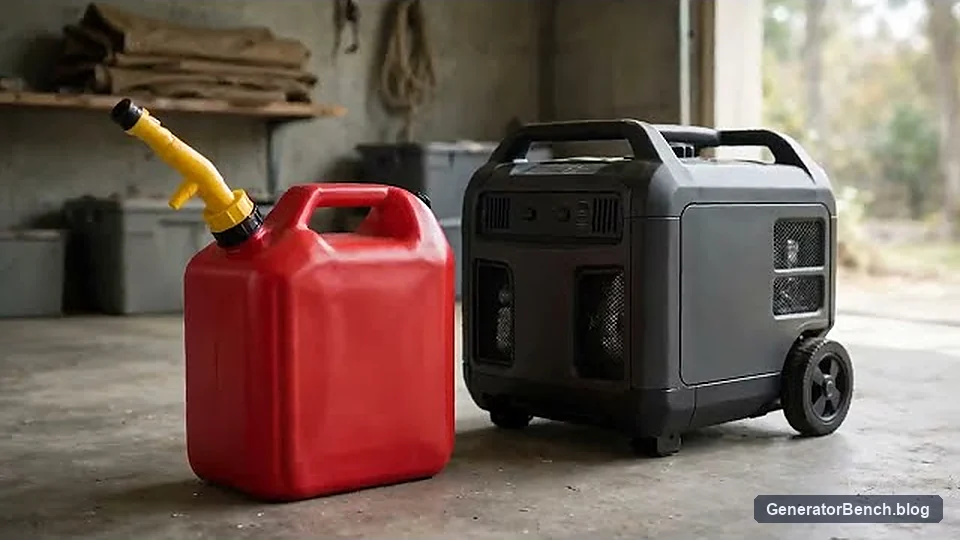
Internal combustion engines burn liquid fuel inside enclosed cylinders to create mechanical rotation. An alternator then transforms that rotational force into usable alternating current electricity to power heavy household appliances during outages.
When shopping for backup solutions, exploring options in our best battery generator roundup helps buyers evaluate lithium iron phosphate chemistry, bidirectional inverters, and clean AC output capacity without combustion steps.
Conversely, gas generators utilize internal combustion engines turning copper-wound alternators to generate raw AC voltage, which must be rectified and inverted cleanly for sensitive modern electronics and motor loads.
- Battery systems utilize chemical energy stored in lithium cells.
- Gas units convert thermal energy from fuel combustion into torque.
- Solid-state electronics manage power delivery in battery generators safely.
Chemical Versus Thermal Energy Storage
Chemical storage allows instant power delivery with zero warm-up time required. Users simply press a button to activate the inverter circuit and draw immediate power.
Thermal energy generation demands precise air-fuel mixtures, spark timing, and mechanical compression. This process creates inherent heat loss and mechanical wear over operating hours.
- Battery storage features instant power availability on demand.
- Gas generation involves mechanical friction and thermal dissipation.
Output Ratings, Surge Capacity, and Inverter Quality
Electrical loads demand careful matching between starting wattage and running wattage capabilities. Battery units handle sudden motor surges well if the inverter limit is respected by connected sensitive electronics.
Selecting units from our quietest gas generator guide ensures sustained high continuous amperages while minimizing engine noise and reducing total harmonic distortion via integrated pure sine wave inverter modules.
Inverter units regulate frequency via pulse-width modulation, achieving Total Harmonic Distortion under three percent. Traditional frame generators often output dirty power exceeding twenty percent distortion under heavy inductive loads.
Surge capacity matters heavily for motor startup currents. Quality battery stations deliver two times continuous output for short bursts, while gas engines leverage mechanical inertia and immediate fuel delivery for starting surges.
- Pure sine wave output protects sensitive medical and computing hardware.
- Surge watts determine whether inductive refrigerator compressors will start successfully.
- Continuous wattage dictates total concurrent appliance capacity.
Managing Sensitive Electronic Loads
Clean power delivery prevents microprocessors from experiencing thermal stress or logic errors during prolonged emergency operations.
Inverter gas generators match battery cleanliness ratings by conditioning raw alternator output through digital microprocessors.
- Digital microprocessors smooth out voltage fluctuations effectively.
- Unfiltered power can damage modern variable-speed HVAC controllers.
Fuel Logistics, Refueling, and Runtime Realities
Battery runtime depends entirely on initial state of charge and available solar recharging panels. Once stored watt-hours are depleted, users must wait for sunlight or grid power to restore capacity.
Gasoline generators offer unlimited potential runtime provided you maintain a steady supply of fresh fuel. Storing volatile hydrocarbons requires approved safety containers and chemical stabilizer additives.
Reviewing choices in our best propane gas generator evaluation highlights alternative fuel systems that avoid gasoline degradation issues, eliminating carburetor varnishing while maintaining reliable energy density for extended storage.
Battery generators eliminate liquid fuel logistics entirely, relying instead on wall outlets, solar arrays, or vehicle auxiliary ports for recharging. However, cold weather drastically reduces effective watt-hour capacity during prolonged winter grid failures.
- Solar recharging offers silent, renewable energy replenishment outdoors.
- Gasoline storage introduces fire safety hazards inside residential garages.
- Propane dual-fuel options extend shelf life significantly compared to gas.
Off-Grid Fuel Resupply Constraints
Extended grid failures often cause local gas station pumps to lose electrical power, rendering liquid fuel replenishment impossible.
Solar panel arrays provide ultimate energy independence for battery stations during prolonged multi-week disaster recovery scenarios.
- Grid outages disrupt commercial petroleum distribution networks rapidly.
- Photovoltaic panels replenish battery capacity without fossil fuel reliance.
Acoustic Profiles, Thermal Management, and Siting
Checking models featured in our best battery generator for home selection reveals whisper-quiet performance that solves placement restrictions, producing only faint fan noise rather than disruptive engine volume.
Combustion engines generate significant noise pollution, often exceeding sixty-five decibels at twenty feet. This loudness restricts placement near windows and neighbors during overnight sleep periods.
Acoustic output represents a major operational divergence. Enclosed inverter generators operate around fifty decibels at twenty feet, whereas conventional open-frame gas engines regularly roar past seventy-five decibels under normal load conditions.
Thermal management dictates reliability across both platforms. Gas generators demand clear exhaust clearance to prevent carbon monoxide buildup, while high-capacity battery banks require active forced-air cooling to protect internal lithium cells.
- Silent battery operation permits safe indoor use in small apartments.
- Gas engines require outdoor placement far from living spaces.
- Exhaust placement prevents deadly carbon monoxide from entering buildings.
Thermal Output and Ventilation Rules
Internal cooling fans dissipate heat from battery inverters to prevent thermal throttling during high-draw appliance usage.
Gas engines expel extreme heat and lethal exhaust gases, mandating strict adherence to outdoor clearance guidelines.
- Thermal sensors protect lithium cells from overheating during rapid charging.
- Exhaust safety zones prevent accidental carbon monoxide poisoning.
Maintenance Demands and Long-Term Component Lifespan
Battery generators require virtually zero mechanical maintenance beyond firmware updates and occasional capacity calibration cycles. Their solid-state design eliminates carburetors, spark plugs, and oil filters entirely.
Gas generators demand rigorous routine maintenance including oil changes every one hundred hours, carburetor cleaning, and seasonal fuel system draining to ensure dependable cold-weather starting.
Internal combustion engines mandate rigorous maintenance schedules, including oil changes every one hundred operating hours, spark plug replacements, and air filter cleanings to maintain optimal fuel efficiency and reliable starting performance.
Electrochemical storage systems require virtually zero mechanical upkeep, though users must monitor firmware updates and maintain proper state-of-charge levels during off-season storage to prevent deep cell degradation over multi-year operational cycles.
- Solid-state electronics remove the need for engine tune-ups.
- Carburetor varnish causes frequent starting failures after long storage.
- Lithium battery capacity degrades gradually over thousands of charge cycles.
Wear Components and Replacement Schedules
Mechanical engines wear down piston rings, pull cords, and ignition coils over years of continuous hard service on remote job sites.
Battery lifespan is measured in calendar years and charge retention percentages before dropping below eighty percent original capacity.
- Mechanical pull cords fray and snap under heavy pulling force.
- Battery chemical degradation is accelerated by high ambient storage temperatures.
Environmental Exposure, Weatherproofing, and Safety
Weather resistance remains a critical factor when deploying temporary power solutions during severe rainstorms or blizzards. Most battery units lack waterproof ingress ratings and must stay dry.
Gas generators can operate in wet conditions if housed inside protective enclosures, but running them directly in heavy rain risks electrical short circuits or catastrophic engine damage.
Weatherproofing standards vary significantly by chassis design. Gas generators feature exposed electrical panels susceptible to moisture ingress, while premium power stations utilize IP-rated silicone seals to guard sensitive internal circuitry from rain.
Safety protocols dictate distinct operational rules. Gas engines present severe carbon monoxide hazards and fire risks from hot exhaust manifolds, whereas chemical energy storage introduces thermal runaway risks if subjected to severe physical punctures.
- Enclosures protect running gas engines from driving rainstorms.
- Moisture intrusion destroys sensitive circuit boards in battery inverters.
- Carbon monoxide detectors are mandatory life-safety accessories for gas equipment.
Indoor Safety and Chemical Hazards
Battery stations produce zero toxic emissions, making them completely safe for bedroom placement during sudden midnight outages.
Combustion engines emit odorless carbon monoxide gas, making indoor operation an immediate fatal hazard to household occupants.
- Zero emissions allow safe operation inside enclosed RV cabins.
- CO poisoning accounts for numerous accidental fatalities during storms.
Economic Total Cost of Ownership Realities
Initial purchase costs for high-capacity battery generators often exceed traditional gas alternatives when calculated per kilowatt-hour of delivered energy capacity.
Gas generators demand ongoing operational expenses for fuel, synthetic oil, air filters, and chemical stabilizers that accumulate significantly over years of ownership.
Evaluating long-term value requires analyzing upfront capital expenditures against consumables. Gas models demand ongoing purchases of fossil fuels and lubricants, whereas battery units involve zero recurring fuel costs but feature finite lithium cycle lives.
Commercial amortization calculations must account for replacement cycles. While internal combustion engines can last thousands of hours with proper rebuilding, lithium battery stations eventually hit capacity degradation limits typically rated at eighty percent retention.
- Battery systems eliminate recurring fuel purchases during normal operations.
- Gas engines incur constant consumable costs for maintenance supplies.
- Solar panel additions increase initial battery setup investments.
Long-Term Value and Amortization
Calculating true value requires weighing fuel availability against the calendar lifespan of expensive internal lithium battery modules.
Gas models offer lower entry costs but require diligent upkeep to preserve resale value and reliable emergency readiness.
- Lithium replacement costs can approach initial unit purchase prices.
- Properly stored gas engines retain utility for multiple decades.
Frequently Asked Questions
Can a battery generator run a full-size residential refrigerator during an extended power outage?
Yes, a high-capacity battery station can power a standard refrigerator for several hours or days depending on its watt-hour rating. However, you must prioritize energy management to ensure essential cooling cycles continue without draining the entire reserve.
Why do gas generators require regular carburetor maintenance during long storage periods?
Modern ethanol-blended gasoline attracts moisture and leaves sticky varnish deposits inside tiny carburetor jets as it evaporates. Using a fuel stabilizer and running the engine dry before storage prevents these stubborn blockages.
Is it safe to operate a battery power station inside a closed bedroom while sleeping?
Battery generators produce zero carbon monoxide or toxic exhaust fumes, making them completely safe for indoor placement. You can safely keep them beside your bed to power CPAP machines or emergency lights.
How many years can I expect a lithium-ion portable power station to last before failing?
Most quality lithium iron phosphate battery packs deliver two to three thousand complete charge cycles before capacity drops to eighty percent. This translates to over a decade of normal residential emergency backup use.
Can I use standard portable solar panels to recharge any brand of battery generator?
Compatibility depends on matching the open-circuit voltage and connector amperage limits specified by the power station manufacturer. Always verify solar input specs before connecting third-party photovoltaic panels to prevent damage.